Understanding Grow Lights for Indoor Gardening (Without the Overwhelm)
One of the biggest adjustments when growing plants indoors is realizing that we become the sun. Outdoors, plants receive enormous amounts of light every day. Indoors, however, plants only receive the light that we provide. And if the light is not strong enough, plants simply do not have the energy they need to grow well.
The good news?
You do not need to become a lighting engineer to understand the basics. Lighting is honestly one of the biggest sources of confusion for indoor gardeners. There are:
watts
lumens
lux
PAR
PPFD
full spectrum lights
…and suddenly you feel like you need a science degree just to grow lettuce.
But thankfully, you really do not need to understand every technical detail to grow healthy plants indoors. So in this post, I want to simplify things so we can avoid any analysis paralysis (which I am VERY prone to).
We’ll look at:
why light matters
what PAR and PPFD mean
why distance matters
and how grow lights affect indoor plant growth
And if you are shopping for grow lights, I would generally recommend looking for full spectrum LED lights.
☀️ WHAT LIGHT DOES FOR PLANTS
Plants use light as energy, through a process called photosynthesis. During photosynthesis, plants combine the following in order to create sugars that fuel their growth:
water
carbon dioxide
and light energy
Those sugars are then used by the plant in order to build:
leaves
stems
roots
flowers
and fruit.
You can think of light as plant food. Without enough usable light, plants simply do not have enough energy to grow properly. This is why indoor plants can struggle even when:
nutrients are correct
watering is correct
and temperatures are good.
If the light is insufficient, the plant simply does not have enough energy available to thrive.
🌿 SIGNS YOUR PLANTS AREN’T GETTING ENOUGH LIGHT
Common Signs of Low Light
Some common signs your plants may not be receiving enough light include:
leggy (stretched) growth
weak stems
slow growth
pale leaves
smaller leaves
poor flowering or fruit production
Plants will often physically stretch toward a light source trying to access more energy.
⚠️ CAN PLANTS GET TOO MUCH LIGHT?
Yes — although indoors, insufficient light is usually the bigger issue. Too much light can sometimes cause:
leaf bleaching
crispy edges
stress
curling leaves
or burning.
This is one reason why grow light distance matters, you want to make sure to keep the grow lights 4-6” above the top leaves. A light that is too close can sometimes damage plants, while a light that is too far away may lead to weak, leggy growth. This is a good reason why it is important to put plants that grow at close to the same rate in the same system. If you have one plant that grows tall or fast in the same system as one that grows slow or short, then it is will damn near impossible to keep the light in the sweet spot. So you will end up burning the tall/fast growing plant to keep the light at a better distance for short/slow one. If you keep the light at the best distance for the tall/fast one then the short/slow one will get leggy trying to S T R E T C H for the light.
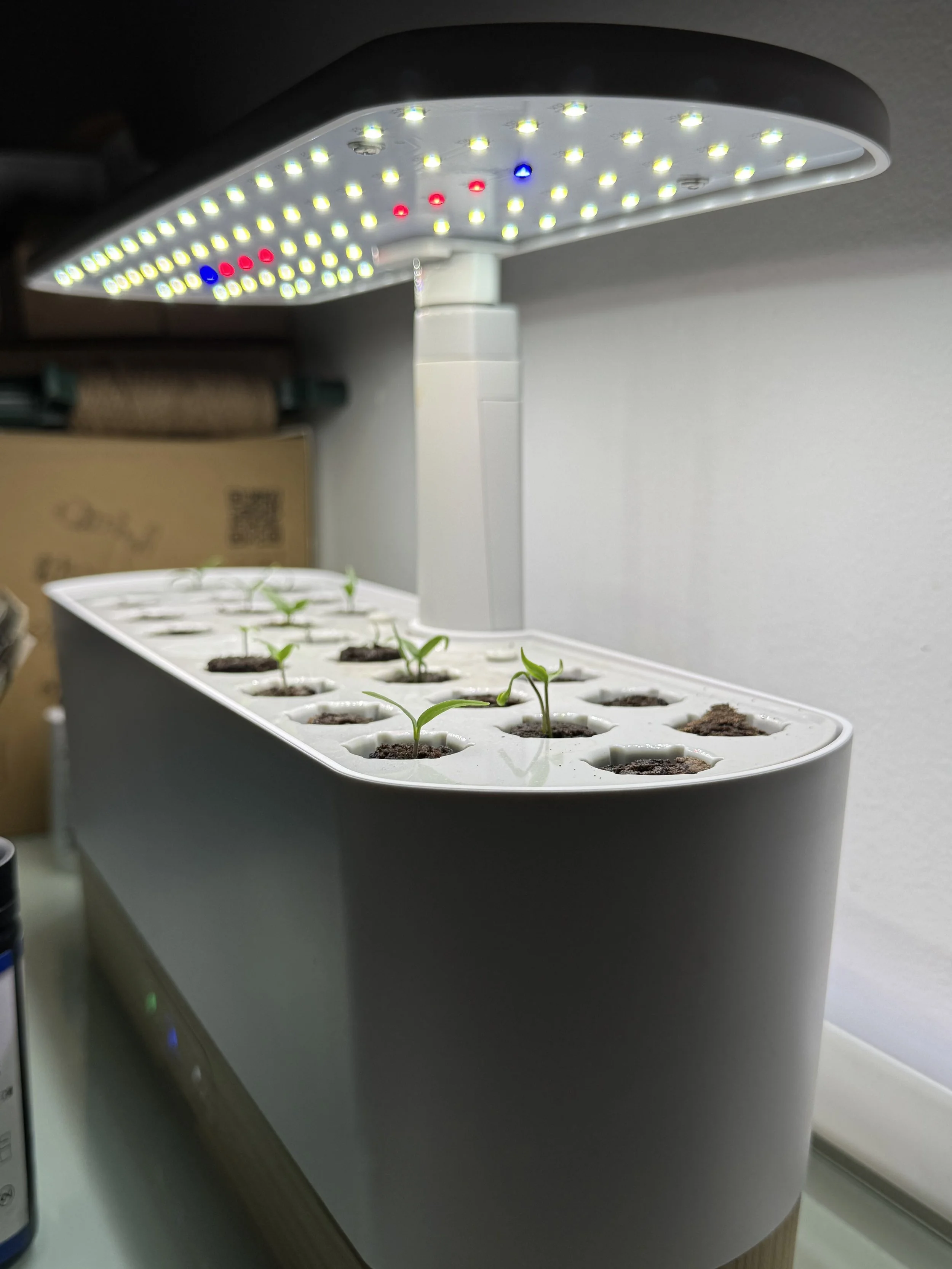
Always look for full spectrum LED lights.
💡 THE 3 MAIN THINGS THAT MATTER
Beginner-Friendly Lighting Basics
When it comes to indoor grow lights, there are really 3 major things beginners should focus on:
1. Light Distance
One thing that surprises many beginners is how quickly light intensity drops as you move farther away from the plant. Even raising a grow light a few inches higher can dramatically reduce the amount of usable light reaching the leaves. This is one reason plants can become leggy indoors. They are literally stretching toward the light source trying to access more energy. It is also why grouping plants with similar growth rates together can make indoor gardening much easier.
2. Duration
Plants also care about how long the lights stay on each day. Most indoor leafy greens grow well with around 14–16 hours of light per day. Some plants also use day length as a signal for flowering.
3. Light Spectrum
Plants respond to different wavelengths of light in different ways.
Blue wavelengths tend to support compact leafy growth.
Red wavelengths play an important role in flowering and fruit production.
Most modern grow lights use a full spectrum design that attempts to mimic natural sunlight more closely. If you are shopping for grow lights, full spectrum LED lights are usually the best place for beginners to start.
🪟 ARE SUNNY WINDOWS ENOUGH?
Sometimes — but often not for long-term productive growth. Many plants may survive near a bright window, but fruiting plants like tomatoes and peppers usually require significantly more light than most windows can provide consistently.
This is especially true during:
winter
cloudy weather
or in northern climates.
That is why supplemental grow lights can make such a big difference indoors.
📏 PAR VS LUX (SIMPLIFIED)
What Is PAR?
PAR stands for Photosynthetically Active Radiation.
This refers to the wavelengths of light plants use for photosynthesis.
PAR measurements help us understand how much usable light plants are actually receiving.
What Is Lux?
Lux measures brightness the way human eyes perceive light.
The problem is, humans and plants do not use light the same way.
A grow light can look bright to us while still not providing ideal light for plant growth.
PAR vs Lux
PAR measures plant-usable light
Lux measures human perception of brightness
PAR is generally the more useful measurement for indoor gardening
🌱 WHAT IS PPFD?
PPFD stands for Photosynthetic Photon Flux Density.
Thankfully, you do not need to memorize that.
In simple terms, PPFD measures how much usable light is actually reaching the plant.
The higher the PPFD, the more light energy the plant receives.
Different plants need different amounts of light depending on what they are growing for.
🌱 GENERAL PPFD TARGETS
Seedlings = 100–200 PPFD
Young seedlings do not need extremely intense light yet.
Leafy Greens = 200–400 PPFD
Plants like:
lettuce
herbs
bok choy
kale
often grow very well within this range indoors.
Fruiting Plants = 400–600 PPFD
Plants like:
tomatoes
peppers
cucumbers
usually require much stronger light levels to support flowering and fruit production. You do not need to obsess over exact numbers right away. These are simply general starting points.
🌱 DON’T OVERTHINK IT
One thing I really want beginner indoor gardeners to know is this. You do not need the “perfect” setup to grow plants indoors. It is very easy to fall into analysis paralysis when researching grow lights and lighting measurements. But honestly?
The best thing you can do is:
start
observe your plants
experiment
and learn as you go.
Plants are excellent teachers.
🧪 UPCOMING INDOOR LIGHTING EXPERIMENTS
In upcoming videos I’ll be:
testing my hydroponic systems with a PAR meter
experimenting with grow light height
comparing light intensity at different distances
This will help show how lighting changes plant growth in real-world indoor gardening setups.
🌱 FINAL THOUGHTS
Indoor lighting can feel complicated at first, but understanding a few core concepts can make a HUGE difference.
And honestly?
You do not need to become a lighting expert to grow healthy plants indoors.
Start simple.
Watch how your plants respond.
Experiment a little.
And adjust as you learn.
Because at the end of the day, indoor gardening is part science experiment… and part plant nerd chaos. 🌱🤓