🪴 How to Grow Herbs Hydroponically: The Complete Beginner's Guide
How to Grow Herbs Hydroponically
If you're just getting started with hydroponics, I always recommend starting with either lettuce and/or herbs. But If you want the biggest newbie bang for your buck, then herbs are hands-down the best place to begin.
They're fast-growing, forgiving, don't require much space, and there's something incredibly satisfying about snipping fresh basil for pasta, cilantro for tacos, or parsley for soup without ever stepping outside.
Many herbs actually thrive in countertop hydroponic gardens because they love the consistent water and nutrients these systems provide. Unlike grocery store herbs that often wilt within days, hydroponic herbs can provide fresh harvests for months with proper care.
Whether you're growing in an AeroGarden, Click & Grow, Rise Garden, Auk, Uruq, LetPot, or another indoor hydroponic system including a Kratky mason jar setup, this guide will walk you through everything you need to know to grow fresh herbs indoors year-round.
Quick Facts
| 🌿 Attribute | Details |
|---|---|
| ⭐ Difficulty | Beginner Friendly |
| ⏱️ Germination | 5–21 days (depending on the herb) |
| 🌱 First Harvest | 3–8 weeks |
| 💡 Light | 12–16 hours (full-spectrum LED) |
| 🌡️ Temperature | 18–24°C (65–75°F) |
| ⚗️ pH | 5.8–6.5 |
| 💧 EC | 0.8–1.8 (varies by herb) |
| 🌸 Pollination | Not required for leafy harvests |
| 🪴 Best Systems | Any countertop hydroponic garden |
| ✂️ Harvest Style | Cut-and-come-again |
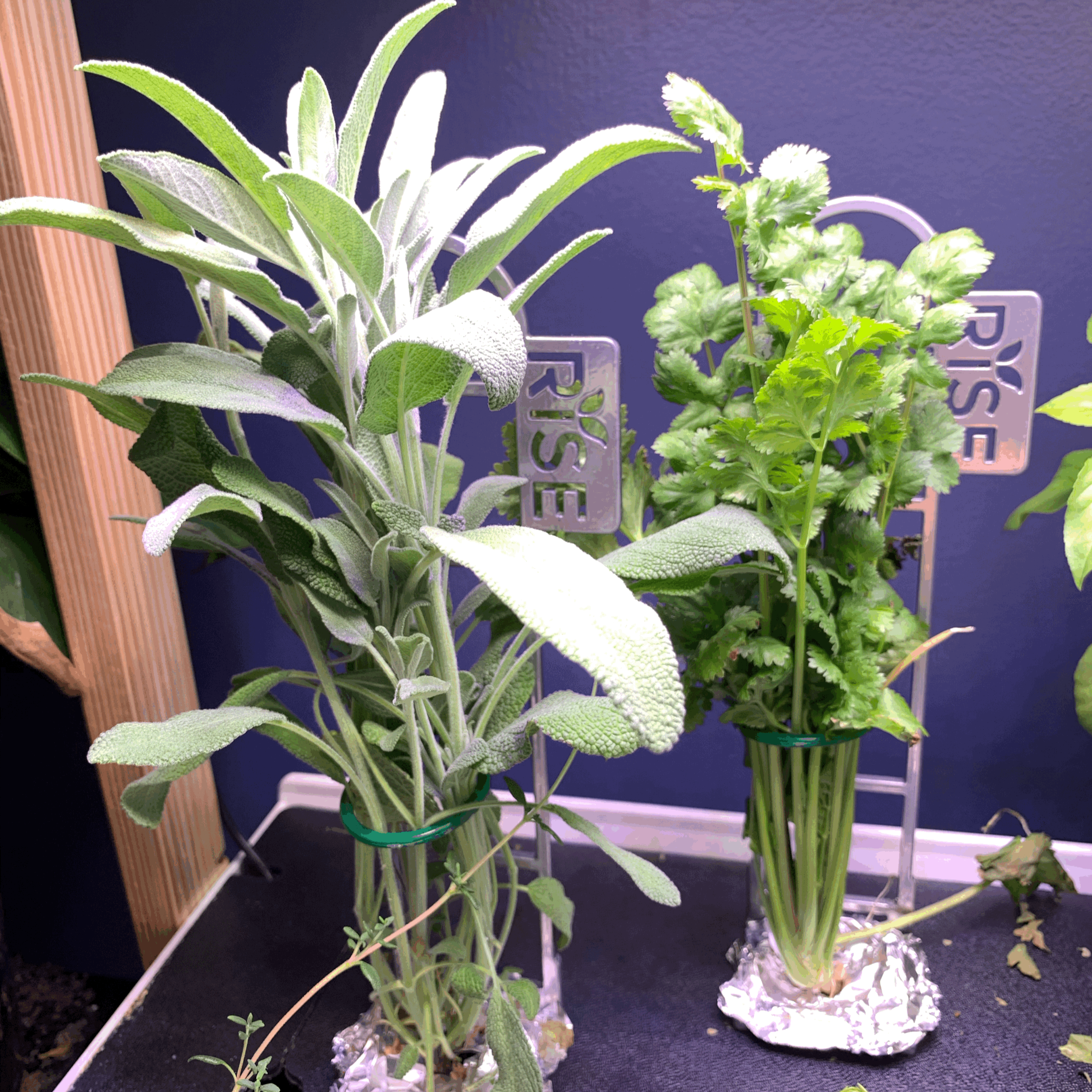
🌿 Grow what you eat!
Herbs (and everything else) grow very fast hydroponically. If you plant herbs that you don’t use on a regular basis you may find yourself drowning in them which could end up just being frusttating.
What Are Culinary Herbs?
Culinary herbs are leafy plants grown primarily for their flavour and aroma rather than their fruit. They're used to season everything from pasta and soups to salads, curries, grilled vegetables, and cocktails.
Many popular herbs are incredibly well suited to hydroponics because they stay relatively compact and respond well to frequent harvesting.
Some of the easiest herbs to grow indoors include:
🌿 Basil
🌿 Parsley
🌿 Cilantro
🌿 Mint
🌿 Dill
🌿 Chives
🌿 Oregano
🌿 Thyme
🌿 Sage
🌿 Lemon Balm
Check out my book!
👉 🇨🇦 [Buy on Amazon.ca]
👉 🇨🇦 [Buy on Indigo]
👉 🇺🇸 [Buy on Amazon.com]
👉 🇬🇧 [Buy at Hatchards]
👉 🇦🇺 [Buy at Booktopia]
Benefits of Growing Herbs Hydroponically
Growing herbs hydroponically offers several advantages over buying fresh herbs from the grocery store.
🌿 Fresh herbs available whenever you need them
💰 Save money by harvesting only what you need
✂️ Most herbs regrow after harvesting
🏡 Perfect for apartments and small spaces
💧 Uses less water than traditional gardening
🦠 Fewer soil-borne diseases
🌱 Fast-growing and beginner friendly
🌎 Grow fresh herbs year-round regardless of the weather
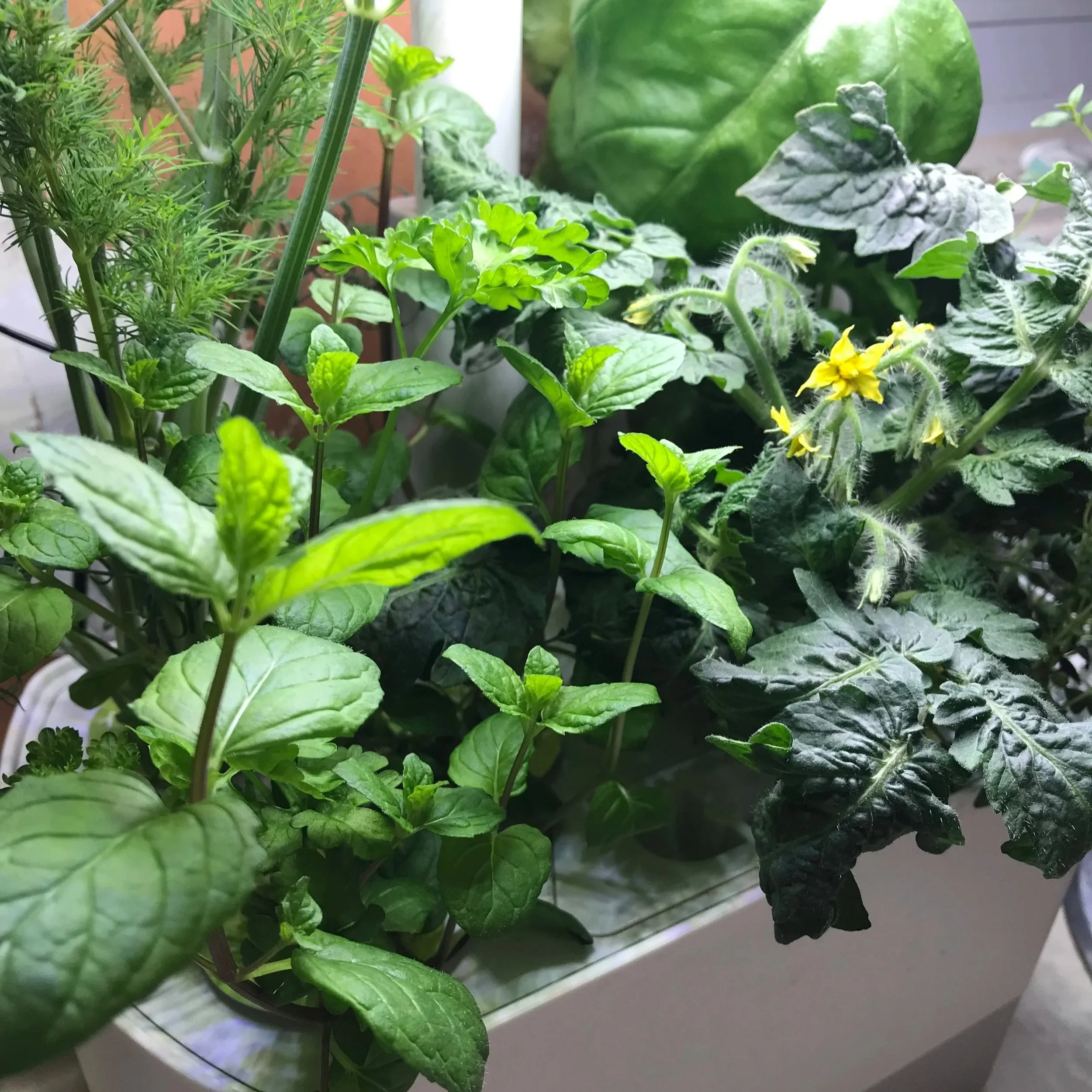
Don’t overcrowd!
This is a picture of my very first AeroGarden Harvest where I had planted all SIX holes. Spoiler alert, don’t do that! Plants will need space to grow and touching leaves and masses of roots do not lead to healthly plants!
Best Herbs for Beginners
If you're new to hydroponics, these herbs are excellent choices:
| 🌿 Herb | ⭐ Difficulty | Why It's Great for Beginners |
|---|---|---|
| 🌿 Basil | ⭐⭐⭐⭐⭐ | Fast-growing, forgiving, and responds well to frequent harvesting. |
| 🌿 Parsley | ⭐⭐⭐⭐⭐ | Very productive once established and easy to maintain. |
| 🌿 Chives | ⭐⭐⭐⭐⭐ | Extremely low maintenance and regrows quickly after cutting. |
| 🌿 Mint | ⭐⭐⭐⭐⭐ | One of the fastest-growing herbs, though it should be grown on its own. |
| 🌿 Cilantro | ⭐⭐⭐⭐☆ | Quick to grow but tends to bolt if temperatures get too warm. |
| 🌿 Dill | ⭐⭐⭐⭐☆ | Fast-growing with feathery foliage that's perfect for fresh harvesting. |
| 🌿 Oregano | ⭐⭐⭐⭐☆ | Slow to start but becomes a productive, long-lived plant. |
| 🌿 Thyme | ⭐⭐⭐⭐☆ | Compact, attractive, and produces flavorful leaves year-round. |
| 🌿 Sage | ⭐⭐⭐☆☆ | Easy to grow but slower than many other culinary herbs. |
| 🌿 Rosemary | ⭐⭐☆☆☆ | Beautiful and fragrant, but slow to germinate and best started from cuttings (you can root them from the grocery store pre-packaged ones!). |
Starting Herbs from Seed
Most herbs are easy to start directly in your hydroponic system.
Place the grow baskets into your hydroponic garden.
Add 2–3 seeds to each grow pod.
Cover with humidity domes.
Keep lights on according to your system's recommendations.
Remove the domes once seedlings are close to touching them (you don’t want to burn young/tender leaves).
Thin to the healthiest seedling once true leaves appear.
Some herbs, like rosemary and thyme, germinate slowly, so don't panic if they take a few extra weeks.
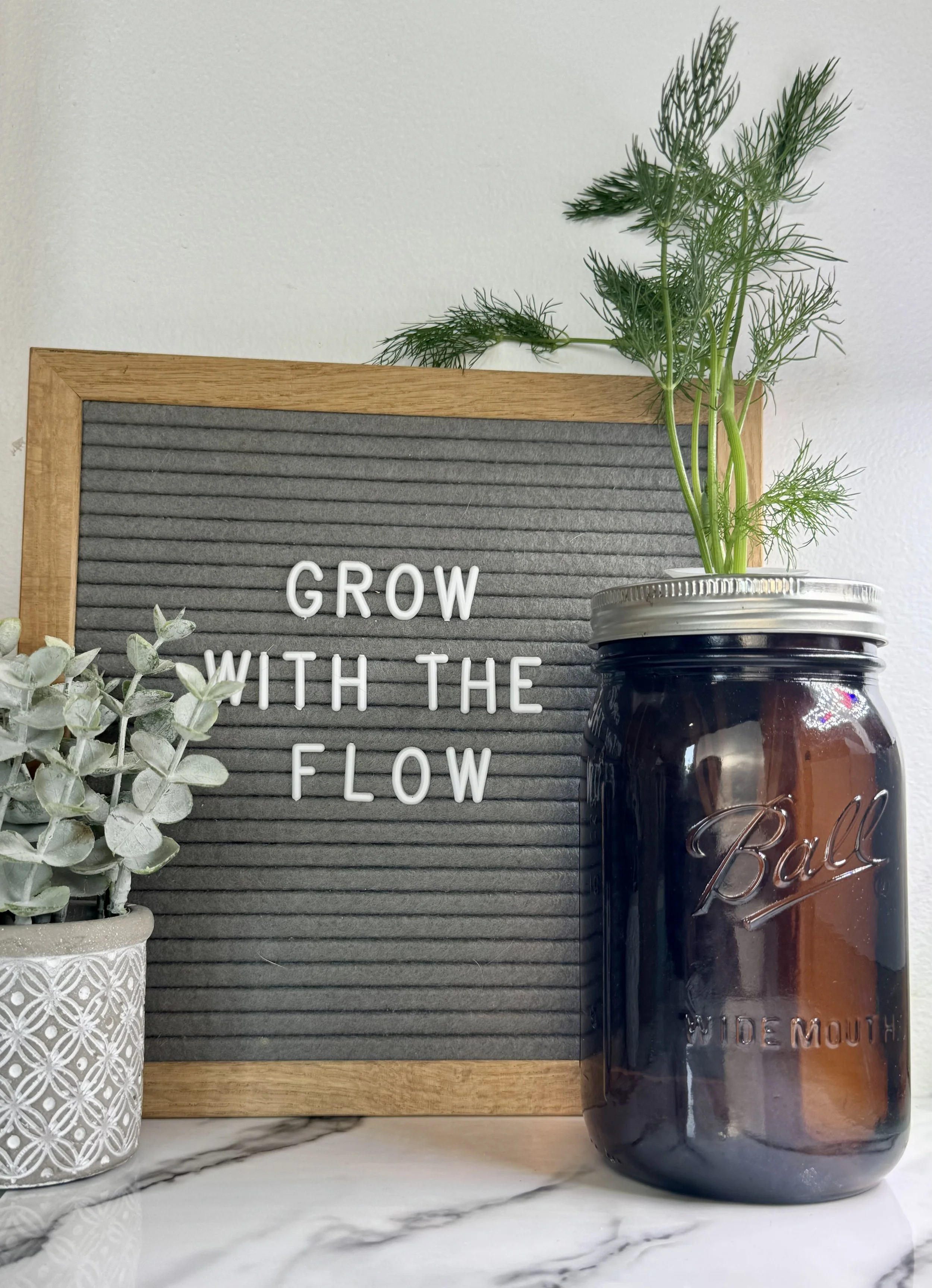
Try a Kratky jar!
If you don’t have space or you don’t even have a store-bought hydroponic system, you can still start growing herbs indoors at home with a simple Kratky mason jar setup.
Target Growing Conditions
Lighting: 12–16 hours/day using full-spectrum LEDs
EC: 0.8–1.8 (varies by herb, check out my EC/pH reference guide)
pH: 5.8–6.5
Temperature: 18–24°C (65–75°F)
Harvesting & Maintaining Herbs
Most herbs are ready for their first harvest 3–8 weeks after planting, depending on the variety.
Harvest by snipping stems just above a pair of leaves. This encourages branching, resulting in fuller, bushier plants.
To keep herbs productive:
Harvest regularly.
Never remove more than one-third of the plant at a time.
Remove flower buds on herbs grown for their leaves.
Trim leggy stems to encourage bushier growth.
Replace older plants once production slows.
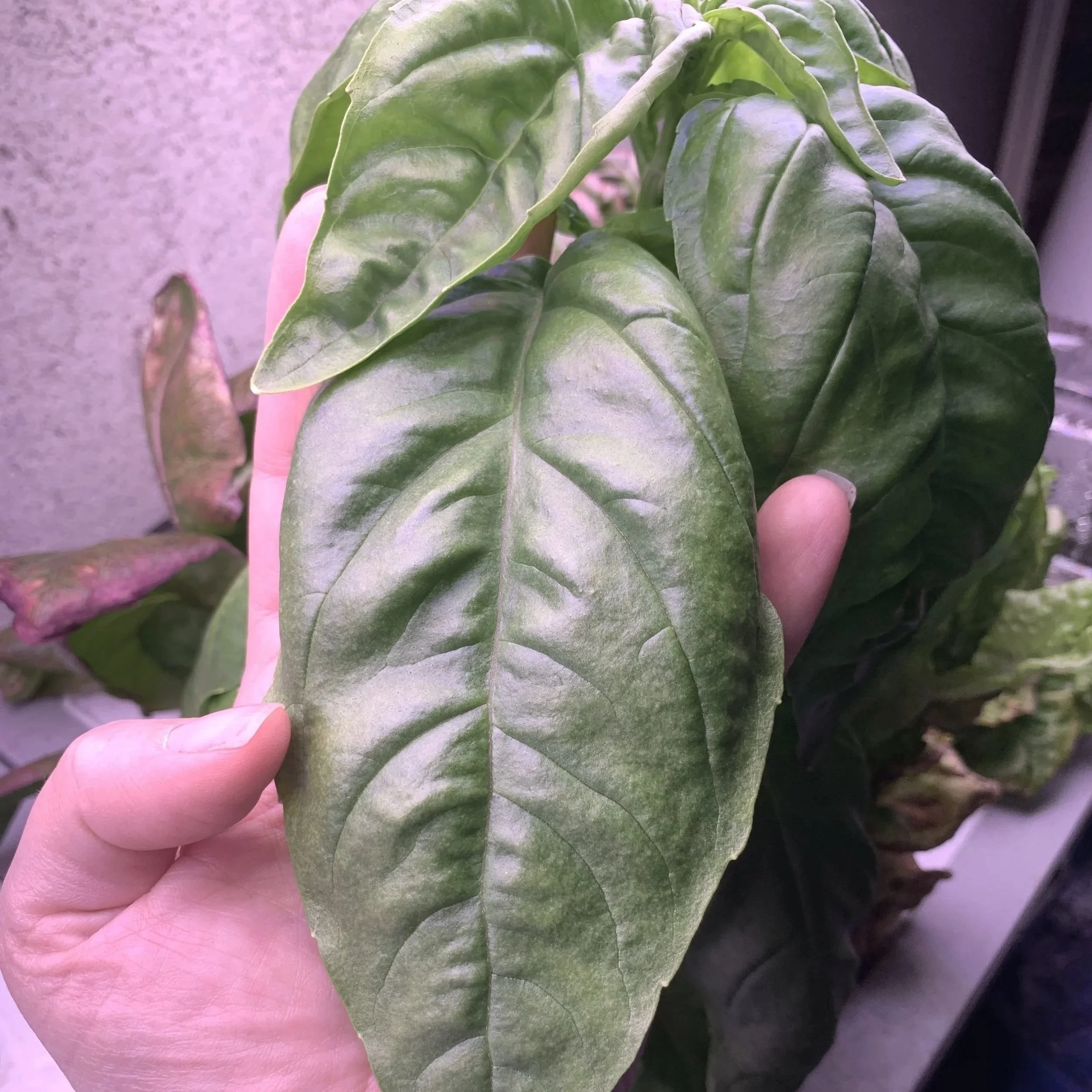
One of my favourite herbs to grow hydroponically is basil, the leaves grow ENORMOUS!
Common Problems
| 🌿 Problem | Likely Cause | How to Fix It |
|---|---|---|
| 🌱 Leggy Growth | Insufficient light | Lower the grow light, increase light duration, and prune regularly. |
| 🍃 Yellow Leaves | Nutrient or pH issues | Check pH, EC, and refresh the nutrient solution. |
| 🌼 Herbs Flowering | Plant maturity or stress | Remove flower buds and harvest frequently. |
| 🥀 Wilting Plants | Root stress or water issues | Inspect roots and ensure the system is operating correctly. |
| 🦠 Brown or Slimy Roots | Root rot | Clean the system, replace the nutrient solution, and improve root oxygenation. |
Common Pests
| 🐛 Pest | Signs | How to Prevent & Treat |
|---|---|---|
| 🟢 Aphids | Clusters of tiny insects and sticky leaves. | Inspect new plants, wash insects off, and use insecticidal soap if needed. |
| 🕷️ Spider Mites | Fine webbing and speckled leaves. | Increase humidity, inspect often, and treat early. |
| 🪰 Fungus Gnats | Small black flies around the system. | Keep the system clean, remove algae, and use sticky traps. |
| 🦋 Whiteflies | Tiny white insects fly up when disturbed. | Inspect leaves regularly and use sticky traps or insecticidal soap. |
| 🟤 Thrips | Silvery streaks and distorted leaves. | Inspect new plants and treat early with insecticidal soap. |
FAQ
-
Basil, parsley, cilantro, chives, dill, mint, oregano, thyme, and sage are all excellent choices.
-
Absolutely! AeroGardens and other countertop hydroponic systems are ideal for growing herbs. Any countertop system will work! So if you have a Click & Grow, Rise Garden, Let Pot, Uruq or Auk you can grow herbs indoors!
-
Yes, but choose herbs with similar growth habits. Avoid planting mint with slower-growing herbs because it can quickly take over. You will also want to make sure that they have similar pH and EC needs so that you can ensure they are all thriving and that some are not just surviving.
-
Harvest regularly once plants are established, but avoid removing more than one-third of the plant at one time.
-
Flowering (bolting) is a natural part of the plant's life cycle. Removing flower buds encourages the plant to continue producing leaves.
-
No. Since you're harvesting the leaves, pollination isn't necessary. Which makes them great for beginners or no-fuss indoor gardeners.
-
Yes. Refresh the nutrient solution every 2–4 weeks, or according to your system manufacturer's recommendations. It is a great idea to pair this with a cleaning of your system so you are starting out fresh and clean each time.
-
Yes! With adequate light and nutrients, hydroponic herbs can be grown indoors all year. Which can save you lots at the grocery store, especially when you realize that for the price of a single bunch of herbs you can buy a package of seeds that gives you enough seeds for YEARS of growing!
🌱 Final Thoughts
Hydroponic herbs are one of the easiest and most rewarding crops you can grow indoors. They're beginner-friendly, incredibly productive, and can transform everyday meals with fresh flavour that's always within reach.
Whether you're clipping basil for homemade pesto, parsley for soup, cilantro for tacos, or chives for baked potatoes, you'll quickly discover that once you start growing your own herbs, it's hard to go back to buying overpriced bunches from the grocery store.
If you're new to hydroponics, start with one or two herbs and build your confidence. Before long, you'll have an indoor herb garden that's producing fresh harvests every week—no backyard required.