🌿 How to Grow Cilantro Hydroponically: The Complete Beginner's Guide
Before we get started, let's address the elephant in the room... Yes, I pronounce it "cil-AN-tro" instead of "cil-AHN-tro." Every time I say it in a video, someone lets me know I'm saying it "wrong." 😅
Thankfully, cilantro doesn't care how you pronounce its name—it just wants the right growing conditions.
Cilantro is a fast-growing herb you can grow hydroponically and a staple in cuisines from around the world. Whether you're making tacos, salsa, curries, soups, or homemade guacamole, having fresh cilantro growing just a few steps away is incredibly convenient.
If you've ever bought a bunch from the grocery store only to have it wilt before you could use it, you're not alone. Growing cilantro hydroponically lets you harvest only what you need, keeping the plant producing fresh leaves for weeks. In this guide, I'll show you everything you need to know to successfully grow cilantro in AeroGarden, Click & Grow, Rise Garden, Auk, LetPot, and other countertop hydroponic gardens.
Quick Facts
| 🌿 Attribute | Details |
|---|---|
| ⭐ Difficulty | Beginner |
| ⏱️ Germination | 7–14 days |
| 🌿 First Harvest | 30–45 days |
| 💡 Light | 12–16 hours (full-spectrum LED) |
| 🌡️ Temperature | 16–24°C (60–75°F) |
| ⚗️ pH | 5.8–6.5 |
| 💧 EC | 1.0–1.8 |
| 🌸 Pollination | Not required |
| 🪴 Best Systems | Any countertop hydroponic garden or a Kratky mason jar |
| ✂️ Harvest Style | Cut-and-come-again (harvest outer leaves first) |
What is Cilantro?
Cilantro (Coriandrum sativum) is a fast-growing annual herb prized for its bright, fresh flavour. While the leaves are known as cilantro, the seeds are harvested as the spice coriander, making it one of the few plants that provides two completely different culinary ingredients.
It's widely used in Mexican, Indian, Thai, Vietnamese, Middle Eastern, and Mediterranean cooking. Its distinctive flavour is famously divisive—some people absolutely love it, while others say it tastes like soap because of the way their genetics interpret certain natural compounds (more on that in the FAQs below).
Fortunately, your hydroponic system doesn't care which camp you're in.
Check out my book!
👉 🇨🇦 [Buy on Amazon.ca]
👉 🇨🇦 [Buy on Indigo]
👉 🇺🇸 [Buy on Amazon.com]
👉 🇬🇧 [Buy at Hatchards]
👉 🇦🇺 [Buy at Booktopia]
Benefits of Growing Cilantro Hydroponically
Hydroponic cilantro grows quickly and gives you a steady supply of fresh herbs without making frequent trips to the grocery store.
Some of the biggest benefits include:
🌿 Fresh cilantro whenever you need it
✂️ Harvest only what you need
💰 Save money compared to buying bunches that spoil in the fridge
🏡 Perfect for apartments and small spaces
💧 Uses less water than traditional gardening
🦠 Fewer soil-borne diseases
🌱 Ready to harvest in as little as a month
🌮 Fresh flavour for tacos, salsa, curries, soups, salads and more
Best Cilantro Varieties
Not all cilantro varieties are created equal. If you've grown cilantro before, you've probably discovered that it loves to bolt just when you're getting excited. While bolting is MUCH more common when growing outdoors, it can still happen when growing hydroponically if your house is warm.
Think of cilantro as that friend who's always threatening to leave the party early. If it gets too warm or stressed, it'll suddenly decide it's time to flower. Choosing a slow-bolting variety helps convince it to stick around a little longer.
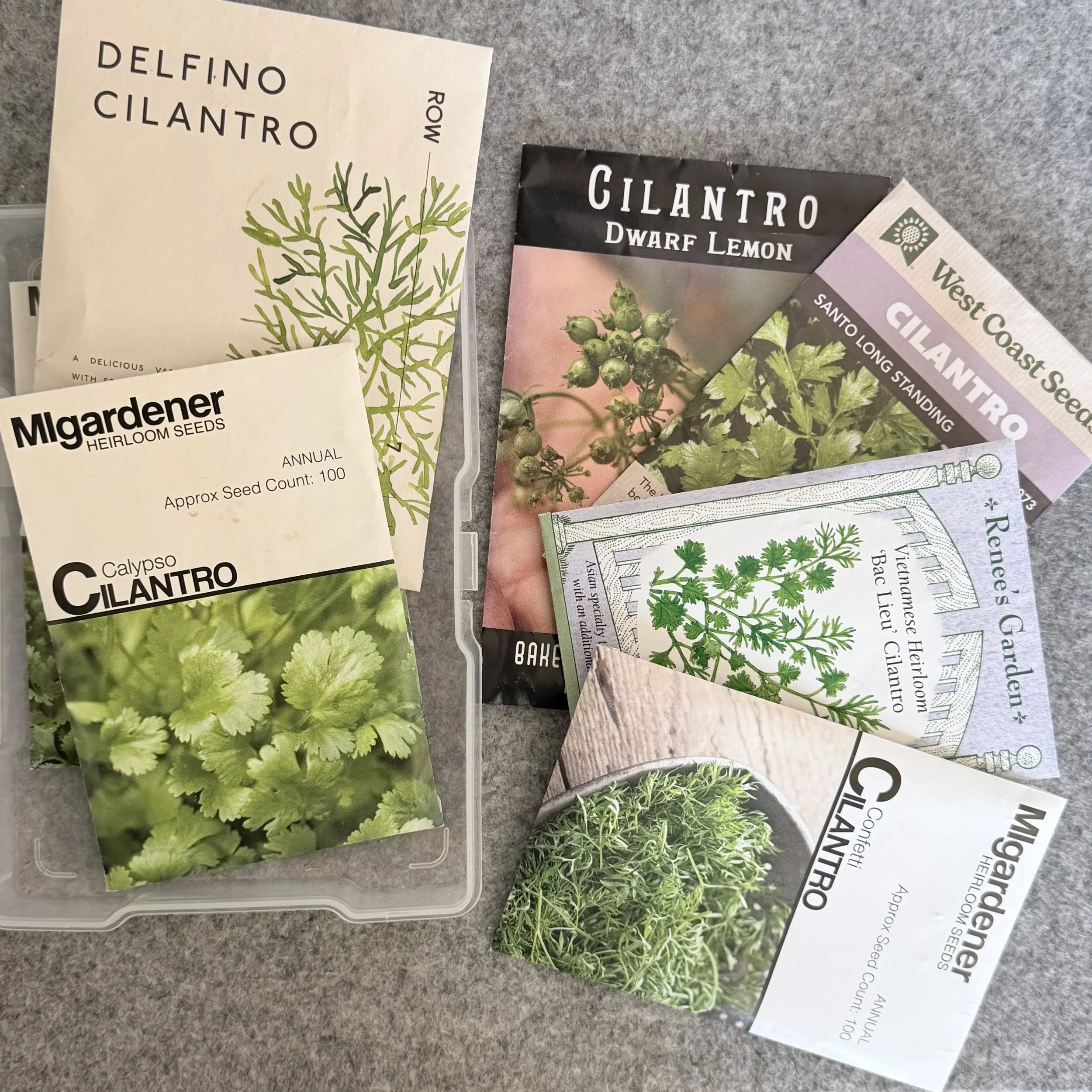
⭐ Calypso (My Top Pick): One of the best slow-bolting varieties available. Produces lots of leaves and stays productive longer.
Santo Long Standing: A favourite among gardeners for its excellent flavour and dependable growth.
Leisure: Produces attractive, flavourful foliage and performs well indoors.
Cruiser: Known for vigorous growth and delayed bolting.
Confetti: A unique variety with finely divided, fern-like leaves and excellent flavour.
Starting Cilantro from Seed
Starting cilantro from seed is simple, and it grows beautifully in countertop hydroponic gardens.
Place grow baskets into your hydroponic system.
Add 1–2 cilantro seeds to each grow pod.
Cover with a humidity dome.
Expect germination within 7–14 days.
Remove the humidity dome before seedlings touch it.
Once seedlings develop their first true leaves, thin to the strongest plant.
Unlike peppers or tomatoes, cilantro dislikes having its roots disturbed, so it's best to grow it directly where it will mature.
If you have struggled with getting cilantro to germinate, I have a trick for you! The cilantro seed is actually a seed POD, and there are two seeds inside. If you gently press the pod between your fingers it will generally crack open. You can then place both halves in a grow pod and it will help with germination.
Target Growing Conditions
Lighting:12–16 hours per day using full-spectrum LED grow lights.
EC: 1.0–1.8 mS/cm
pH:5.8–6.5 (ideal around 6.0)
Temperature: 16–24°C (60–75°F)
Keeping cilantro on the cooler side helps delay bolting and extends your harvest.
Harvesting & Maintaining Cilantro
When to Start Harvesting
Begin harvesting once plants reach about 10–15 cm (4–6 inches) tall.
Always harvest the outer leaves first while leaving the centre growing point intact so the plant can continue producing.
Tips for Longer Harvests
Harvest regularly.
Remove flower stalks as soon as they appear.
Keep temperatures cool.
Avoid removing more than one-third of the plant at a time.
Sow a new pod every few weeks for continuous harvests.
Eventually every cilantro plant will bolt, but regular harvesting can significantly extend its productive life.
Common Problems
| 🌿 Problem | Likely Cause | How to Fix It |
|---|---|---|
| 🌼 Cilantro Bolting | Warm temperatures, plant maturity, or stress | Keep temperatures cooler, grow slow-bolting varieties, and harvest regularly to encourage leafy growth. |
| 🍃 Yellow Leaves | Nutrient imbalance, incorrect pH, or older leaves naturally aging | Check pH and nutrient levels, remove older yellow leaves, and make sure plants are receiving enough light. |
| 🌱 Slow Growth | Insufficient light, cool temperatures, or weak nutrients | Increase light duration or intensity, maintain proper temperatures, and ensure nutrients are balanced. |
| 🌿 Bitter-Tasting Leaves | Plant beginning to flower or bolting | Harvest earlier, remove flower stalks, and start new plants regularly for continuous fresh leaves. |
| 🥬 Wilting Plants | Root stress, low water levels, or excessive heat | Check water levels, inspect roots for issues, and move the system away from heat sources. |
| 🪴 Leggy Growth | Not enough light or light positioned too far away | Increase light intensity or adjust the light height according to the manufacturer's recommendations. |
Common Pests
Although indoor gardens experience fewer pest issues than outdoor gardens, keep an eye out for:
| 🐛 Pest | Signs | How to Prevent & Treat |
|---|---|---|
| 🟢 Aphids | Small green, black, or white insects clustered on stems and the undersides of leaves. Leaves may become curled, distorted, or sticky from honeydew. | Inspect new plants before adding them to your indoor garden. Spray plants with a strong stream of water to knock aphids off, or treat with insecticidal soap. Repeat treatments may be needed. |
| 🕷️ Spider Mites | Tiny speckled damage on leaves, yellowing foliage, fine webbing between stems and leaves, and overall plant decline. | Increase airflow, avoid overly dry conditions, and regularly inspect leaves. Remove heavily damaged leaves and treat with insecticidal soap or horticultural oil. |
| 🪰 Fungus Gnats | Small black flies hovering around your hydroponic system or crawling near the grow pods. Larvae can damage roots and slow plant growth. | Keep your growing area clean, remove dead plant material, and avoid algae buildup. Use sticky traps for adults and treat the growing medium if larvae are present. |
| 🦋 Whiteflies | Tiny white insects that fly up when plants are disturbed. Leaves may yellow, become weak, or develop sticky residue. | Check the undersides of leaves regularly. Remove heavily affected leaves and use insecticidal soap or sticky traps to reduce populations. |
| 🟤 Thrips | Tiny slender insects that cause silvery streaks, distorted leaves, and small dark specks of insect waste on foliage. | Inspect new plants carefully, keep the growing area clean, and treat early with insecticidal soap or another appropriate indoor plant treatment. |
| 🐚 Mealybugs | White cotton-like clusters on stems or leaf joints. Plants may become weak, yellow, or slow growing. | Remove visible insects with a cotton swab dipped in rubbing alcohol and treat affected areas. Isolate heavily infested plants to prevent spreading. |
Prevention is always the best medicine, so make sure that you inspect plants regularly. That way you can catch pests (and other disease) early and treat them early before they become bigger issues.
Frequently Asked Questions
-
Absolutely! Cilantro grows very well in hydroponic systems and is one of the easiest herbs for beginners.
-
Yes! Cilantro grows well in AeroGarden, Click & Grow, Rise Garden, LetPot, and other countertop hydroponic gardens.
-
It can be a bit of a diva and heat, stress, and age all encourage flowering. Growing slow-bolting varieties and keeping temperatures cool helps extend harvests.
-
Yes. Harvest the outer leaves while leaving the centre growing point intact, and the plant will continue producing.
-
If your goal is fresh leaves, remove flower stalks as soon as they appear. If you'd like to harvest coriander seeds, allow the plant to flower and set seed.
-
Yes! Fresh cilantro freezes well and is a great way to preserve extra harvests.
-
Calypso is one of the best slow-bolting varieties, followed closely by Santo and Cruiser.
-
They both come from the same plant (coriandrum sativum), but in North America we refer to the leaves and stems as cilantro and the seeds as coriander. But over the pond in England and Europe they tend to refer to the whole plant as coriander.
-
If are on team #IHATECILANTRO there is a good chance that it tastes like soap to you. If yes, then you can thank your genetics! There is a smell-receptor gene known as OR6A2 which makes you more sensitive to the aldehyde part of cilantro and makes it smell and taste like soap!
-
If you have struggled with getting cilantro to germinate, I have a trick for you! The cilantro seed is actually a seed POD, and there are two seeds inside. If you gently press the pod between your fingers it will generally crack open. You can then place both halves in a grow pod and it will help with germination.
Final Thoughts
Cilantro has a reputation for being a short-lived herb, but don't let that discourage you. With cool temperatures, regular harvesting, and a slow-bolting variety, you can enjoy fresh cilantro for weeks from a single plant.
The trick is accepting that cilantro likes to do things on its own schedule. Eventually, it'll decide the party is over and send up a flower stalk—but until then, you'll have a steady supply of fresh herbs for tacos, salsa, curries, soups, and countless other dishes. If you want a constant source of cilantro, then you just need to make sure to do a succession planting so you will have a new plant ready for harvest when the first ones decides to quit.
And whether you pronounce it "cil-AN-tro", "cil-AHN-tro," or something completely different like coriander... I promise I won't judge. (Although YouTube commenters totally would. 😉)