🦠Green Slime in Your Hydroponic Garden? How to Get Rid of Algae
If you've looked inside your hydroponic garden and noticed green water, green slime, or a green film coating the reservoir, grow pods, or roots, you may have an algae problem.
And if your first thought was, “Is this going to kill my plant?” — do NOT panic.
Algae is incredibly common in indoor hydroponic gardens, especially countertop systems where light can reach the nutrient solution. It's usually more of a sign that your system is getting too much light and needs a good cleaning than an immediate plant emergency.
The good news? Once you understand why algae grows, it's usually fairly easy to control.
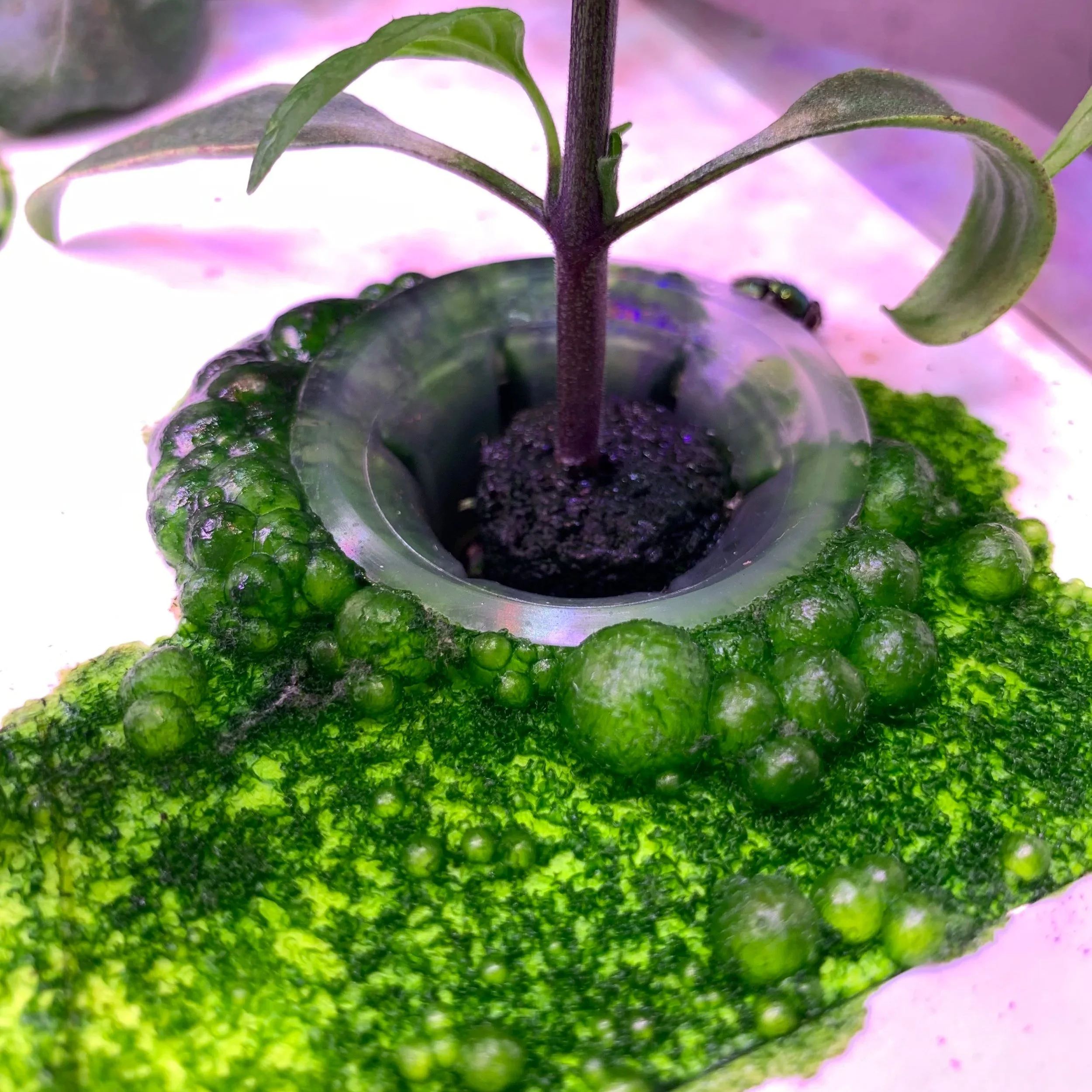
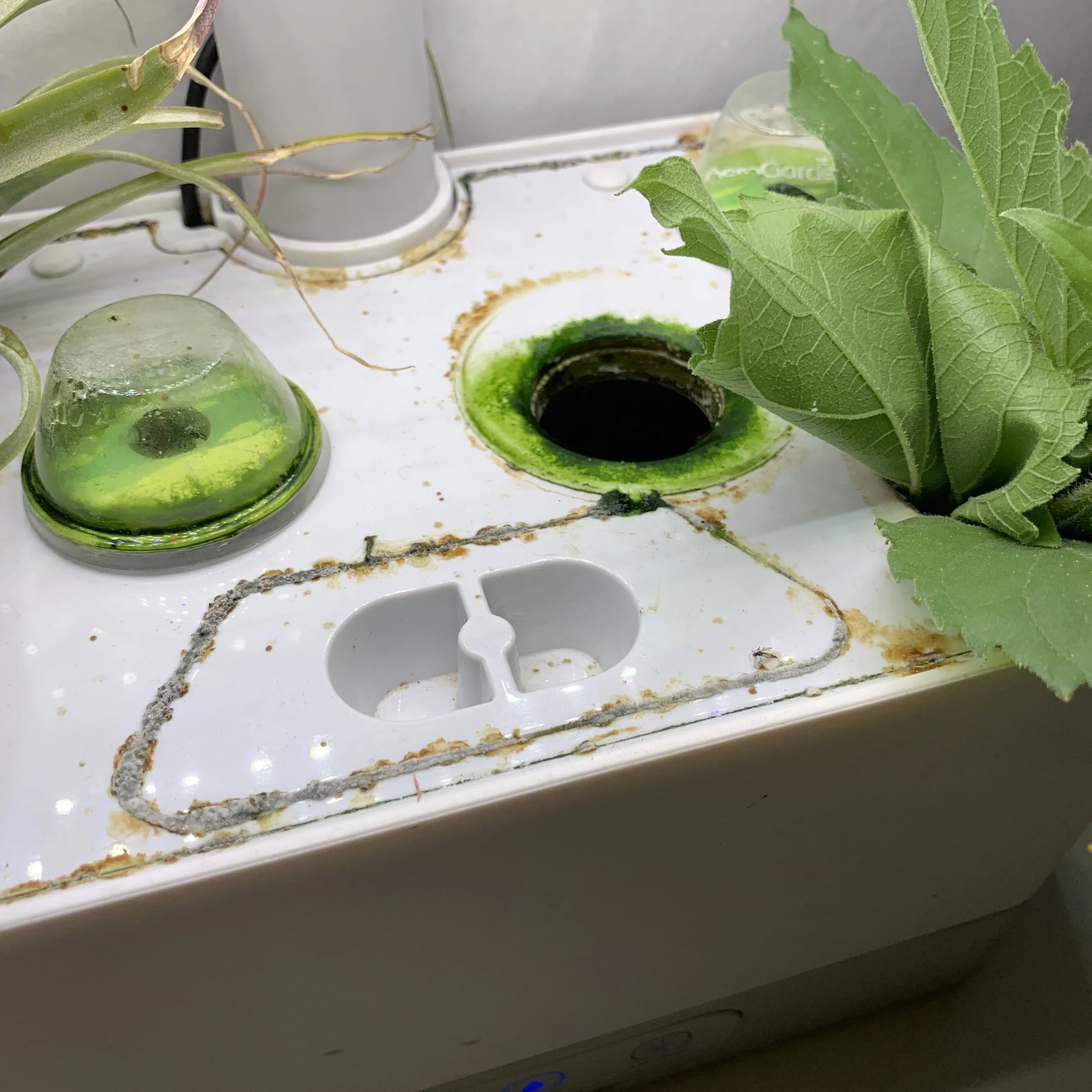
Yup… that's algae. 😳
When light, moisture, and nutrients come together, algae can take advantage of the situation surprisingly quickly. This grow deck is a great example of why covering your grow pods and keeping light out of the nutrient solution matters.
What Is That Green Stuff in My Hydroponic Garden?
If it's green and growing where there is water + nutrients + light, algae is a strong possibility.
Algae isn't technically a single type of organism. It's a broad group of photosynthetic organisms that can grow in aquatic environments.
Your hydroponic garden can accidentally provide almost everything algae needs:
💧 Water
🌱 Nutrients
☀️ Light
And unlike your plants, algae doesn't need you to intentionally plant it.
Even a small amount of light leaking into a reservoir can give algae an opportunity to establish itself. This is why it's so important to keep the AeroGarden stickers, Click & Grow pod caps, or Rise Garden foil in place over your grow pods. These help cover the growing media and reduce the amount of light reaching the nutrient solution.
The same principle applies to any open growing positions you're not using. Make sure those holes are covered with something opaque so light can't reach the nutrient solution. An uncovered pod hole might seem harmless, but it's essentially an open window for light—and potentially algae—to get into your reservoir.
You can use the covers that AeroGarden and Rise Garden provide, rocks, the terracotta bases from plant pots, golf balls—get creative! Just make sure whatever you use is opaque and actually covers the hole. The goal is simple: keep the light out!
Where You Might Find It
It may look like a green film, green slime, green fuzz, or even make the entire nutrient solution look green.
Is Algae Bad for Hydroponic Plants?
This is where things get a little more complicated.
A small amount of algae doesn't necessarily mean your plants are doomed.
But heavy algae growth isn't something you want to ignore.
As algae grows, it can compete with your plants for resources and contribute organic material to the system. A significant amount of growth can also make your nutrient solution and equipment increasingly difficult to keep clean.
And there's another issue that's particularly important in hydroponics:
Algae is a symptom of a light problem.
If algae can grow inside your reservoir, there's a good chance light is reaching somewhere it shouldn't.
That means simply cleaning the algae without fixing the light leak often results in:
Clean reservoir → algae comes back → clean reservoir → algae comes back → 😩
The goal isn't just to remove the algae.
It's to remove the conditions that allowed it to grow.
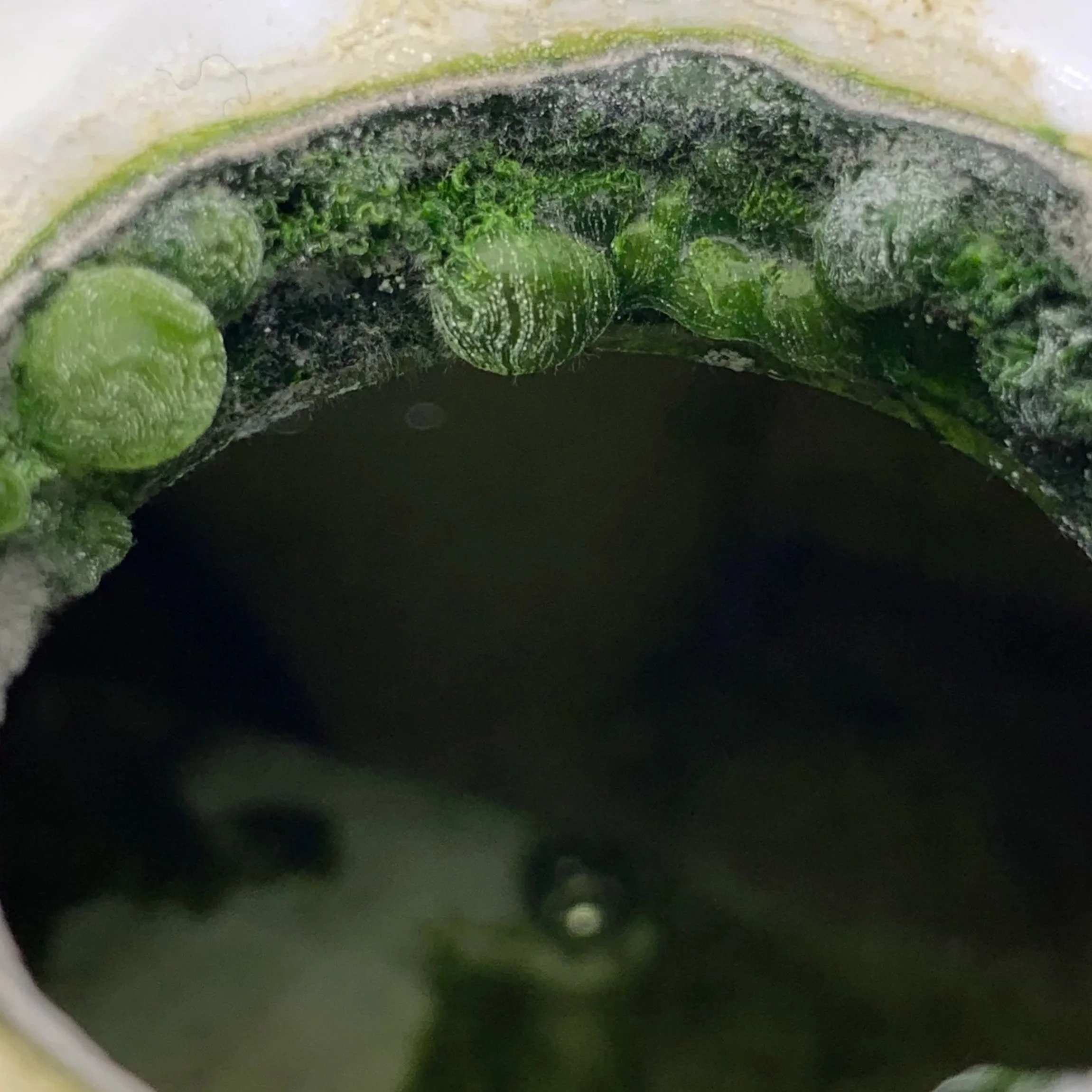
Okay, I have to admit… I kind of love this picture. 😂
It looks like something from a microscopic underwater world, but what you're actually looking at is algae growing around a hydroponic grow pod. Algae may be a nuisance in your garden, but sometimes you have to appreciate just how fascinating it can look!
Why Does Algae Grow in Hydroponic Systems?
The biggest culprit is usually light.
In a hydroponic system, your plants need light.
Your nutrient solution doesn't.
When light reaches nutrient-rich water, algae can take advantage of it.
☀️ 1. Light Is Reaching the Nutrient Solution
This is the big one.
Countertop hydroponic gardens are especially susceptible because their reservoirs often have openings around the grow pods.
Light can sneak through:
Empty pod openings
Gaps around grow baskets
Translucent reservoirs
Cracks or gaps in reservoir covers
Transparent tubing
Exposed portions of the reservoir
Even a small amount of light can contribute to algae growth over time.
💧 2. Your Nutrient Solution Contains Food for Algae
Hydroponic nutrients are designed to provide plants with the minerals they need.
Unfortunately, algae doesn't care whether the nutrients were intended for your lettuce.
If light and water are available, the nutrients in your reservoir can support unwanted growth too.
This is one reason algae can become particularly noticeable in hydroponic gardens compared with plain water.
🌡️ 3. Warm Conditions Can Encourage Growth
Many indoor hydroponic gardens operate in relatively warm environments.
Warm temperatures combined with light and nutrient-rich water can create favorable conditions for algae.
This doesn't mean your garden needs to be cold.
It means that temperature, light, water, and nutrients all interact, and controlling the light is often the easiest place to start.
CHECK OUT MY BOOK 🥰
👉 🇨🇦 [Buy on Amazon.ca]
👉 🇨🇦 [Buy on Indigo]
👉 🇺🇸 [Buy on Amazon.com]
👉 🇬🇧 [Buy at Hatchards]
👉 🇦🇺 [Buy at Booktopia]
How to Tell if It's Algae
Not everything green or slimy in a hydroponic system is necessarily the same thing.
Look at where it is growing, what it looks like, and how it feels.
🟢 Got Green Stuff?
Don't just scrub it away—figure out why it showed up.
Download the free Hydroponic Algae Quick-Fix Guide for a visual algae ID chart, step-by-step cleanup checklist, and simple prevention tips you can keep beside your hydroponic garden.
Get the Free Guide → Click here
Algae vs. Biofilm vs. Mold: What's the Difference?
Algae isn't the only thing that can show up in a hydroponic garden. Biofilm, mold, mycelium, root hairs, mineral buildup, and root problems can sometimes look surprisingly similar at first glance.
Color is one clue, but location and texture matter too.
If the growth you're seeing is white and fuzzy rather than green and slimy, check out my post White Fuzzy Stuff on Your Hydroponic Grow Pod? Don't Panic — It Might Be Mycelium.
If your roots themselves are turning brown, slimy, or developing an unpleasant smell, you'll want to investigate root health rather than assuming algae is the only issue.
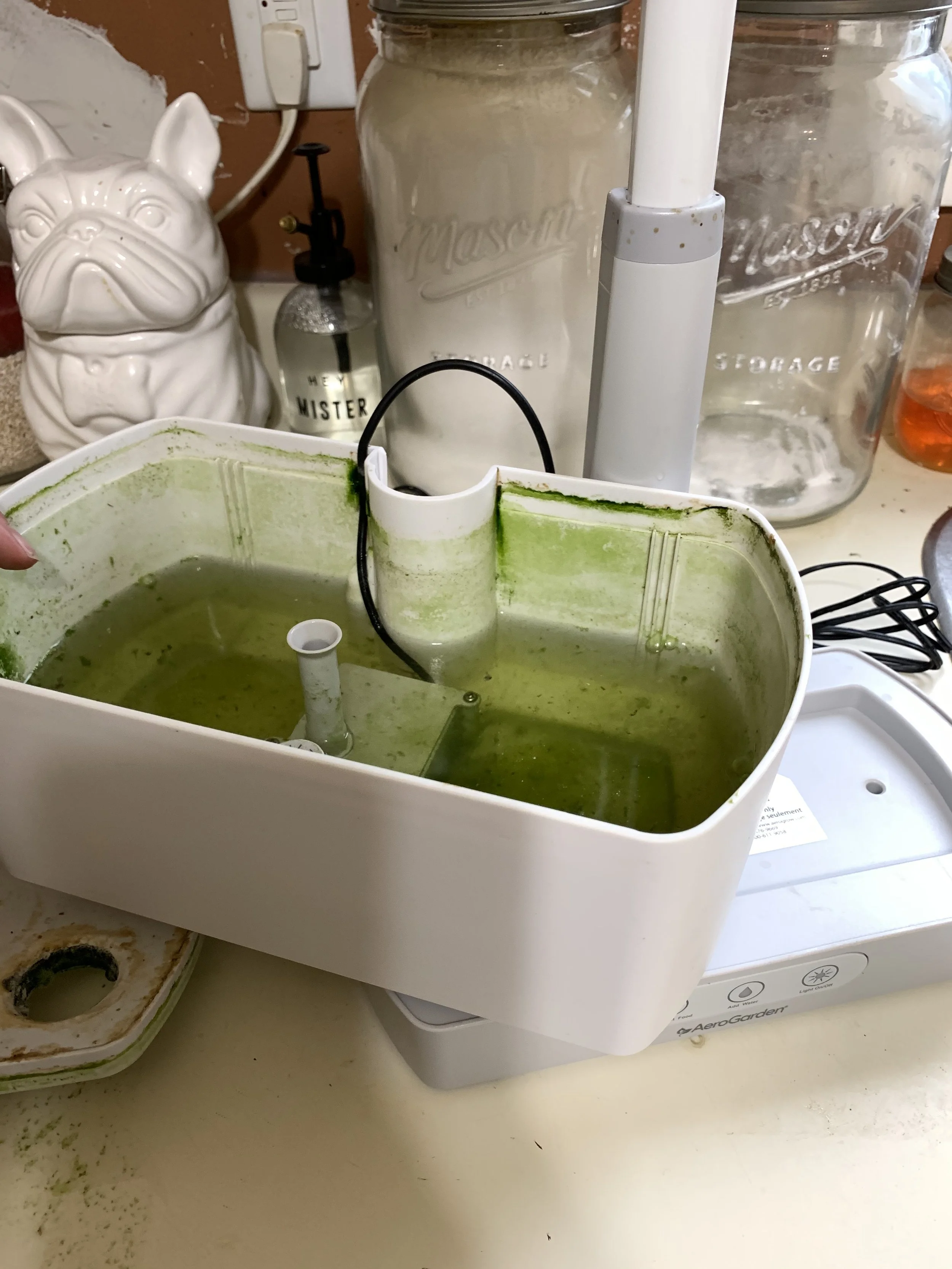
How to Get Rid of Algae in Your Hydroponic Garden
If you've confirmed that you're dealing with algae, don't just wipe off the visible green stuff and call it a day.
You want to clean the system and eliminate the conditions that allowed it to grow.
Step 1: Remove the Plants if Necessary
Depending on your system and how extensive the algae growth is, you may need to temporarily remove your plants, grow baskets, or pods.
Be gentle with the roots.
You don't want to turn an algae problem into a root-damage problem.
Step 2: Empty the Reservoir
Discard the old nutrient solution rather than trying to filter the algae out and continue using it.
This is a good opportunity to inspect the reservoir for:
Green film
Slime
Debris
Root pieces
Mineral buildup
Other unusual growth
Step 3: Clean the Reservoir and Components
Thoroughly clean the parts of the system where algae has accumulated.
Pay particular attention to:
Reservoir walls
Reservoir lid
Pump components
Tubing
Grow baskets
Pod openings
Any areas where water sits
Your goal is to remove the visible algae rather than simply covering it up.
Always follow your hydroponic system manufacturer's cleaning recommendations, particularly for pumps, tubing, electronics, and components that may be damaged by certain cleaners.
Step 4: Deal With the Light
This is arguably the most important step.
Ask yourself:
Where is the light getting into my nutrient solution?
Look closely at your system while the grow light is on.
Check:
☐ Empty pod openings
☐ Gaps around pods
☐ Reservoir covers
☐ Transparent components
☐ Exposed water surfaces
☐ Tubing exposed to strong light
If you clean everything but leave the light problem untouched, algae can return.
Step 5: Refill With Fresh Nutrient Solution
Once the system has been cleaned, refill it according to the manufacturer's instructions and your normal nutrient routine.
Don't compensate for an algae problem by simply adding extra nutrients.
More nutrients aren't the solution.
Less light reaching the nutrient solution is.
Should I Throw Away My Plant if It Has Algae?
Usually, not necessarily.
Finding algae in your system doesn't automatically mean your plant is contaminated beyond saving.
Instead, look at the overall condition of the plant and its roots.
Keep an eye out for:
Healthy-looking roots
Strong new growth
Wilting
Discolored roots
Slimy roots
Bad odors
Significant root damage
If the plant itself looks healthy and the problem is primarily algae growing on exposed surfaces, cleaning the system and preventing further light exposure may be enough.
If you also have smelly, slimy, deteriorating roots, that's a different situation and deserves closer investigation.
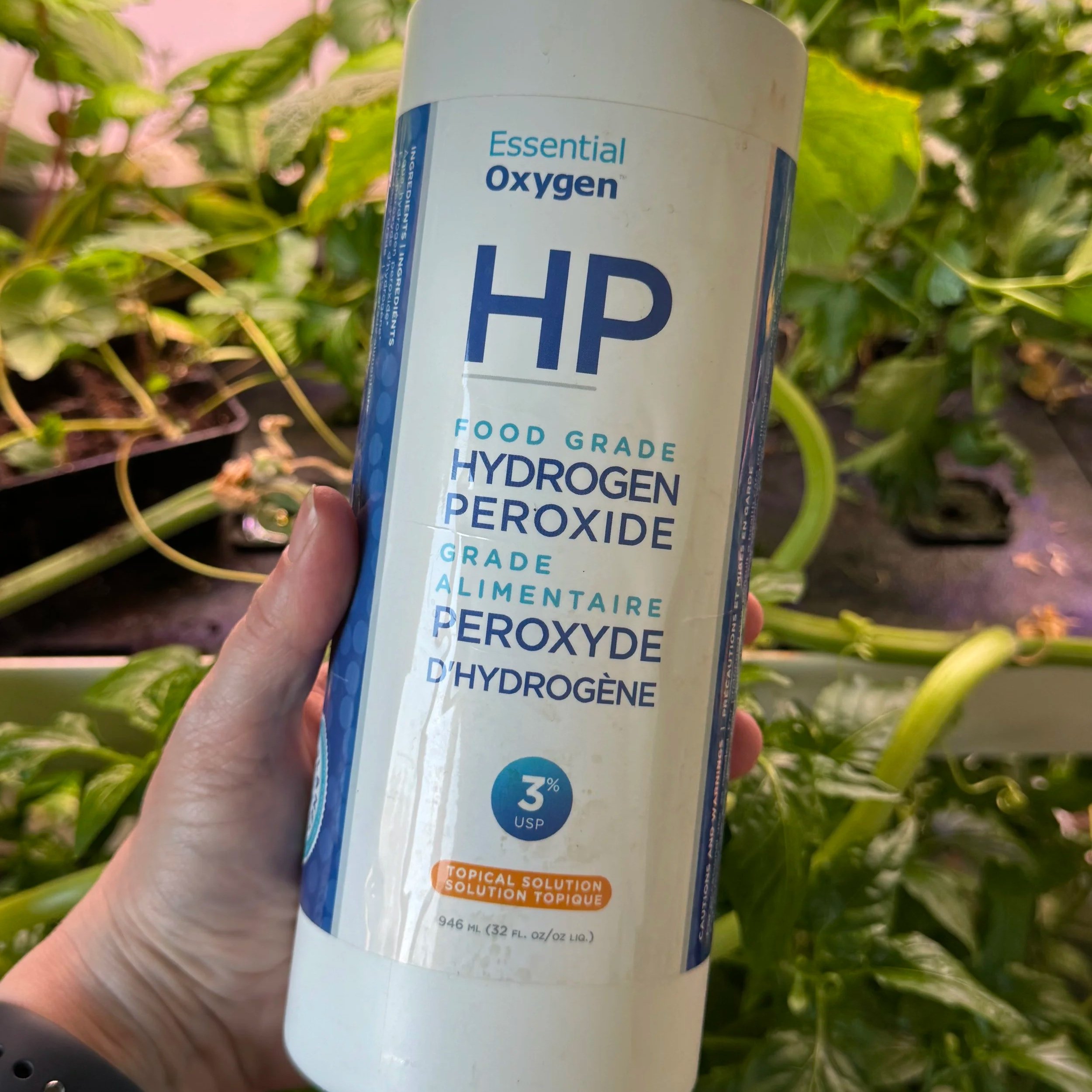
Make sure to use food grade hydrogen peroxide.
What About Hydrogen Peroxide?
You'll see hydrogen peroxide recommended frequently in hydroponic discussions as a way to deal with algae and other unwanted growth.
But I wouldn't make hydrogen peroxide your first line of defense.
Why?
Because if light is continuously reaching your nutrient solution, treating the algae without fixing the underlying problem doesn't solve the cause.
Think of it this way:
Hydrogen peroxide may address the symptom.
Blocking the light addresses one of the main causes.
If you choose to use any chemical treatment in your hydroponic system, follow the product directions and the recommendations of your system manufacturer.
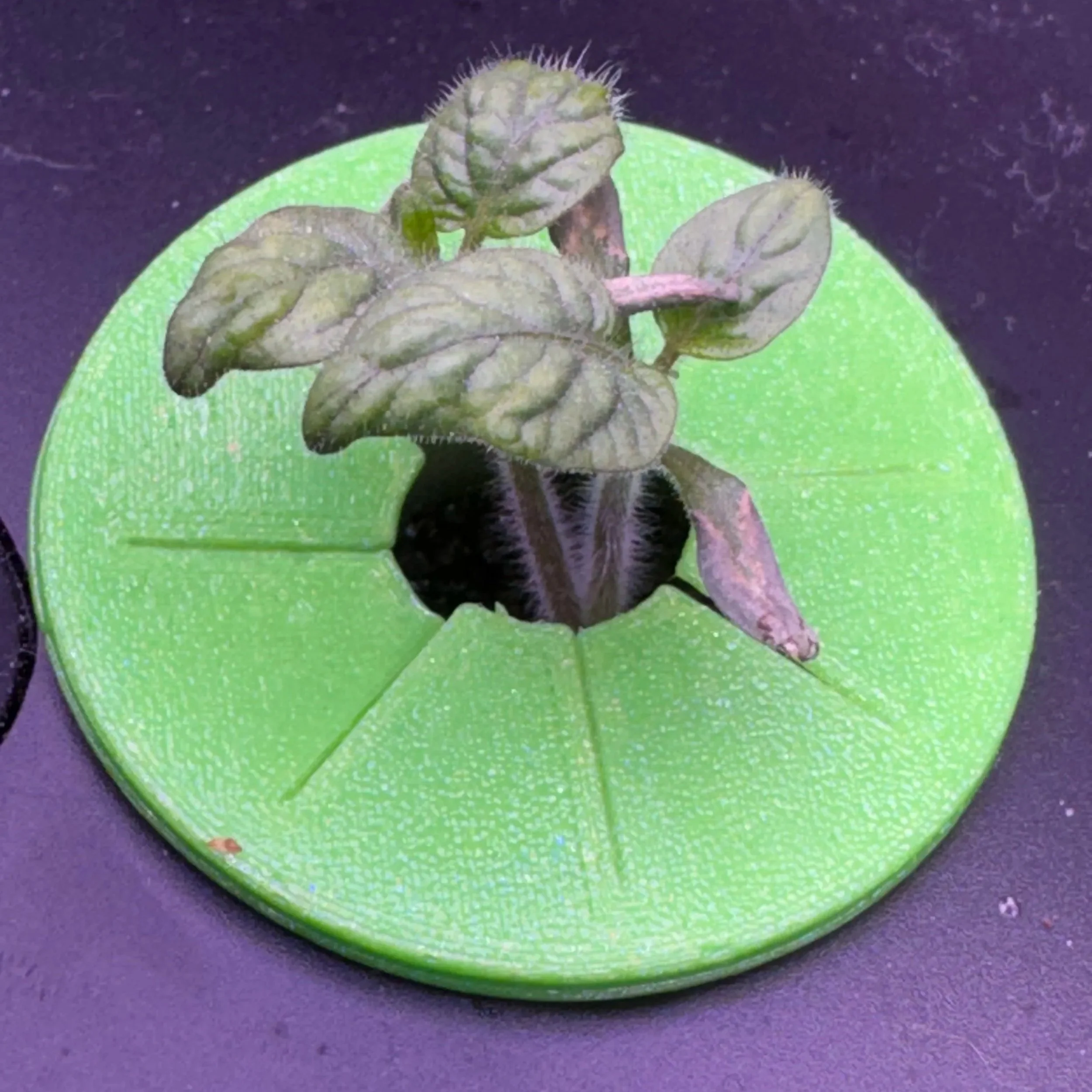
Keep them covered!
Covering the pods is key to keep the light out and helping to reduce the chance of algae taking hold.
How to Prevent Algae From Coming Back
Once you've cleaned your garden, prevention becomes much easier.
🌑 Block the Light
This is your biggest priority.
Your plants need light.
Your reservoir doesn't.
Keep nutrient solution in the dark whenever possible.
🧽 Keep Your System Clean
Don't wait until you have a huge algae buildup.
Regular cleaning helps prevent algae, mineral deposits, biofilm, and other buildup from becoming bigger problems.
Your cleaning schedule will depend on the system you're using and the manufacturer's recommendations.
🌱 Don't Leave Empty Pod Holes Exposed
This is especially important with countertop gardens.
If you aren't using every growing position, an open pod hole can allow light to reach the nutrient solution.
Use the appropriate covers or plugs for your system.
Why Does Algae Keep Coming Back?
If you've cleaned your hydroponic garden three times and the algae keeps returning, don't just keep cleaning it.
Look for the source.
Ask yourself:
Where is the light getting in?
Is there an uncovered pod opening?
Is the reservoir translucent?
Is light reaching exposed roots or water?
Are there areas inside the system that aren't being cleaned?
Is algae growing inside tubing or other hard-to-reach components?
Recurring algae is usually a sign that the conditions supporting it haven't changed.
Does Algae Mean My Hydroponic System Is Dirty?
Not necessarily.
Algae isn't necessarily a sign that you're doing something "wrong."
It's often simply the result of:
Light + water + nutrients = an opportunity for algae.
Even a well-maintained hydroponic garden can develop algae if the reservoir isn't adequately protected from light.
So don't beat yourself up if you find it.
Clean it, figure out where the light is getting in, and make the necessary changes.
How to Keep Algae Out of Different Hydroponic Systems
The exact solution depends on your garden.
Countertop gardens
These are particularly prone to algae because of exposed pod openings and small reservoirs.
Focus on:
Covering unused openings
Keeping the reservoir covered
Cleaning regularly
Checking for light leaks
Larger hydroponic systems
For larger systems, also inspect:
Reservoir lids
Tubing
Channels
Drip lines
Net pots
Areas where light reaches the nutrient solution
The basic principle remains the same:
Keep the nutrient solution dark.
What If I Find Algae Around the Roots?
This deserves a closer look.
Roots naturally grow in a wet environment, so it's possible to see algae growing where light reaches exposed roots.
But if you notice:
Brown or mushy roots
Slimy roots
Bad smells
Roots falling apart
Sudden wilting
then don't assume algae is the only problem.
You may be dealing with a root-health issue as well as algae.
That's when I'd stop thinking of the algae as the entire problem and start investigating the root environment.
The Bottom Line
Finding green slime or green water in your hydroponic garden can be alarming, but algae is usually a manageable problem.
The key is to remember that algae needs the right conditions to grow.
If you want to get rid of it:
🧽 Clean the system.
💧 Replace the nutrient solution.
☀️ Find and eliminate the light source.
🌑 Keep the reservoir dark.
And don't forget the most important part:
Don't just remove the algae. Remove the conditions that allowed it to grow.
Frequently Asked Questions
-
A small amount doesn't necessarily mean your plants are in immediate danger, but significant algae growth should be addressed because it can interfere with system cleanliness and plant health.
-
Green nutrient solution is commonly caused by algae growing in the water when light reaches the nutrient solution.
-
Yes. If roots are exposed to light, algae can grow on or around them.
-
Start by cleaning the system and preventing light from reaching the nutrient solution. Pay particular attention to unused pod openings and gaps around the grow deck.
-
No. Algae and root rot are different problems. However, algae can occur alongside other root-health problems, so inspect your roots for discoloration, slime, odor, and deterioration.
-
The presence of algae doesn't automatically mean the plant is unsafe to eat. However, you should identify the problem, clean the system appropriately, and follow good food-safety practices before harvesting.
-
The most common reason is that the conditions that allowed it to grow haven't changed—particularly light reaching the nutrient solution.
🟢 Got Green Stuff?
Don't just scrub it away—figure out why it showed up.
Download the free Hydroponic Algae Quick-Fix Guide for a visual algae ID chart, step-by-step cleanup checklist, and simple prevention tips you can keep beside your hydroponic garden.
Get the Free Guide → Click here
🌱 Final Thoughts
Remember, having an algae bloom does NOT mean you're a bad hydroponic gardener!
It's one of those things that can show up even when you're doing almost everything right. Hydroponic gardens give plants exactly what they need to grow—and unfortunately, sometimes they give algae exactly what it needs too. I have been growing hydroponically for years, and every now and then, algae gets the better of me too.
Green water isn't just something to scrub away. It's a clue that light is reaching somewhere it shouldn't. If you fix that underlying issue, you're much less likely to find yourself cleaning the same green slime again next week.
One of my favorite things about hydroponic gardening is that there's always something to learn. You will occasionally find something weird, unexpected, or downright alarming in your garden. Don't panic. Take a closer look, figure out what you're actually seeing, and then work backward to find out why it's happening.
That's how you go from simply growing plants to becoming a better indoor gardener. And isn't that what we're striving for? Learn. Get better. Grow more.
And if you find something strange in your hydroponic garden that you can't identify, take a picture before you start cleaning it up. Sometimes the weird stuff makes the best gardening lessons. 😉