White Fuzzy Stuff on Your Hydroponic Grow Pod? Don’t Panic 😱
You check on your hydroponic garden and suddenly notice something white and fuzzy growing on your grow pod.
Cue the panic. Is that mold?!
Before you throw out the plant, replace the grow pod, dump your reservoir, and start disinfecting your entire hydroponic garden, take a breath.
That white fuzz might be fungal growth. But it could also be something completely normal—like root hairs.
And even if it is fungal growth, that doesn't automatically mean your plant is sick.
The trick is learning how to tell what you're actually looking at.
In this article, we'll look at three common possibilities:
🌱 Root hairs — normal plant growth
🍄 Mycelium — fungal growth that may simply be colonizing the moist grow pod
🧂 Salt or nutrient buildup - crusty white buildup on grow pods or other places in the system.
⚠️ Potentially problematic fungal growth — growth accompanied by signs that your plant is actually in trouble
I'll also show you how you can use a small hydrogen peroxide test as an additional clue—and, just as importantly, explain why that test can't actually diagnose mold.
First: Not Everything White and “Fuzzy” Is Mold
This is probably the most important thing to understand.
When you're growing plants hydroponically, you're working with a warm, moist growing environment. Your grow pod contains organic material, moisture, and plenty of nutrients for microorganisms to take advantage of.
So it's not unusual to see things growing in and around the pod.
And sometimes what looks like mold is actually part of the plant itself.
That's exactly what is happening in the photo below.
🌱 Example #1: Root Hairs
Those tiny white hairs are root hairs. Root hairs are normal structures produced by young roots. They increase the surface area of the root, helping the plant absorb water and nutrients. And when you're looking at a tiny seedling emerging from a dark grow pod, those hairs can look surprisingly fuzzy.
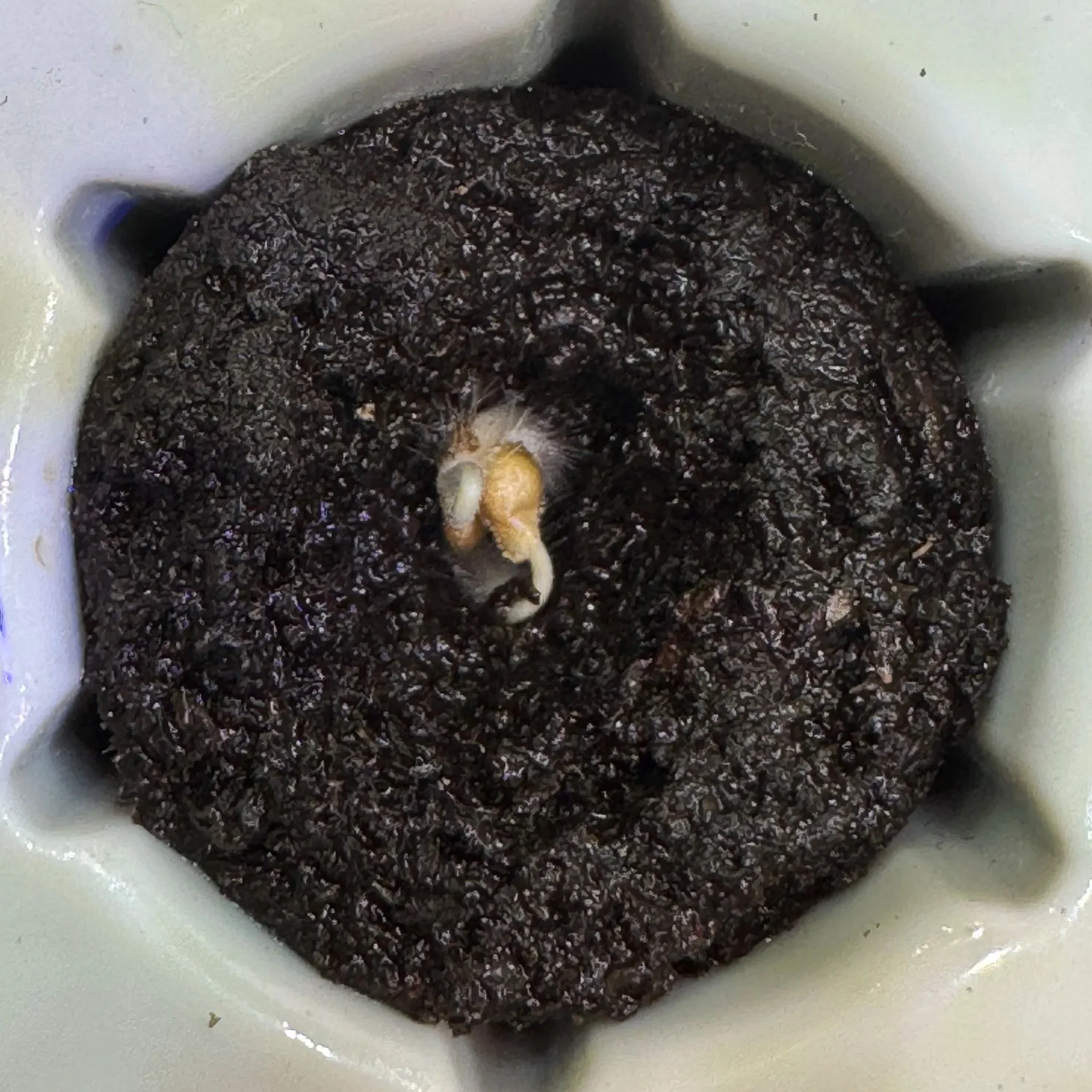
Those fine white hairs surrounding the emerging root are root hairs—not mold. Notice how the hairs are concentrated around and attached to the developing root..
How to recognize root hairs
Look at where the fuzz is located.
If the white hairs are:
Attached directly to the root
Concentrated around the developing root
Following the shape of the root
Appearing as the root develops
…you're probably looking at root hairs, not fungus.
This is one reason I don't want you to automatically assume that every bit of white fuzz on a grow pod is mold.
Check out my book
👉 🇨🇦 [Buy on Amazon.ca]
👉 🇨🇦 [Buy on Indigo]
👉 🇺🇸 [Buy on Amazon.com]
👉 🇬🇧 [Buy at Hatchards]
👉 🇦🇺 [Buy at Booktopia]
🍄 Example #2: Mycelium
Now let's talk about the other possibility.
Mycelium is the network of thread-like structures produced by fungi. When it grows through or across a moist growing medium, it can look like white fuzz, cotton, cobwebs, or fine threads.
And yes—this is technically fungal growth.
But here's the important part:
Fungal growth does not automatically mean your plant has a fungal disease.
Fungi are everywhere. Your hydroponic garden isn't a sterile laboratory, and your grow pod is a particularly attractive environment for microorganisms because it's warm, moist, and contains organic material.
White fungal growth on the surface of moist seed-starting media is a common occurrence, and extension experts note that it is often associated with overly wet growing media. By itself, it isn't necessarily a problem.
What can mycelium look like?
You might see:
Fine white threads
Cottony white fuzz
A web-like appearance
White growth spreading across the surface of the pod
Fuzz concentrated around the moist portion of the growing medium
The appearance can vary quite a bit, so color alone isn't enough to identify it.
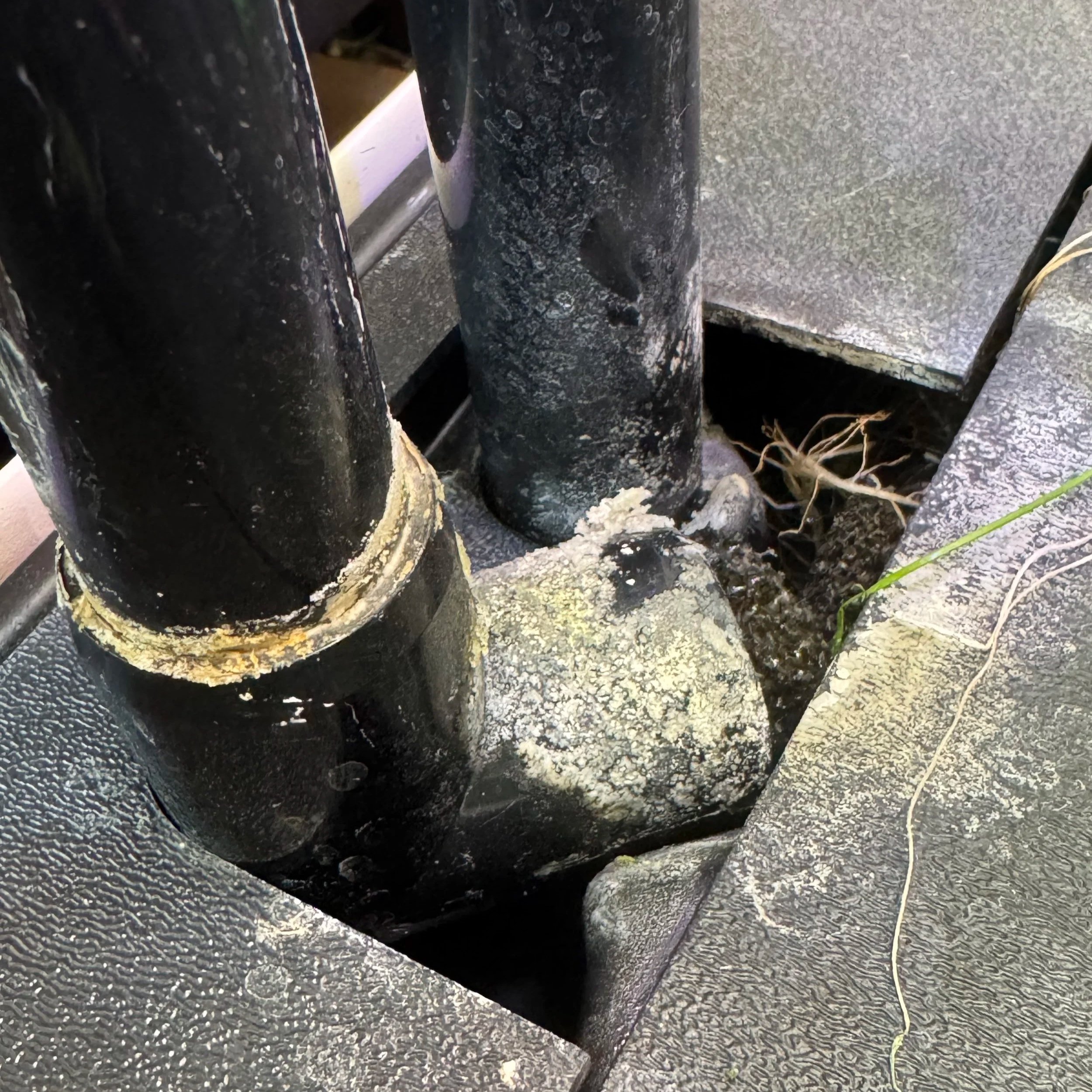
Nutrient buildup on my system.
🧂 Example #3: Mineral & Nutrient Salt Buildup
Not everything white is alive. Sometimes that mysterious white stuff is simply mineral or nutrient salt buildup left behind as water evaporates.
If you're using tap water, especially hard water, it naturally contains dissolved minerals such as calcium and magnesium. Your hydroponic nutrients also contain dissolved mineral salts. As water evaporates from the reservoir, grow pod, or growing medium, those dissolved minerals don't evaporate with it—they can be left behind as a white, powdery, flaky, or crusty residue.
You may notice it around:
The waterline of your reservoir
The top of a grow pod or net pot
The surface of growing media
Areas where nutrient solution splashes
Wicks, tubing, or other places where water regularly moves and evaporates
How can you tell?
Mineral deposits tend to look more crusty, powdery, or crystalline than fuzzy when you get a close look. They also tend to stay where water has been evaporating rather than spreading across a surface like fungal growth might.
If you wipe it away and it leaves a chalky or powdery residue, mineral buildup is a good possibility.
Why does it happen?
The more minerals your water contains, the more residue it can leave behind. Nutrient solution that becomes more concentrated as plants use water can also contribute to salt buildup.
This doesn't necessarily mean anything is wrong with your plant. However, significant buildup is a good reminder to keep an eye on your water quality, nutrient concentration, and cleaning routine.
So before you assume that mysterious white stuff is mold or fungus, take a closer look. Sometimes your hydroponic garden is simply leaving you a little reminder of what's dissolved in your water.
😩 Weird White Stuff?
Don't just scrub or wipe it away—figure out why it showed up.
Download the free What Is That White Stuff? Guide for a quick visual ID chart, simple checklist to help you figure out what you're seeing, and practical tips for knowing when to leave it alone, clean it up, or investigate further.
Get the Free Guide → Click here
⚠️ Example #4: When You Should Actually Be Concerned
Here's where I want you to pay attention.
The question isn't simply: “Is there fungus?”
The better question is: “Is the plant showing signs that something is wrong?”
Certain fungal diseases can produce white, cottony growth, particularly under humid conditions. But they are generally accompanied by other symptoms such as wilting, tissue damage, stem lesions, rot, or plant decline.
So don't just look at the fuzz. 🔎🌱 Look at the plant.
🚨 Warning signs include:
The seedling is collapsing
The stem is becoming dark, brown, or black
The stem is soft or pinched at the base
The plant is suddenly wilting
Roots are brown, mushy, or deteriorating
The plant is turning yellow and declining
There's a foul or rotten smell
The growth is rapidly spreading over diseased or dying plant tissue
If you have white fuzz plus a seedling that's collapsing, that's a very different situation from a healthy seedling with a little fuzzy growth on the surface of its pod.
For example, damping-off diseases can cause seedlings to develop darkened stems at the soil line, wilt, and collapse.
What About the Hydrogen Peroxide Test?
Okay, here's where things get interesting.
You've probably seen people recommend putting 3% hydrogen peroxide on the white fuzzy growth to determine whether it's mold or mycelium.
There is some science behind the bubbling reaction—but there's also a lot of misinformation about what the test actually tells you.
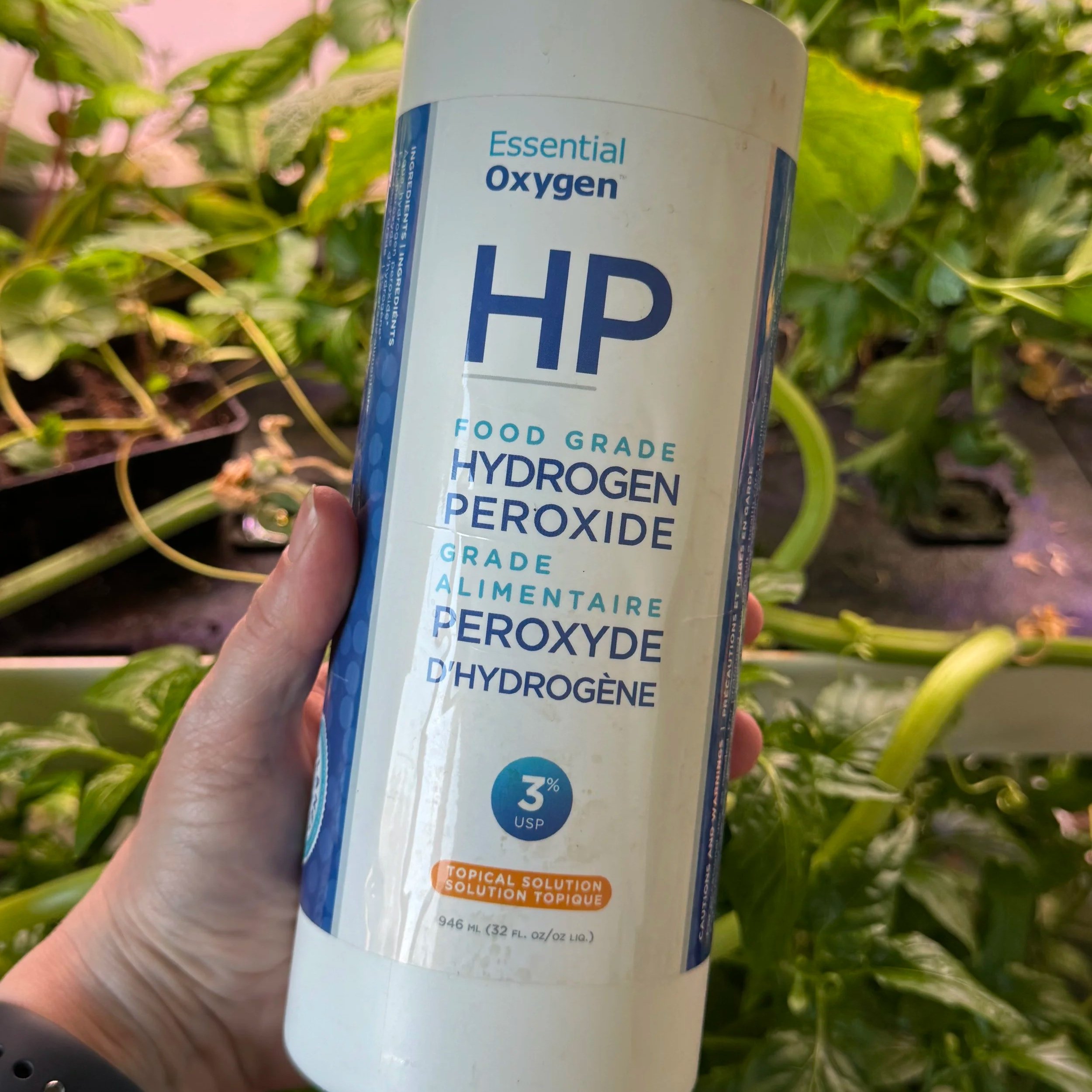
I always make sure I am using FOOD GRADE hydrogen peroxide.
Here's the important distinction:
Hydrogen peroxide bubbling does NOT tell you “this is mold” or “this is mycelium.”
In fact, those aren't really two mutually exclusive categories.
Mycelium is the thread-like body of a fungus, while “mold” is a general term for certain types of fungi.
A hydrogen peroxide bubbling reaction is related to an enzyme called catalase. In laboratory testing, hydrogen peroxide is used to test for catalase activity; a rapid bubbling reaction indicates that oxygen is being released.
So if you see bubbling on your grow pod, it means something in that material is reacting with the hydrogen peroxide.
It does not identify the species—or even reliably tell you whether the fungus is harmful.
So why include the test?
Because it can still be a fun and useful observation experiment for curious growers.
Just don't treat it as a definitive mold detector.
How to Do a Hydrogen Peroxide Test
If you want to try the test, use 3% hydrogen peroxide and test only a very small area.
What you'll need:
3% hydrogen peroxide (Food Grade)
A dropper or cotton swab
The suspicious white growth
A healthy dose of curiosity
Step 1: Don't soak the whole pod
Choose a small section of the white growth.
You don't need to pour hydrogen peroxide all over the plant.
Step 2: Add one small drop
Place a small drop of 3% hydrogen peroxide directly onto the suspicious material.
Step 3: Watch what happens
Look for an immediate reaction.
You may see:
Fizzing or bubbling: This indicates oxygen being released as hydrogen peroxide breaks down. That's consistent with catalase activity, but it doesn't identify the organism.
Little or no visible reaction: That simply means you didn't see a strong bubbling reaction under these conditions. It doesn't prove that the material isn't fungal.
The important takeaway:
Don't use the peroxide test as your final diagnosis.
Think of it as an interesting clue—not a fungal identification test. And don't repeatedly drench your living plant or roots with hydrogen peroxide just because you found something fuzzy. Hydrogen peroxide is an oxidizing agent and can damage living tissues depending on concentration and exposure.
So How Do You Figure Out What You Have?
Instead of relying on one test, use your Three-Question Check.
1. Where is it?
Is it attached to a root?
Think root hairs.
Is it spreading across the surface of the grow pod?
Think fungal growth/mycelium.
Is it growing directly on damaged plant tissue?
Investigate further.
2. What does the plant look like?
This is probably your most important clue.
Healthy plant + white fuzz = Don't panic. A healthy seedling with some surface fungal growth isn't automatically in trouble.
Sick plant + white fuzz = Pay attention. If the seedling is wilting, collapsing, developing dark stem tissue, or developing mushy roots, the fungus may be associated with a genuine plant health problem.
3. What's happening in the growing environment?
White fungal growth is more likely when conditions stay very wet and humid.
University of Maine Cooperative Extension recommends adjusting watering, improving air movement, and avoiding conditions that keep growing media excessively wet when dealing with common surface fungal growth around seedlings.
So take a look at your setup.
Is your humidity dome still on?
Humidity domes are useful during germination, but once seedlings emerge, you don't want to keep them in a permanently humid, stagnant environment. So once you see some leaves it is time to remove the domes.
Is the pod constantly soaked?
The goal isn't to dry out your hydroponic pod.
But there's a difference between moist and perpetually wet with no airflow.
Is there any air movement?
Gentle airflow can help keep the surface environment from becoming excessively humid and stagnant. It is always a good idea to have a small oscillating fan to help move air around your plants. Keep in mind we only need a gently breeze! It also helps to build stronger stems as your plants grow!
What Should You Do If It's Just White Fungal Growth?
If your seedling is healthy and you're seeing a small amount of white fungal growth on the surface of the pod, you don't necessarily need to throw the whole thing away.
Start with the environment.
Improve airflow
Give the seedlings some gentle air movement.
Reduce excessive humidity
If you're still using a humidity dome after germination, consider whether your seedlings still need it.
Avoid unnecessarily wet conditions
Don't deliberately let the pod dry out completely, but avoid creating a perpetually saturated, stagnant environment.
Monitor the plant
This is the big one.
If your seedling keeps growing normally, that's reassuring.
If it starts declining, investigate.
Newbie Mistake: Panic at the First Sign of Fuzz
I get it. You see white fuzz on your beautiful little hydroponic seedling and your brain immediately goes: MOLD.
But that's not enough information. The same white appearance can represent very different things.
It could be root hairs.
It could be fungal mycelium growing on the pod.
It could be salt or mineral buildup.
Or it could be fungal growth associated with a plant disease.
The appearance is only one piece of the puzzle.
Location + plant health + environment will tell you much more.
Frequently Asked Questions
-
Not necessarily. It could be root hairs, fungal growth such as mycelium, or another type of microbial growth. Look at where the fuzz is growing and whether the plant is showing signs of disease.
-
Root hairs are tiny, fine structures that grow directly from roots. On young seedlings they can make a developing root look fuzzy or hairy.
-
Not exactly. Mycelium is the network of thread-like structures produced by fungi. “Mold” is a general term for certain fungi that grow as multicellular filaments. So saying a peroxide test determines whether something is “mold or mycelium” is an oversimplification.
-
No. Hydrogen peroxide bubbling can indicate catalase activity, but it isn't a reliable way to identify a fungus or determine whether fungal growth is harmful. Laboratory catalase tests use hydrogen peroxide specifically to observe this bubbling reaction.
-
If the plant is healthy and the growth is limited to the surface of the growing medium, you don't necessarily need to throw away the pod. Start by improving airflow and avoiding excessively wet, stagnant conditions, then monitor the plant. If you do want to remove it then you can do so gently using a Q-tip.
-
Be more concerned when the growth is accompanied by a declining plant, dark or damaged stems, wilting, mushy roots, foul odors, or rapidly spreading growth. Some plant diseases produce white fungal growth along with tissue damage and plant decline.
-
Mineral deposits from tap water and nutrient salts can accumulate as water evaporates, particularly with hard water or concentrated nutrient solutions.
-
Root hairs are attached directly to the roots and look like very fine individual hairs. Mycelium tends to look more like interconnected threads or cottony growth on the growing medium or other surfaces.
🌱 Final Thoughts
The next time you look at your hydroponic grow pod and think: “OH NO. WHAT IS THAT WHITE FUZZ?!”
Don't panic. 👀 Look closer.
If the fuzz is attached to the root, you may simply be looking at root hairs.
If it's spreading across the moist growing medium, you may be seeing fungal mycelium.
And if the plant itself is declining, that's when you need to start looking for a genuine plant health problem.
The goal isn't to keep your hydroponic garden completely sterile. The goal is to understand what you're seeing so you know when to act—and when to leave your plant alone.
And honestly?
Sometimes that scary-looking white fuzz is just your tiny plant doing exactly what it's supposed to do.
😩 Weird White Stuff?
Don't just scrub or wipe it away—figure out why it showed up.
Download the free What Is That White Stuff? Guide for a quick visual ID chart, simple checklist to help you figure out what you're seeing, and practical tips for knowing when to leave it alone, clean it up, or investigate further.
Get the Free Guide → Click here