🥬 How to Grow Lettuce Hydroponically: The Complete Beginner's Guide
If there is a gateway crop into growing hydroponically it has to be lettuce. It grows so incredibly well in a hydroponic environment, it is a vegetable that most people use on a frequent basis and it can keep producing for multiple harvests. All of this strongly stacks the deck in favour of growing it indoors year round rather than having to run to the grocery store all the time for a lettuce that has been dragged across the country (or countries) before it takes a place on your dinner plate. There is never a bad time to start growing your own lettuce, especially with all the news stroes about people getting sick from grocery store lettuce or the big cyclospora lettuce crisis of 2026.
Disclosure: Some of the links below are affiliate links, meaning, at no additional cost to you, I will earn a commission if you click through and make a purchase.
Quick Facts
| 🌱 Attribute | Details |
|---|---|
| ⭐ Difficulty | Beginner |
| ⏱️ Germination | 2–7 days |
| 🥬 First Harvest | 30–45 days |
| 💡 Light | 12–16 hours full spectrum LED |
| 🌡️ Temperature | 15–22°C |
| ⚗️ pH | 5.5–6.5 |
| 💧 EC | 0.8–1.4 |
| 🌸 Pollination | Not Required, unless you want to save seeds |
| 🪴 Best Systems | Any system, including Kratky |
| ✂️ Harvest Style | Cut-and-come-again or whole-head harvest |
What is Lettuce?
Lettuce (Lactuca sativa) is one of the easiest and most rewarding leafy greens to grow, making it a favorite among both beginner and experienced hydroponic gardeners. There are several types of lettuce, including loose-leaf, romaine (cos), butterhead, and crisphead, each offering different textures, flavors, and growth habits. One of the biggest advantages of growing lettuce hydroponically is its fast growth rate—many varieties are ready for their first harvest in as little as 3 to 5 weeks.
Because lettuce thrives in cool temperatures and has relatively low nutrient requirements, it adapts exceptionally well to indoor hydroponic systems. With the right light, nutrients, and growing conditions, you can enjoy a continuous supply of fresh, pesticide-free lettuce year-round, regardless of the season outside.

Check out my book!
👉 🇨🇦 [Buy on Amazon.ca]
👉 🇨🇦 [Buy on Indigo]
👉 🇺🇸 [Buy on Amazon.com]
👉 🇬🇧 [Buy at Hatchards]
👉 🇦🇺 [Buy at Booktopia]
Benefits of Growing Lettuce Hydroponically
The main benefit is having year-round lettuce! But on top of that you will find that lettuce grown hydroponically grows fast, like really fast. Additionally, you don’t have to worry about things like weeding, soil-borne diseases and pests. That is not to say that pests will NEVER occur when growing indoors hydroponically but they are much less likely. I have found that I prefer the taste of the lettuce grown hydroponically to that grown outside, but then again I am weird. I also find it is a great way to free up space in my outdoor garden for the things that I can’t grow indoors hydroponically. That way I allow more space for delicious sun-ripened tomatoes, potatoes, onions to grow outdoors while growing pant-loads of lettuce inside. But ultimately, the benefits of growing lettuce hydroponically are less about growing indoors vs outdoors and more about having it all year and not having to go to the grocery store!
Best Hydroponic Systems
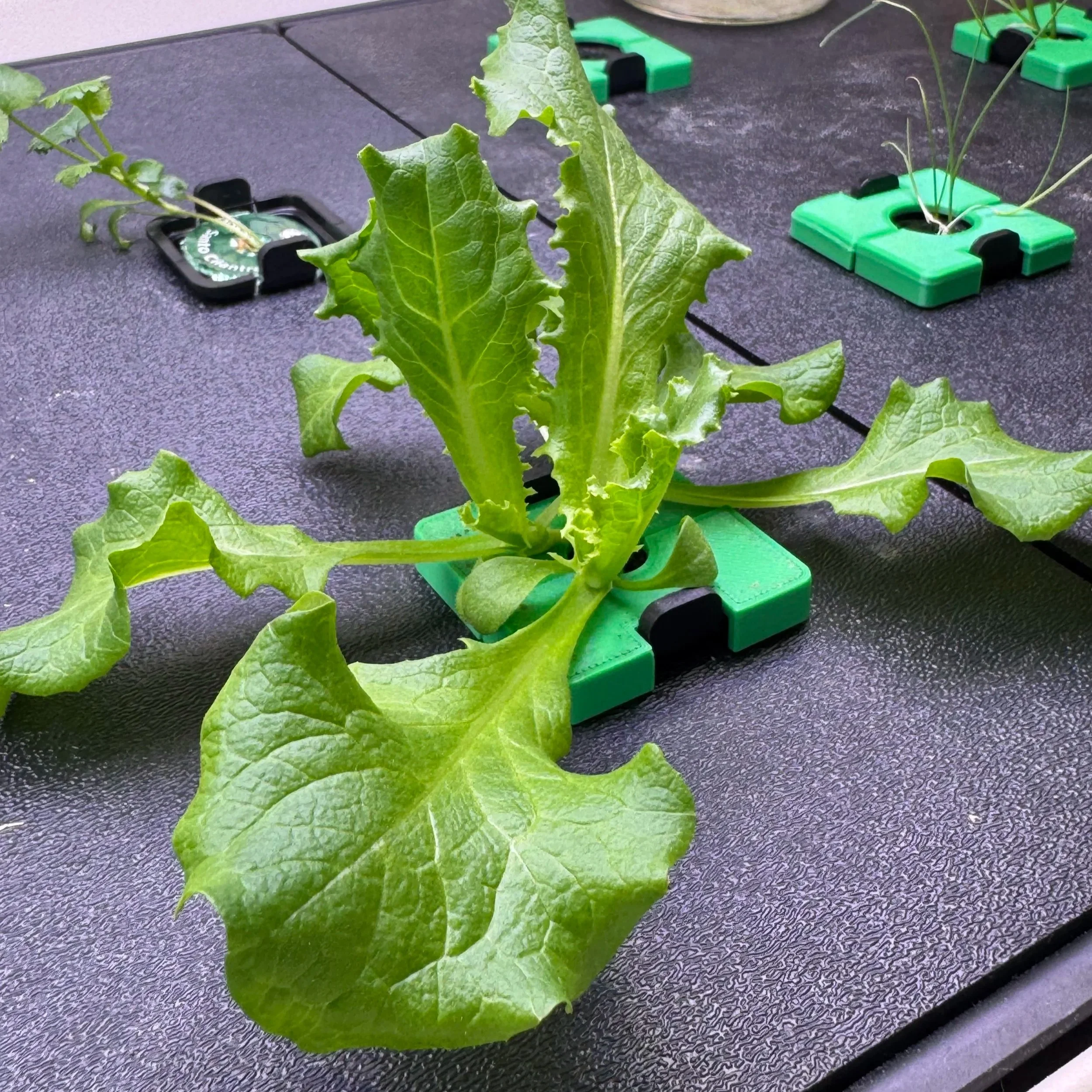
Lettuce is great and will grow in any hydroponic system, you can even use a Kratky setup and grow some awesome lettuce.
Best Lettuce Varieties
Truthfully there isn’t really a best variety for growing hydroponically in my opinion as they all grow so damn well. So instead I will share some of my favourite varieties that I have grown indoors. These are my go-tos that I grow time and time again!
Buttercrunch
Lolla Rossa
Tropicana Greenleaf
Ilema (loose leaf)
Little Gem
Tom Thumb
Ice Queen
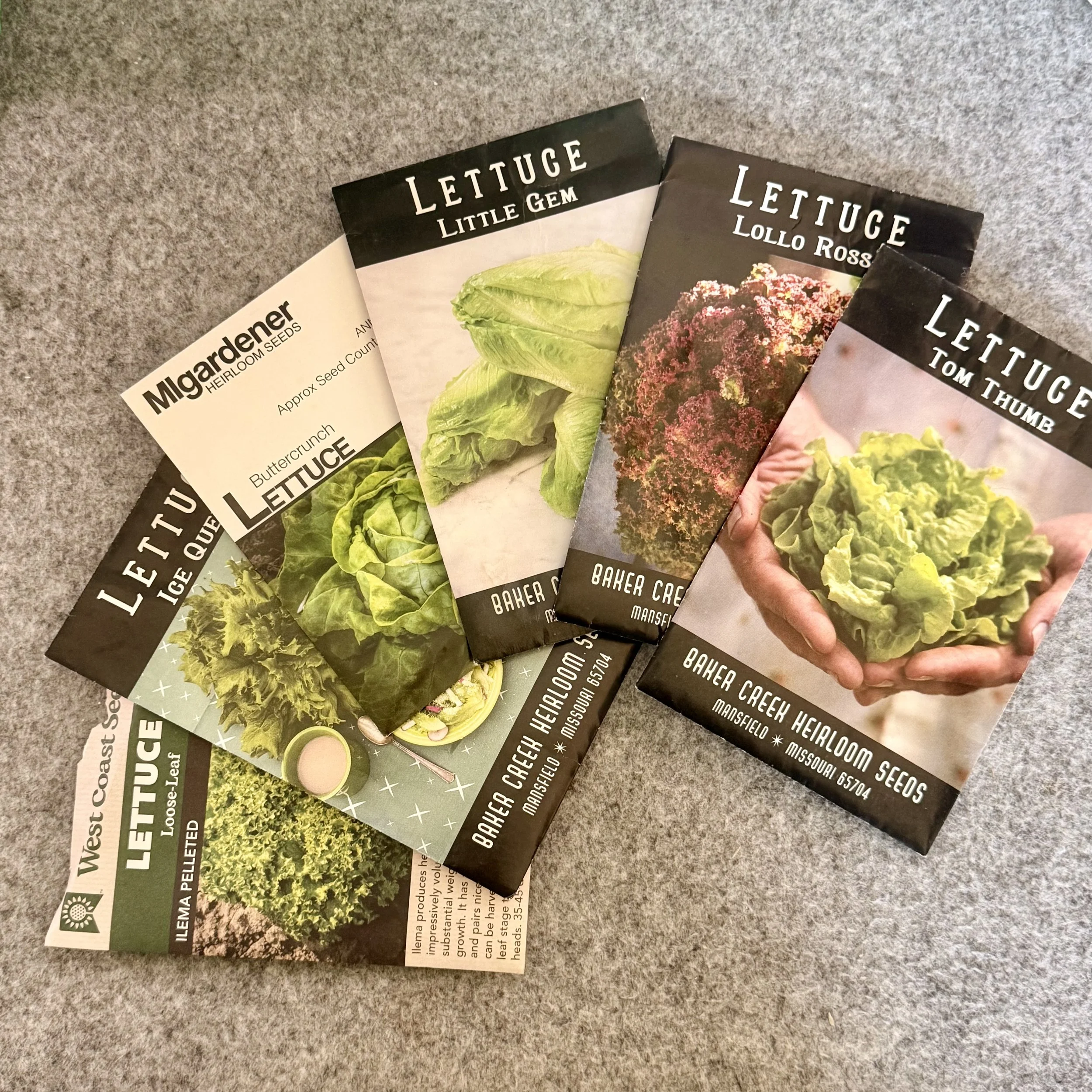
There are so many different varieties of lettuce!
I source a lot of my seeds from Baker Creek Heirloom Seeds — I love them as they have so many heirloom varieties, and they carry varieties you genuinely won’t find anywhere else. Some other great places are West Coast Seeds, Renee’s Garden and MI Gardener. There are SO many varieties, and I am the proud owner of 19 different kinds!
Starting Lettuce from Seed
There are no special tricks (that I have come across) when starting lettuce from seed. What I will mention is that the seeds are small and very light, the breeze from a fan or a sneeze can send them flying! You can find lettuce seeds that are pelleted, which just means they are covered in a layer of clay. This makes them much easier to see and handle. This is especially useful when planting outside as you can easily see the seeds and space them out as required. When growing hydroponically this is not as necessary, but can make them a little less daunting for new growers.
Place grow baskets into your hydroponic system
Add 2–3 lettuce seeds per seed pod
Set the pod in the basket and cover with a grow dome (to help them germinate)
Watch for sprouts within 4–10 days
Remove domes before seedlings run the risk of touching them (this could burn delicate leaves)
Once the plants start growing and before they get too big, find the strongest seedling and remove any others. You just want one lettuce per pod.
Whether you use pelleted seeds or not, the most important thing is to thin the plants down to one per pod after the seeds germinate and have grown a bit. Just select the one that looks healthiest to you. I used to not thin, thinking I would get “more” but truthfully after I tried thinning I found the plants grow so much better.
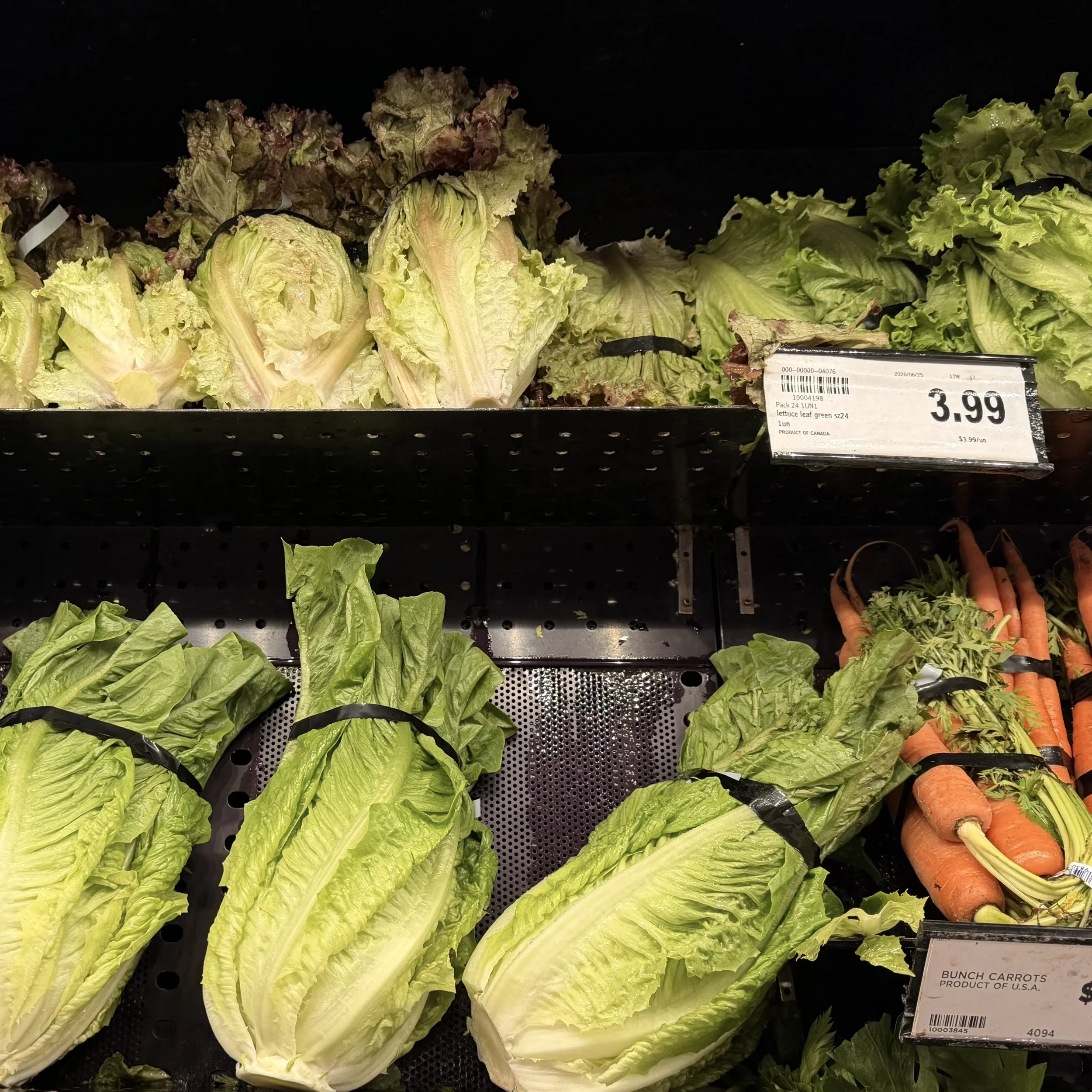
A single grocery store lettuce costs as much as a pack of lettuce seeds that can have HUNDREDS of potential lettuces in it!
Target Growing Conditions
Lighting: 12–16 hours/day, using full-spectrum LEDs
EC: 0.8-1.2
pH: 5.5-6.5
Temperature: 10-22C (50-72F)
Harvesting & Maintaining Lettuce
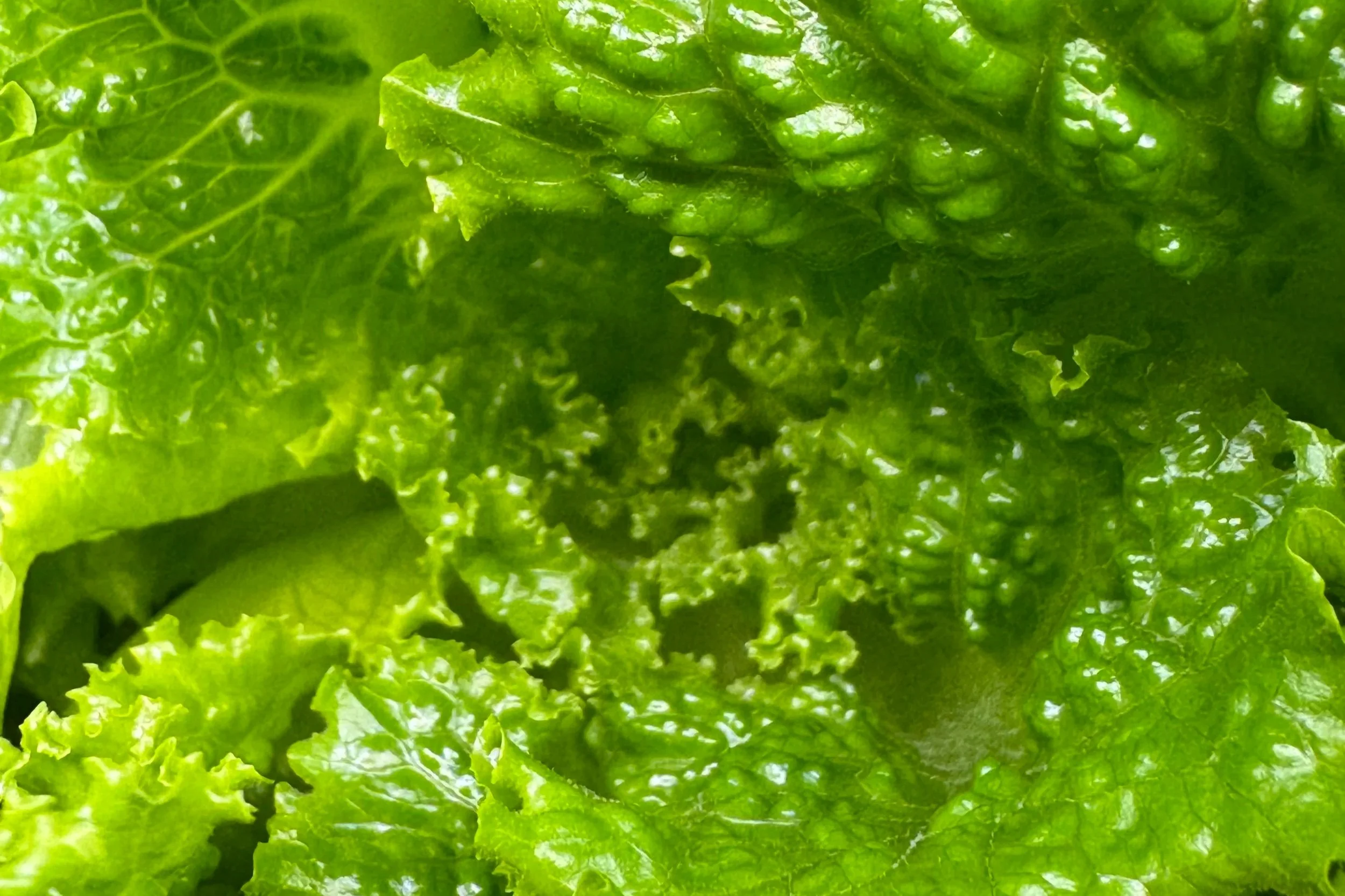
Lettuce is an easy crop to grow, it doesn’t require different nutrient mixes for different stages of growth, it doesn’t need taking or pollination. This makes it perfect for any new gardeners, whether they are growing indoors or outside. It absolutely thrives in a hydroponic environment which is another huge plus.
When to start harvesting: Lettuce takes about 30-45 days to reach maturity, but normally you can start harvesting sooner than that as long as you don’t take too much.
How to harvest (Three methods):
When it comes to harvesting lettuce, you have a few methods to choose from.
Harvest outer leaves:
This is my preferred method of harvesting. I just remove the outer leaves as I need them. This is great because the outer leaves are the most mature and it leaves the inner new leaves alone to continue developing. This method does also allow you to place more plants in the system as long as you stay on top of the harvesting so that it doesn’t get too crowded!
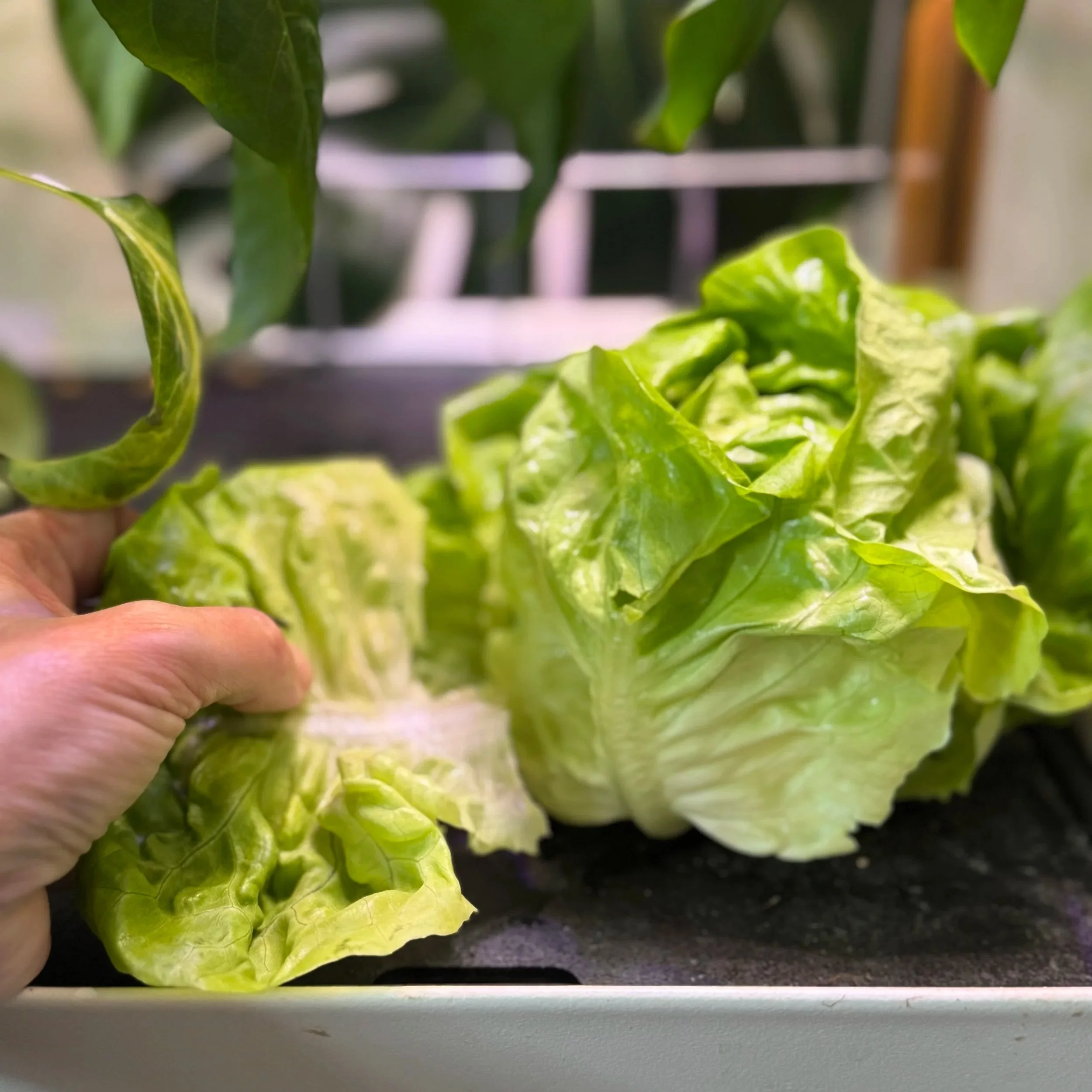
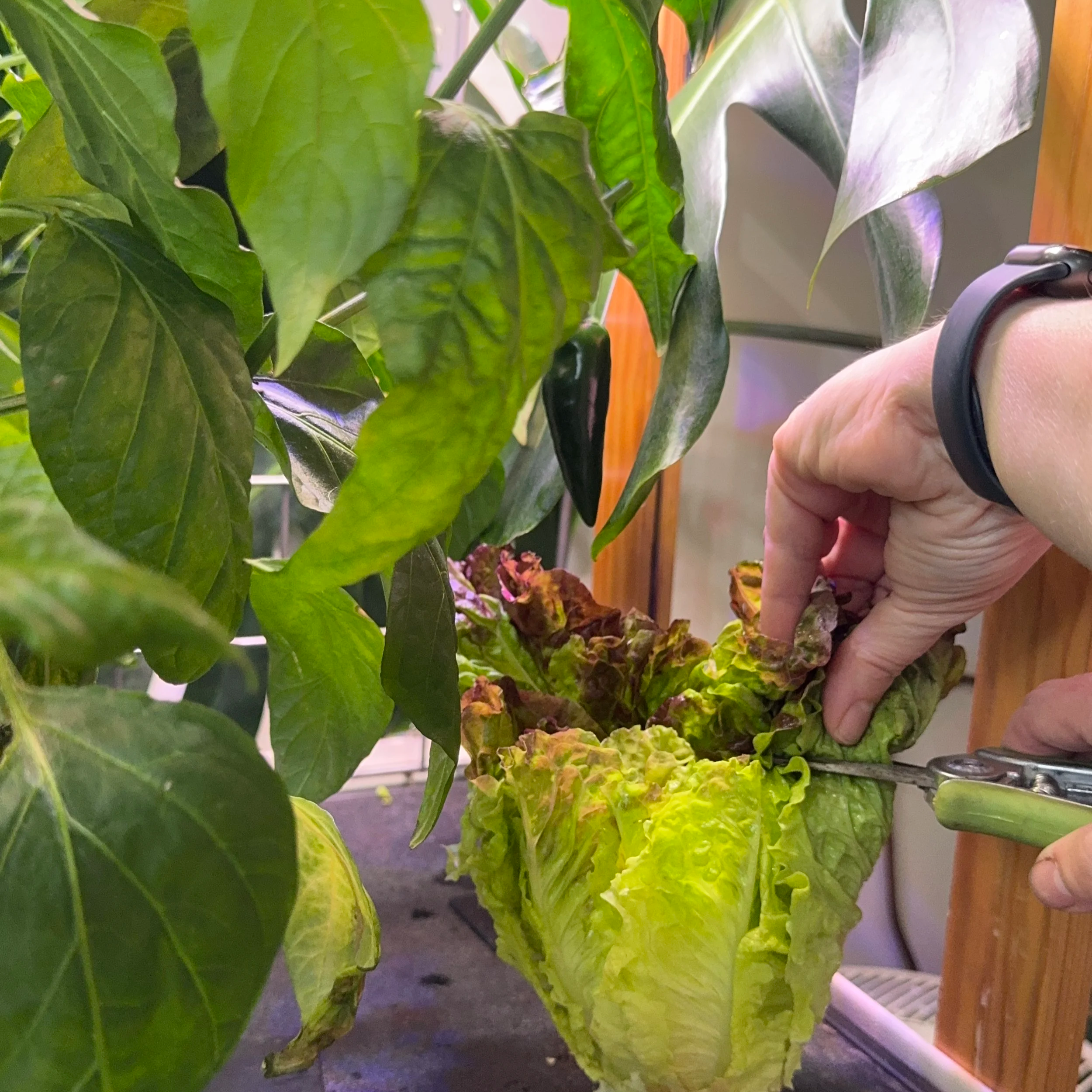
Haircut Method:
With this method you basically grab the tops of the leaves and cut below (giving it a “haircut”) to get what you need. Just make sure that you don’t remove more than 1/3 of the plant. You need to leave enough of the plant intact so that it can continue growing. You will also want to make sure that you don’t damage the centre of the lettuce (the core) as this is where the new leaves are forming. Using this method you may notice some white milky liquid especially at the top of the main rib of each leaf that you have cut. This is just a completely harmless, natural latex produced by the plant. It is called lactucarium, it is a defence mechanism of the plant and totally safe to eat.
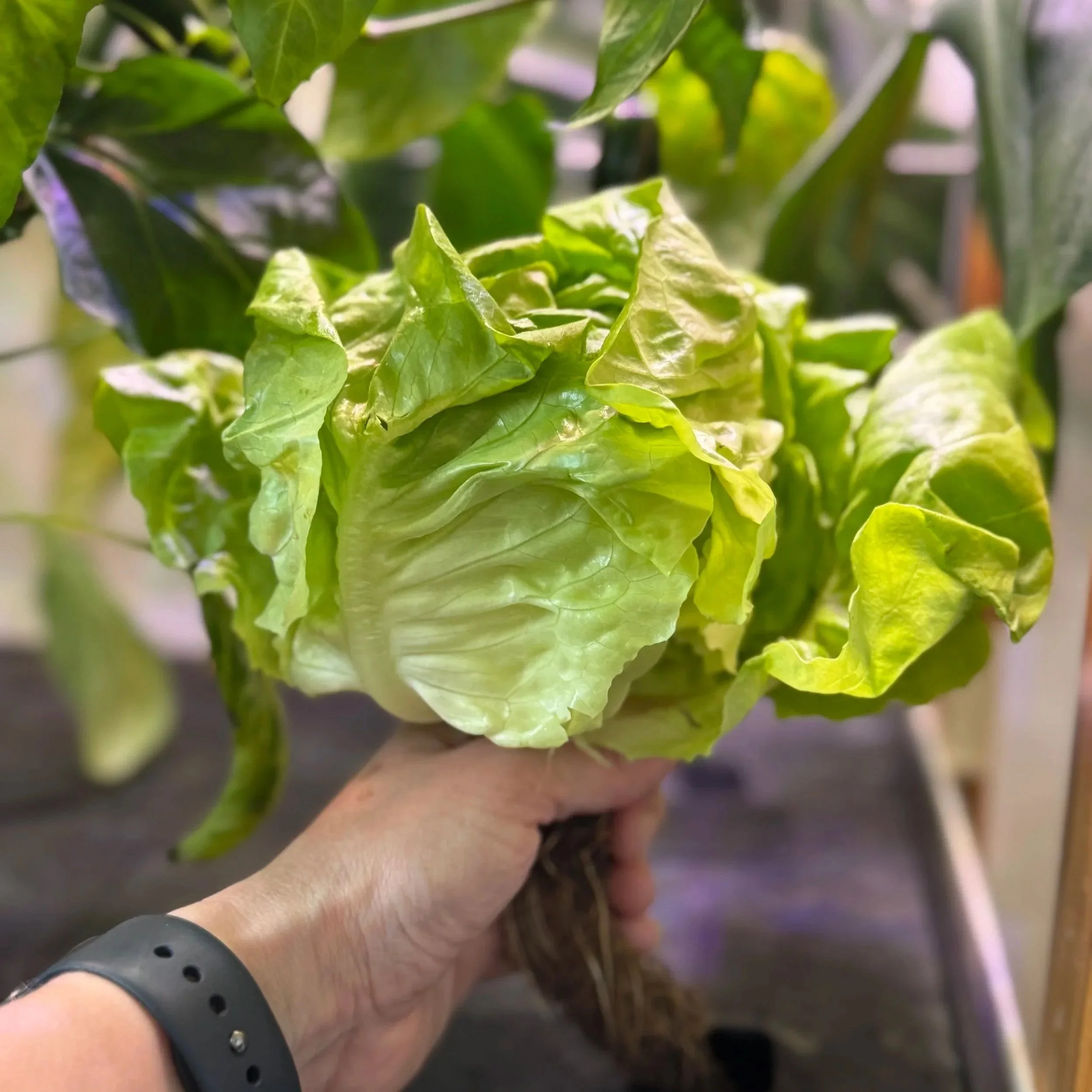
Whole Plant:
If you have lots of lettuce or just need a whole bunch at once then you can always just harvest the whole plant!
Common Problems
| 🥬 Problem | Likely Cause | How to Fix It |
|---|---|---|
| 🌼 Lettuce Bolting | Temperatures that are too warm, plant maturity, or heat stress | Keep temperatures between 15–22°C (59–72°F), harvest regularly, and choose slow-bolting varieties. Once lettuce bolts, the leaves may become bitter. |
| 🍃 Yellow Leaves | Nutrient deficiency, incorrect pH, aging leaves, or root stress | Check pH (5.5–6.5) and EC levels, refresh nutrients if needed, remove older damaged leaves, and inspect roots for problems. |
| 🌱 Slow Growth | Insufficient light, low nutrients, cool temperatures, or overcrowding | Ensure plants are receiving adequate light, maintain proper nutrient levels, and thin seedlings if too many plants are competing for space. |
| 🌿 Leggy Lettuce | Grow lights are too weak, too far away, or the light duration is too short | Increase light intensity if possible, adjust the light height according to the manufacturer's recommendations, and provide 14–16 hours of light per day. |
| 🥬 Bitter Lettuce | Heat stress, bolting, or the plant being left too long before harvest | Harvest earlier, keep growing temperatures cooler, and start new plants regularly for a continuous supply of fresh leaves. |
| 🟤 Brown Leaf Tips | Tip burn caused by rapid growth, calcium uptake issues, high EC, or low humidity | Lower nutrient strength if EC is too high, maintain proper airflow, keep nutrients balanced, and harvest affected leaves. |
| 💧 Wilting or Drooping Leaves | Low water levels, root issues, heat stress, or poor oxygen availability | Check water levels, inspect roots for browning or damage, maintain cooler temperatures, and ensure the system is functioning properly. |
| 🦠 Slimy or Brown Roots | Root rot caused by warm water, low oxygen, or poor system cleanliness | Remove affected roots, clean the system, keep water temperatures cooler, and maintain good airflow around the growing area. |
FAQ
-
With regular pruning and fresh nutrients, lettuce can produce continuously for 4–6 weeks or even longer. Eventually the plant will start to grow taller, trying to go to seed and will become bitter.
-
Tip burn is usually due to insufficient calcium circulating in the plant. It is NOT necessarily due to insufficient calcium in the nutrient mix. Some people just jump to adding in Cal-mag once they see it is calcium related. But there are other causes to investigate first.
Other causes can be high salt concentrations, poor transpiration or growth spurts. So let’s look at what causes these issues and how to address them. If your EC is out of whack then it can cause nutrient lockout, making it so that your lettuce can’t access the calcium available. A quick test of the EC in your reservoir can indicate it you have an issue or not. Then add water or better yet flush your system and rebalance your nutes. If the humidity is too high or there is a lack of airflow then your lettuce will not be able to move calcium through its tissues properly (via transpirtation). Just add a small oscillating fan to help fix this issue. Lastly, if you lights are too strong or temps are too high it can lead to your lettuce growing too quick, so that the plant is not able to keep up with movement of calcium necessary.
-
Even indoors, aphids can be an issue. A simple solution of 2 tsp dish soap per gallon of water sprayed over the whole plant handles them well. Other potential pests are thrips and spider mites.
Hydroponic Lettuce as a Space Saver for your outdoor garden
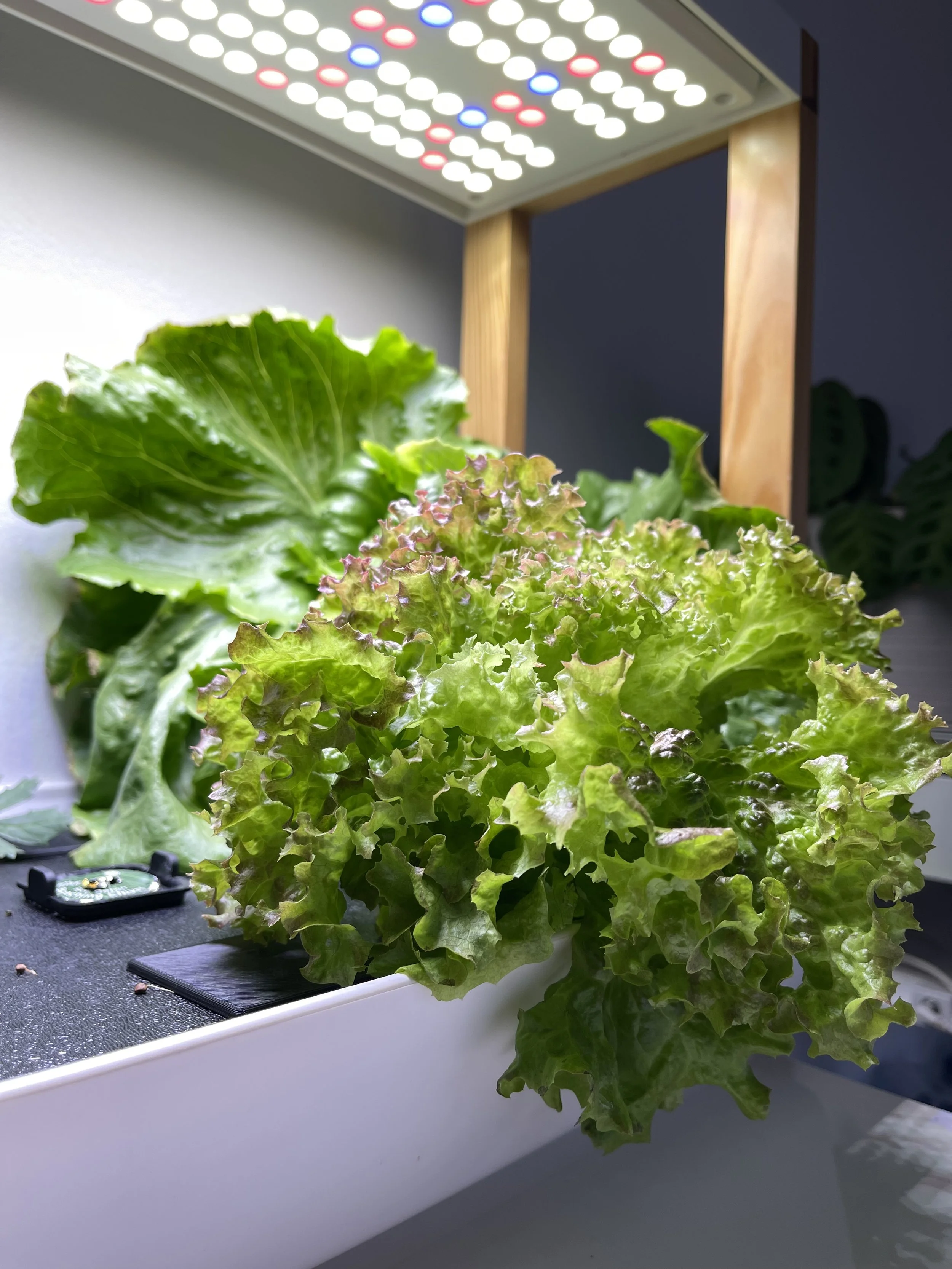
I mentioned this earlier but it is worth mentioning again as it truly makes a difference. My outdoor garden is reserved for crops that truly need the OUTDOOR space—things like tomatoes, squash, cucumbers, and corn. By growing lettuce hydroponically indoors, I free up valuable garden beds while still harvesting fresh salads every week. I don’t have to worry about approaching heat waves that could cause my lettuce to bolt and turn bitter. When you have a small garden you have to be frugal about how you allocate the space you have. Every single square foot of space needs to be carefully considered, and for me, bringing the lettuce indoors is a no-brainer.
🌱 Final Thoughts
If you're new to hydroponics, lettuce should be your first crop. It's fast-growing, forgiving, highly productive, and lets you harvest fresh salads year-round while freeing up valuable outdoor garden space for larger crops.