🍅 How to Grow Tomatoes Hydroponically: The Complete Beginner's Guide
Tomatoes are often what people want most to grow, and if that’s you, I totally get it! Growing tomatoes indoors does bring a few extra considerations compared with planting them outside. The size and variety of the tomato are prime concerns, along with the type of hydroponic system you’ll use. That said, if you pick the right variety for your space and set up, you can enjoy fresh tomatoes year-round, take pride in your harvest, and cross a frequently bought item off your shopping list.
Disclosure: Some of the links below are affiliate links, meaning, at no additional cost to you, I will earn a commission if you click through and make a purchase.
Quick Facts
| 🍅 Attribute | Details |
|---|---|
| ⭐ Difficulty | Intermediate to Advanced |
| ⏱️ Germination | 5–10 days |
| 🍅 First Harvest | 60–90 days (depending on variety) |
| 💡 Light | 14–16 hours (high-intensity full spectrum LED) |
| 🌡️ Temperature | 20–27°C (68–80°F) |
| ⚗️ pH | 5.8–6.5 |
| 💧 EC | 2.0–3.5 |
| 🌸 Pollination | Required indoors (shake flower trusses, small oscillating fan or use an electric toothbrush) |
| 🪴 Best Systems | AeroGarden Farm XL (for dwarf or determinate varieties) or any other AG, Rise Garden, Click & Grow, Auk or other system (for micro varieties) |
| ✂️ Harvest Style | Harvest ripe fruit regularly to encourage continued production |
What are Tomatoes?
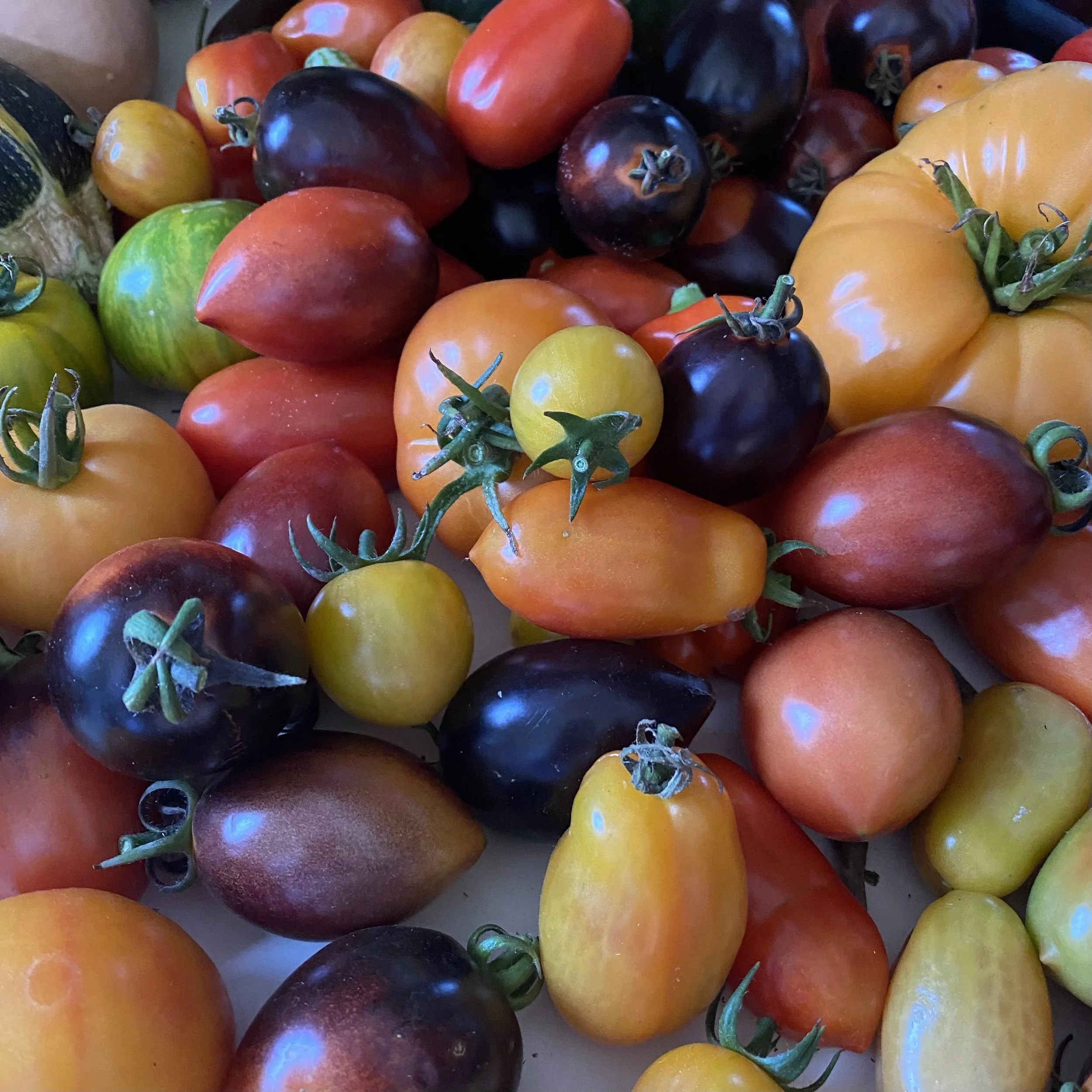
Tomatoes (Solanum lycopersicum) are one of the most rewarding crops to grow hydroponically. Although they're commonly thought of as vegetables, tomatoes are actually fruits because they develop from the flower of the plant and contain seeds.
Native to South America, tomatoes have become a staple in kitchens around the world and come in an incredible range of sizes, colours, and flavours. From bite-sized cherry tomatoes to large beefsteak varieties, there's a tomato to suit almost every taste and growing space.
When looking to categorize tomatoes, I would separate them into four growth habits:
Determinate tomatoes grow to a set size, produce most of their fruit over a short period, and then stop growing. They're a great option for smaller hydroponic systems and gardeners who want a concentrated harvest. Some examples of determinate varieties are Roma and Bush Early Girl.
Indeterminate tomatoes continue growing, flowering, and producing fruit throughout the season. They require staking or trellising and regular pruning but reward you with continuous harvests for months. Some examples of indeterminate varieties are Sungold, Sweet Million, Cherokee Purple, Brandywine.
Dwarf tomatoes (such as those developed through the Dwarf Tomato Project) combine the compact size of determinate varieties with the extended production of indeterminate tomatoes. They have sturdy, stocky plants that typically grow 3–5 feet (0.9–1.5 m) tall and produce full-sized tomatoes over a long season, making them an excellent choice for indoor growers with limited space. Some dwarf varieties are Rosella Purple, Tasmanian Chocolate, Dwarf Awesome, Uluru Ochre.
Micro tomatoes are the smallest tomato plants available, often growing just 6–12 inches (15–30 cm) tall. These ultra-compact varieties are perfect for countertop hydroponic gardens and systems like the AeroGarden or other small indoor setups. While the fruit is usually cherry-sized or smaller, micro tomatoes are incredibly productive for their size and are ideal when space is at a premium. Some micro tomato varieties are Tiny Tim, Orange Hat, Red Robin, Micro Tom, Pinocchio.
For most countertop hydroponic gardens, I would stick with micro tomato varieties as the best choice. Larger systems, such as an AeroGarden Farm XL, can support determinate and dwarf full-sized slicing and heirloom tomatoes, provided they receive enough light and proper support. Save the indeterminate tomatoes for your outdoor garden and enjoy those thoughtout the summer months.
With the right setup, hydroponic tomatoes can provide an abundant harvest of fresh, flavourful fruit year-round, making them one of the most satisfying plants to grow indoors.
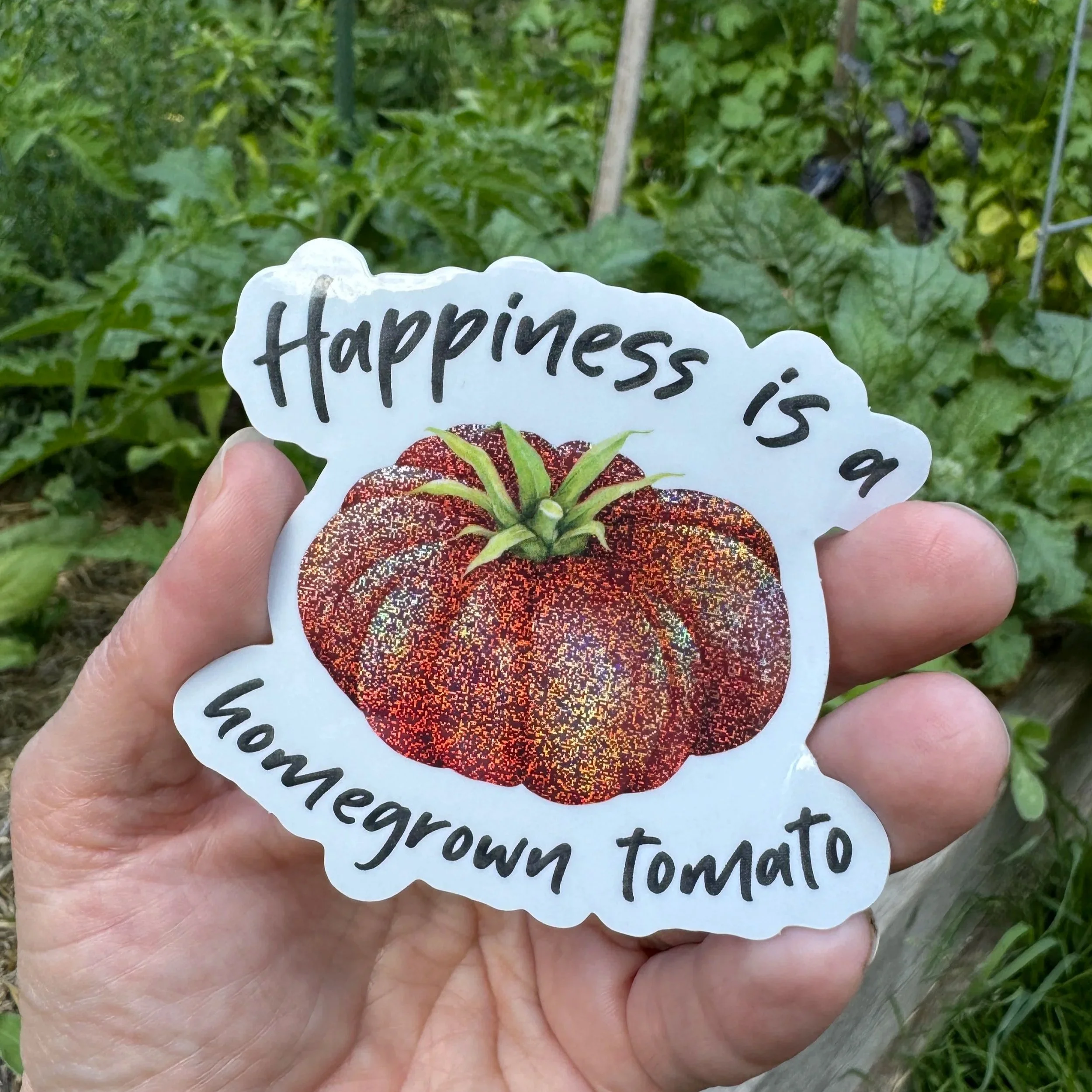
I love homegrown tomatoes so much I made a sticker!
This is my pixie dust version, available in my Etsy Shop - The MicroHomestead
Benefits of Growing Tomatoes Hydroponically
While growing tomatoes hydroponically requires a little more attention than leafy greens or herbs, the payoff is worth it. With the right care, hydroponic tomatoes can produce abundant harvests of fresh, flavourful fruit for months.
One thing to keep in mind is that tomatoes require patience. After pollination, it can feel like the fruit will stay green forever—but don't worry! Once tomatoes reach their mature size, they'll eventually begin to change colour and ripen. Every hydroponic tomato grower has had the "Are these ever going to turn red?" moment.
Some of the biggest advantages of growing tomatoes hydroponically include:
🍅 Higher yields – Tomatoes often produce more fruit than soil-grown plants because they receive a constant supply of water and nutrients.
⚡ Faster growth – With ideal growing conditions, hydroponic tomatoes typically grow more vigorously than those grown in soil.
💧 Efficient water use – Hydroponic systems recycle water, using significantly less than traditional outdoor gardening.
🦠 Fewer soil-borne diseases – Growing without soil eliminates many common problems like Fusarium wilt, Verticillium wilt, and root-knot nematodes.
🌱 Healthier root systems – Constant access to oxygen and nutrients encourages strong root development.
🏡 Grow year-round – With adequate lighting and temperature control, you can harvest fresh tomatoes even in the middle of winter.
🧹 Cleaner gardening – No digging, weeding, or muddy garden beds means less mess and less maintenance.
📈 Easy to monitor plant health – Because you're controlling the nutrients, pH, and water, it's often easier to identify and correct problems before they become serious.
Although tomatoes are considered an intermediate-to-advanced hydroponic crop, don't let that discourage you. Once you harvest your first perfectly ripe tomato that you grew indoors, you'll understand why so many gardeners become obsessed with growing them.
Best Hydroponic Systems
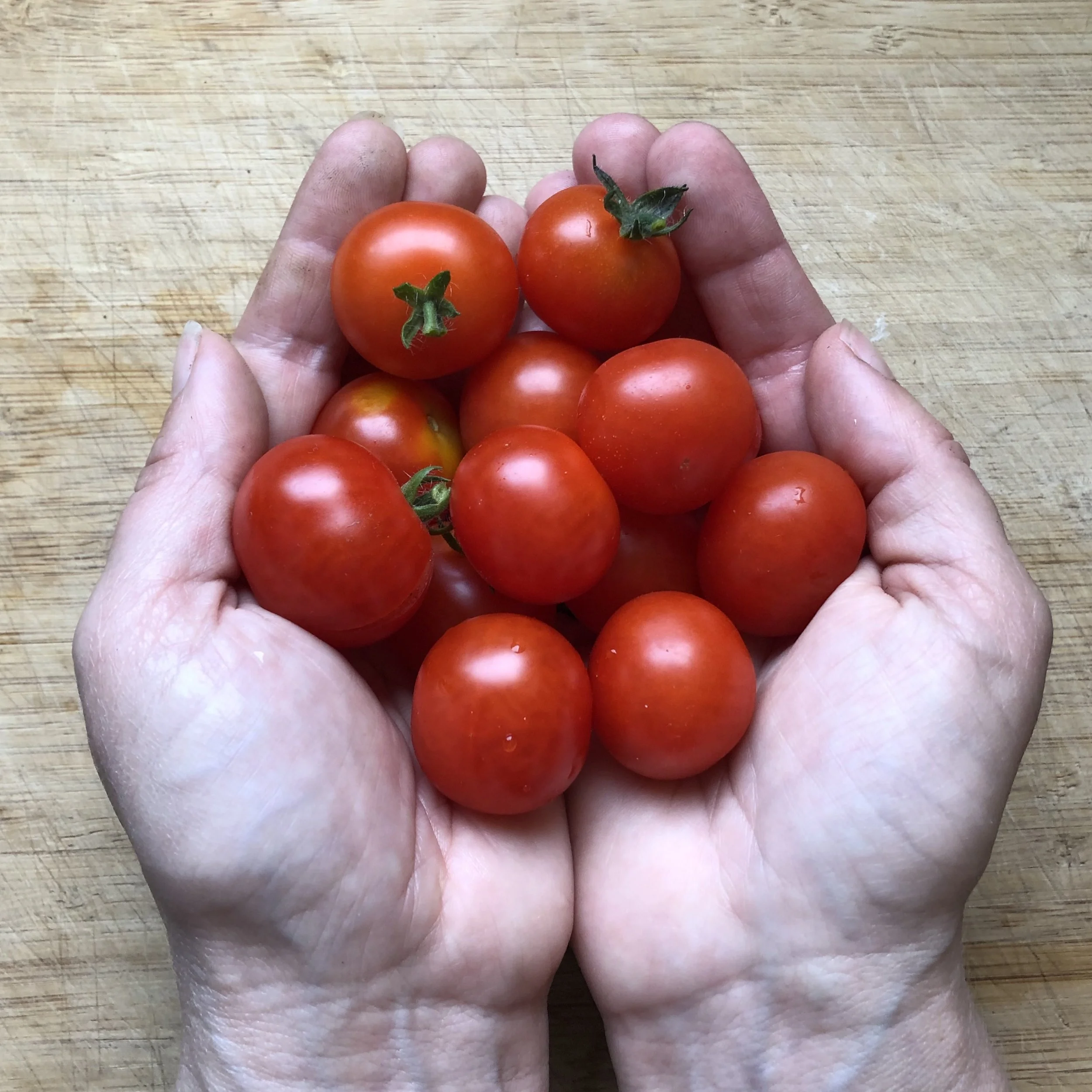
The best system really depends on the variety you choose. Personally, I would not recommend growing these in a small Kratky jar, maybe you could get away with it if you are using a small micro dwarf variety but tomatoes need a lot of nutrients and also support so a Kratky mason jar really isn’t the best option. If you want to grow dwarf varieties then an AeroGarden Farm XL is your best option and for any of the other AeroGarden, Click & Grow, Rise Garden, Auk or other options then I would always suggest the micro dwarfs. Few systems other than the AeroGarden Famr XL have the new essary height to support healthy tomato growth.
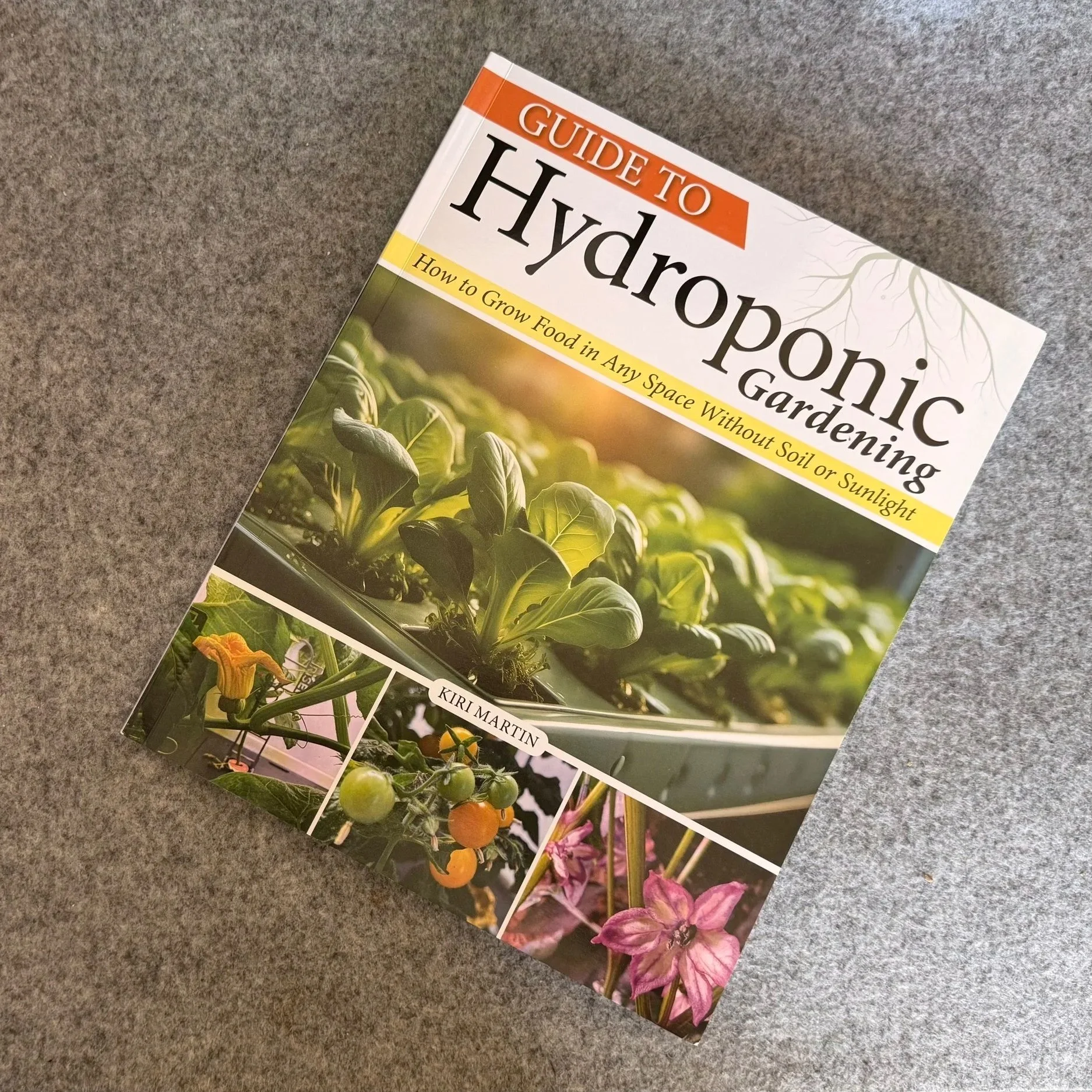
Check out my book!
👉 🇨🇦 [Buy on Amazon.ca]
👉 🇨🇦 [Buy on Indigo]
👉 🇺🇸 [Buy on Amazon.com]
👉 🇬🇧 [Buy at Hatchards]
👉 🇦🇺 [Buy at Booktopia]
Best Tomato Varieties for Hydroponics
I’ll be honest—there is no single “best” tomato variety for hydroponics. The perfect tomato depends on your growing space, your hydroponic system, your lighting, and (perhaps most importantly) your personal taste.
To say I love tomatoes would be an understatement. I have grown hundreds of tomato varieties, although many of those are reserved for my outdoor gardens where I have more space to let large plants grow wild.
When it comes to growing tomatoes indoors hydroponically, I’m much more selective. Space is limited, lighting is expensive, and not every amazing garden tomato makes a great indoor tomato. Over the years, I’ve found a few varieties that consistently perform well in smaller spaces and have earned a spot as my indoor go-to varieties.
Here are some of my favourite hydroponic tomato varieties:
🍊 Orange Hat (Micro Tomato)
This variety will always have a special place in my heart because it was the tomato that introduced me to—and completely hooked me on—micro tomatoes.
Orange Hat is a tiny but surprisingly productive tomato plant that is perfect for countertop hydroponic systems. It stays incredibly compact, making it ideal for smaller setups, but still produces a generous crop of sweet orange cherry tomatoes.
Best for:
Countertop hydroponic gardens
Small spaces
Beginners
Growers who want a compact plant with big personality
🍅 Brandyfred (Dwarf Tomato)
Brandyfred is a dwarf variety that brings the flavour of a larger tomato plant into a much more manageable size. It produces medium-sized pink beefsteak-style tomatoes with excellent flavour while maintaining a compact growth habit.
Unlike many large heirloom tomatoes that can become overwhelming indoors, Brandyfred offers a great balance between plant size, productivity, and tomato quality.
Best for:
Dwarf tomato enthusiasts
Indoor growers with a little more space
Gardeners who want heirloom flavour in a compact plant
🍷 Tastywine (Dwarf Tomato)
Tastywine is another standout dwarf variety that proves you don't need a massive tomato plant to get incredible flavour. It produces rich, delicious tomatoes on a sturdy, compact plant that works well in controlled environments.
This is a great option for indoor growers who want something more unique than standard cherry tomatoes but don't have room for a full-sized indeterminate plant.
Best for:
Flavour-focused growers
Dwarf tomato lovers
Smaller hydroponic setups
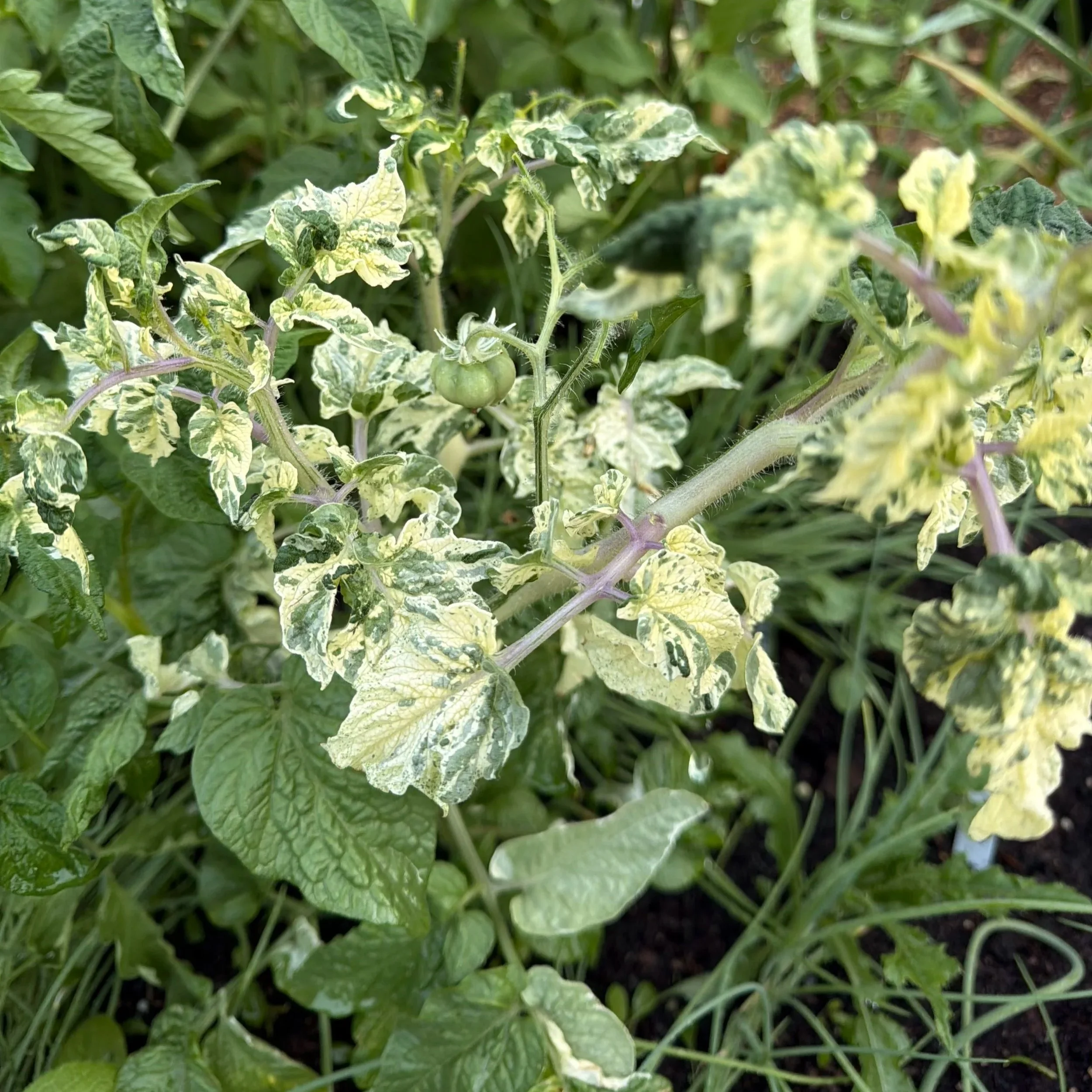
A dwarf walter’s fancy in my outdoor garden, I love how even the stem is variegated.
🍅 Dwarf Walters’s Fancy (Dwarf Tomato)
Dwarf Walter’s Fancy is a variegated beauty and productive dwarf tomato variety that produces flavourful, medium-sized fruit on a compact plant.
It is part of the reason dwarf tomatoes are becoming so popular with indoor gardeners—they provide the experience of growing a “real” tomato plant without requiring a massive grow space.
Best for:
Indoor gardeners with limited vertical space
Growers looking for larger tomatoes
Dwarf tomato collections
🍅 Laura #5 (Micro Tomato)
Laura #5 is a compact tomato variety that performs well in smaller growing spaces while still producing delicious fruit. It is a great example of why choosing the right variety matters so much when growing tomatoes indoors. This plant can produce a LOT of fruit, sometimes more fruit than even leaves.
Best for:
Small indoor gardens
Hydroponic growers experimenting with dwarf varieties
Growers who want something different
🍅 Lil Peeps (Micro Tomato)
Lil Peeps is another excellent micro tomato variety for indoor growing. Its tiny growth habit makes it a great choice for countertop systems, windowsill gardens, and anyone who wants to grow tomatoes without dedicating an entire grow area.
Despite its small size, it can produce an impressive number of small, sweet tomatoes.
Best for:
AeroGarden-style systems
Small apartments
Beginner hydroponic growers
Final Thoughts on Choosing a Hydroponic Tomato Variety
When choosing tomatoes for hydroponics, resist the temptation to grow the biggest, most impressive varieties you can find. A 14-foot heirloom tomato plant may produce incredible fruit outdoors, but it can quickly become difficult to manage indoors.
For most indoor growers, micro tomatoes, dwarf tomatoes, and compact cherry varieties will give you the best combination of flavour, productivity, and manageable plant size.
The best tomato variety is ultimately the one that fits your space—and the one you enjoy eating the most.
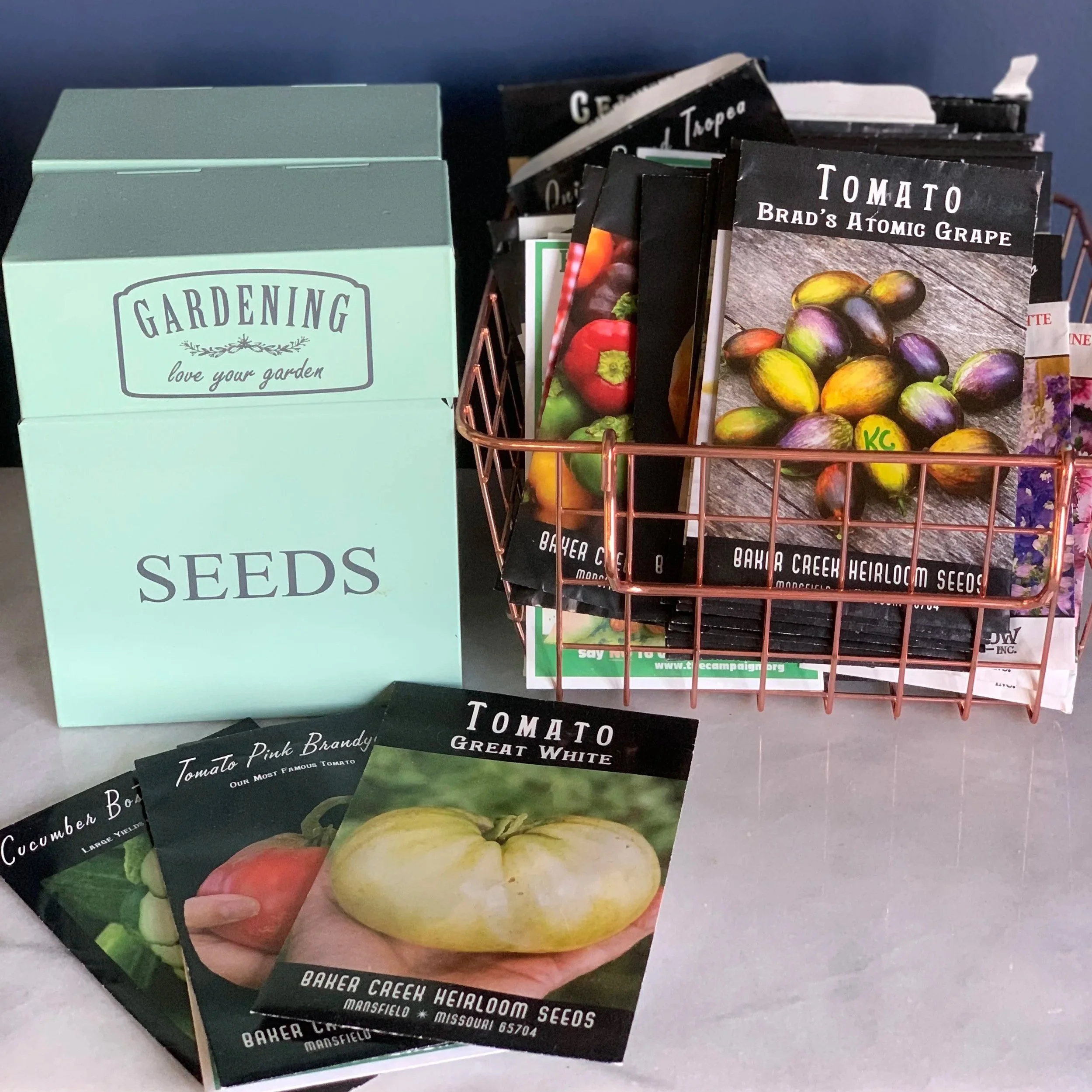
There are so many different varieties of tomatoes!
I source a lot of my seeds from Baker Creek Heirloom Seeds — I love them as they have so many heirloom varieties, and they carry varieties you genuinely won’t find anywhere else. For the micro tomato varieties my go-to is MoonGlow seeds. Some other great places are West Coast Seeds, Renee’s Garden and MI Gardener. There are SO many varieties, and I am the proud owner of HUNDREDS of different kinds!
Starting Tomatoes from Seed
Tomato seeds are relatively easy to start, but they do require a little patience. Unlike leafy greens that can be harvested within a few weeks, tomatoes are a long-term crop that need time to develop strong roots, sturdy stems, and enough growth to support fruit production.
Place grow baskets into your hydroponic system
Add 2 tomato seeds per seed pod
Set the pod in the basket and cover with a grow dome (to help them germinate)
Watch for sprouts within 7–14 days
Remove domes before seedlings run the risk of touching them (this could burn delicate leaves)
Once seedlings have grown their first true leaves, decide on the healthiest plant and remove the other one.
If you are like me, and can’t just throw out the sacrificial lamb, there is good news. Tomatoes are SUPER hardy! Even if the one you pulled out has no roots, you can insert it into another grow pod and continue growing it in your system or move it outdoors!
Target Growing Conditions
Lighting: 14–16 hours/day, using full-spectrum LEDs
EC: 2.0–3.5
pH: 5.8–6.5
Temperature: 20–27°C (68–80°F)
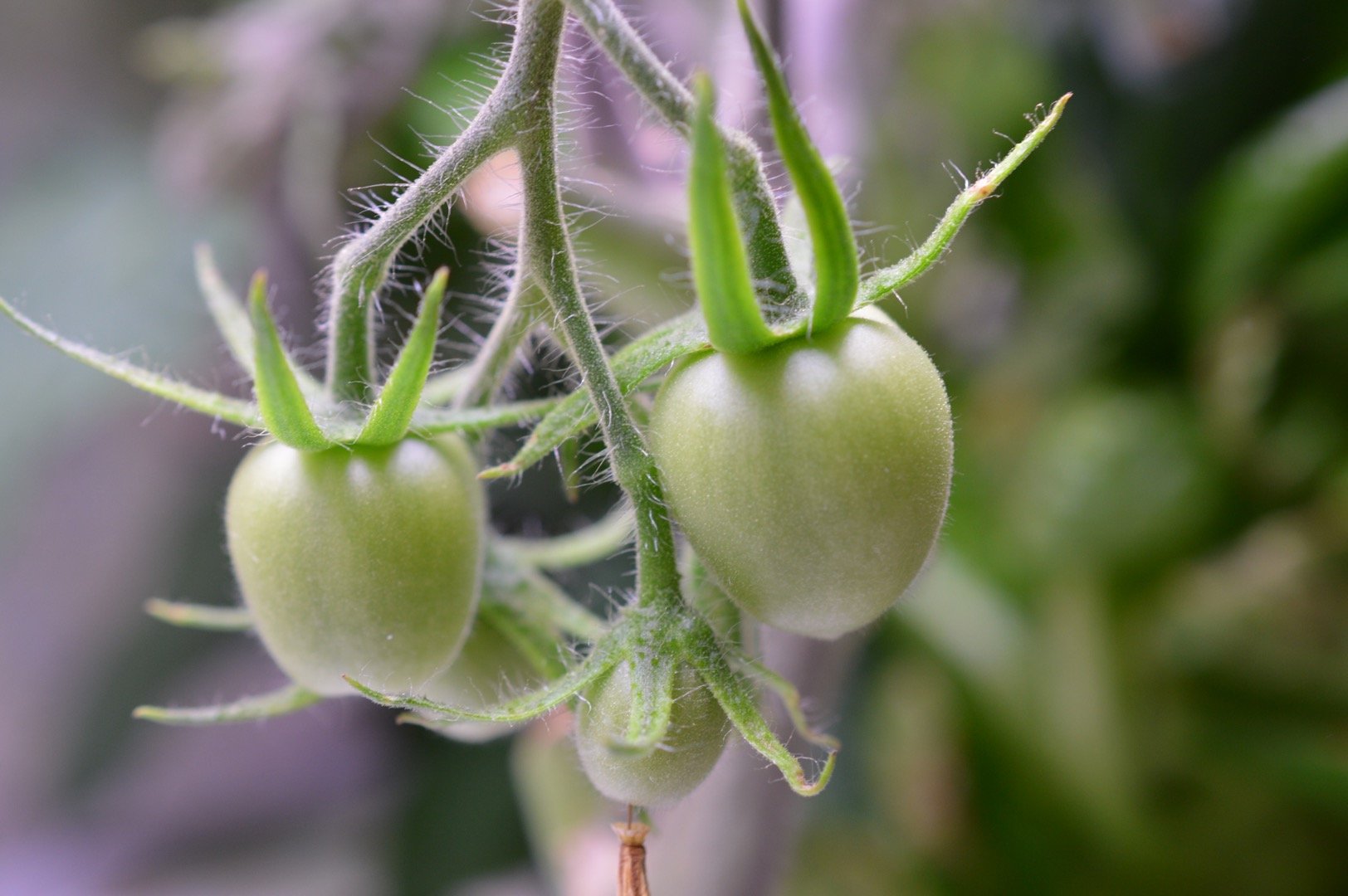
Harvesting & Maintaining Tomatoes
When to Start Harvesting
Hydroponic tomatoes are usually ready to harvest 60–90 days from transplant, depending on the variety. Cherry and micro tomatoes often ripen sooner, while larger slicing and heirloom varieties can take longer.
Tomatoes are ready to harvest when they have reached their mature size and begin changing colour. For the best flavour, allow them to fully ripen on the vine whenever possible.
How Long Do Hydroponic Tomato Plants Produce?
With proper care, indeterminate tomato plants can continue producing for 6–12 months or longer indoors. Determinate varieties typically produce a larger harvest over a shorter period before naturally slowing down.
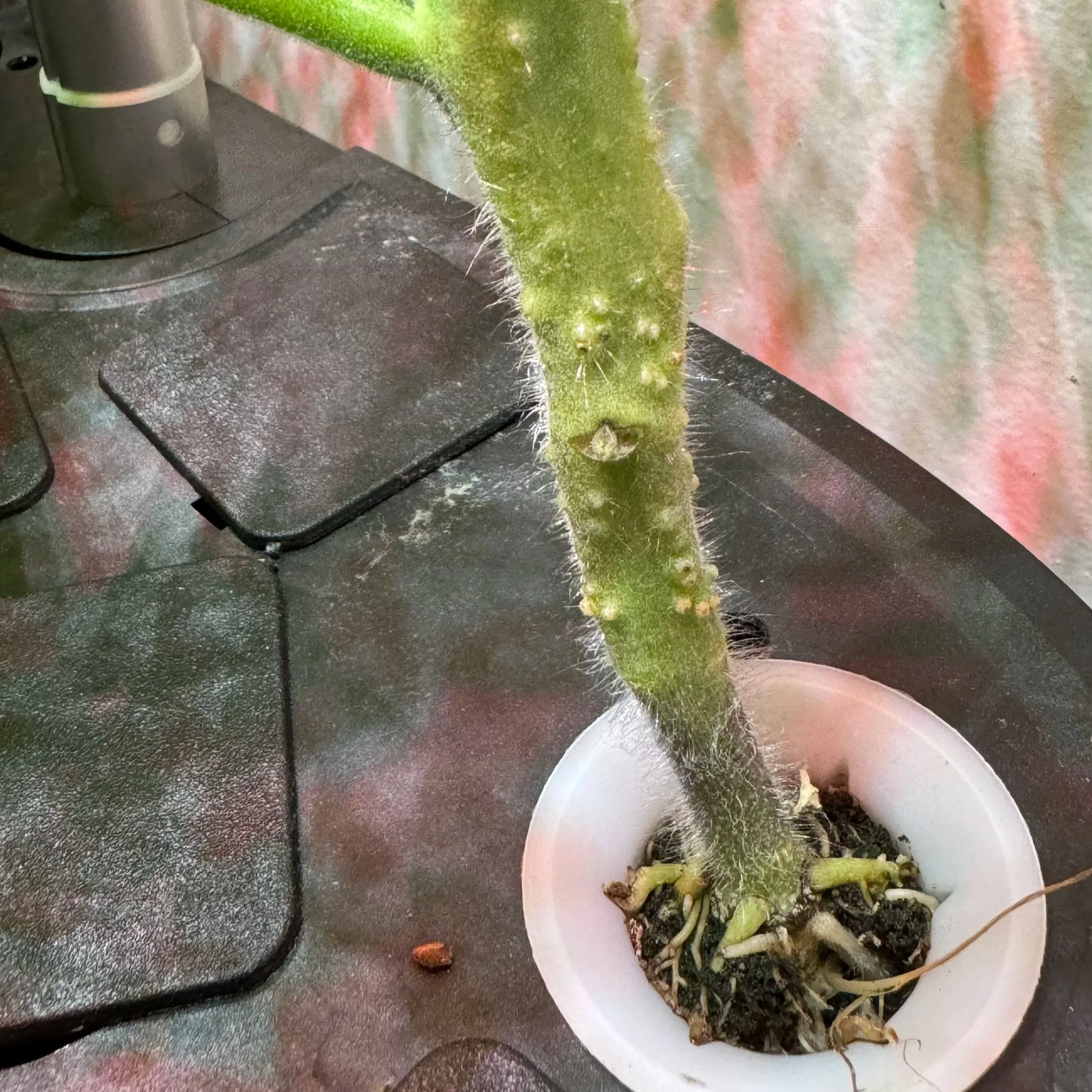
Don’t freak out about bumps!
Especially as tomatoes get more mature they can develop bumps along the stem. In their natural state, tomatoes actually have a vining habit! They grow along the ground and these bumps are actually potential spots where new roots can grow. So while they don’t always look pretty they are not the sign of an issue.
Tips for Maintaining Productive Plants
To keep your tomato plants producing:
🍅 Harvest ripe fruit regularly to encourage continued production
✂️ Prune yellowing leaves and excess growth to improve airflow
🪴 Provide support with stakes, clips, or trellising as plants grow
💡 Maintain strong lighting throughout the flowering and fruiting stages
⚗️ Monitor pH and EC and adjust nutrients as the plant moves into fruit production
🌸 Continue hand-pollinating flowers since indoor plants don't have access to wind or pollinators
With the right care, a single hydroponic tomato plant can provide months of fresh harvests, making it one of the most rewarding crops to grow indoors.
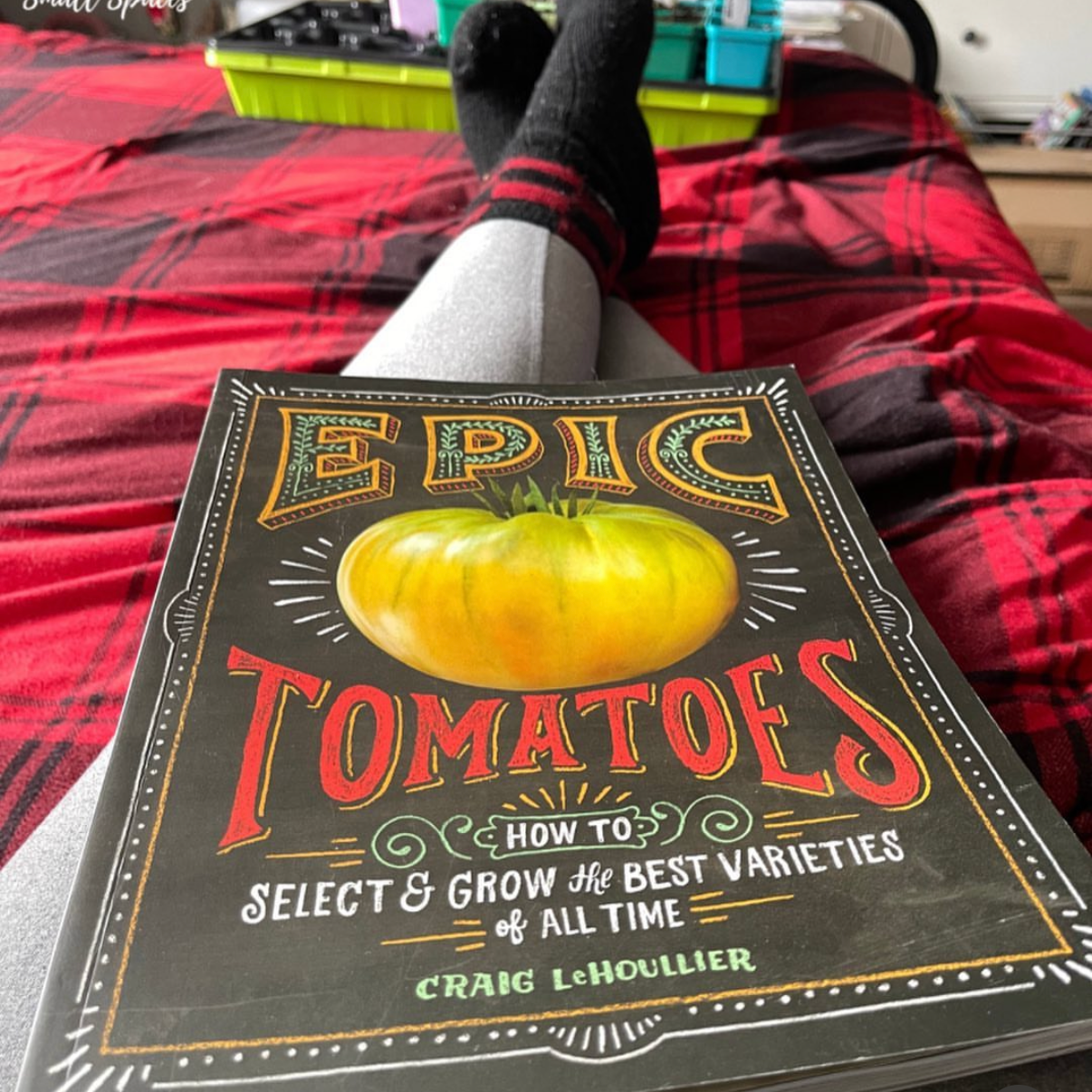
I’m so tomato obsessed, that I even have books about growing tomatoes! Find the book here
Common Problems
| 🍅 Problem | Likely Cause | How to Fix It |
|---|---|---|
| 🌼 Flowers Dropping | Temperature stress, poor pollination, low humidity, or inconsistent growing conditions | Maintain temperatures around 20–27°C (68–80°F), improve airflow, gently shake flowers or hand-pollinate, and keep growing conditions consistent. |
| 🍅 Flowers but No Tomatoes | Flowers are not being pollinated or the plant is stressed | Help pollinate flowers by gently tapping the plant, using a small brush, or using an electric toothbrush. Check lighting, nutrients, and temperature. |
| 🍃 Yellow Leaves | Nutrient deficiencies, incorrect pH, overwatering/root issues, or natural aging | Check pH and EC levels, ensure nutrients are balanced, remove older yellow leaves, and inspect roots for signs of stress. |
| 🌱 Slow Growth | Insufficient light, low nutrients, cool temperatures, or poor root development | Increase light intensity if needed, maintain warm temperatures, check nutrient strength, and make sure roots have access to oxygen. |
| 🍂 Leaf Curling | Heat stress, inconsistent watering, nutrient imbalance, or environmental stress | Maintain stable conditions, check nutrient levels, improve airflow, and avoid sudden changes in temperature or water availability. |
| 🍅 Blossom End Rot | Calcium uptake issues caused by inconsistent water availability, root stress, or incorrect nutrient balance | Maintain consistent water levels, avoid root stress, keep pH in range, and ensure your nutrient solution contains adequate calcium. |
| 🌿 Leggy Plants | Insufficient light intensity or the grow light being positioned too far away | Increase light intensity, adjust light height according to manufacturer recommendations, and consider pruning to encourage bushier growth. |
| 🐌 Slow Ripening Fruit | Not enough light, temperature stress, or simply the variety taking longer to mature | Be patient, maintain strong lighting, keep temperatures consistent, and choose faster-maturing varieties if growing indoors. |
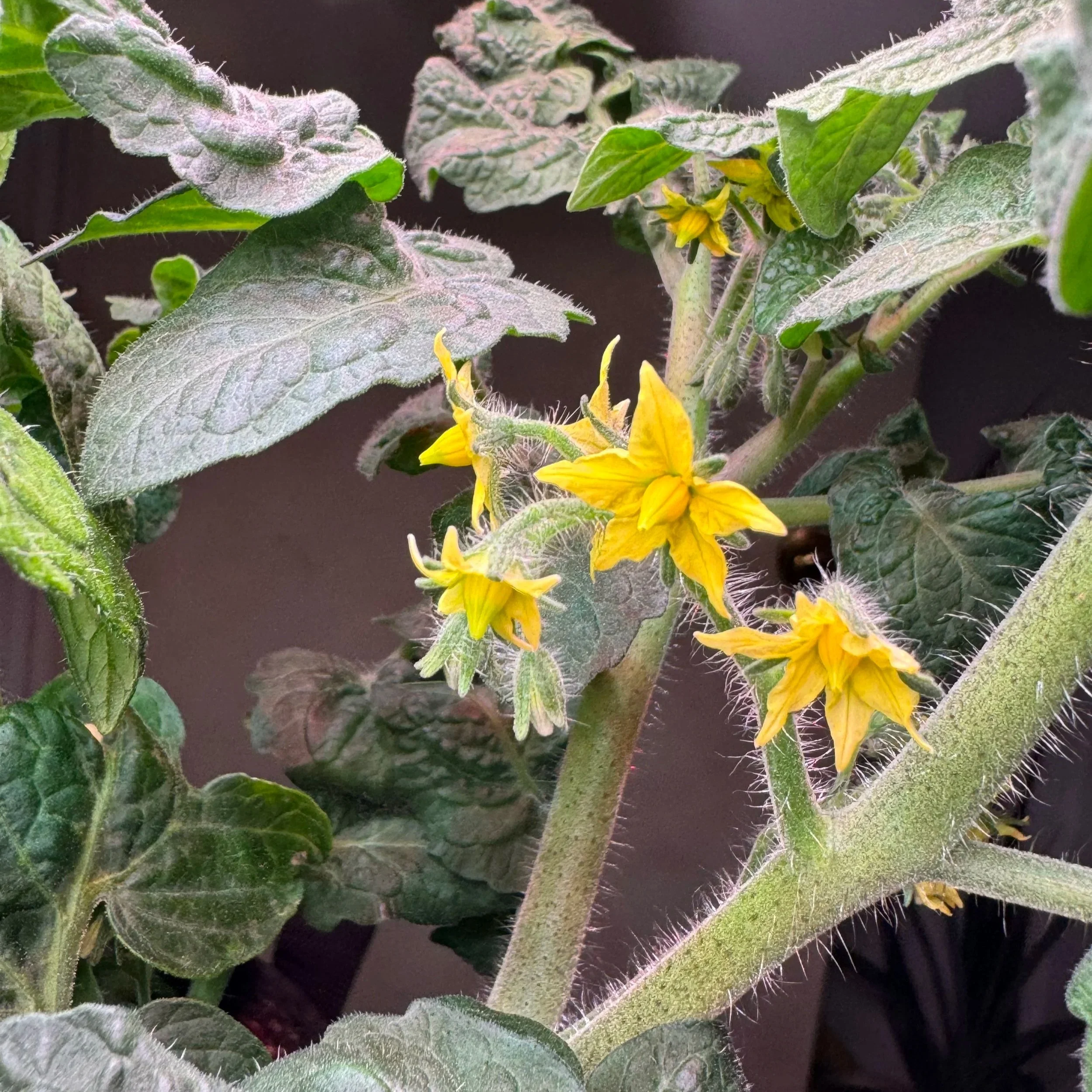
Perfect flowers???
Yup, when it comes to botany, tomato flowers are considered perfect as they contain both male and female reproductive organs. This is what helps to make them self-pollinating as the stamen and pistil are present in a single structure (the flower).
FAQ
-
Yes. Hydroponic tomatoes contain many of the same vitamins, minerals, and antioxidants as soil-grown tomatoes. Their nutritional value depends more on the variety and growing conditions than on whether they're grown in soil or hydroponically.
-
Yes. Because indoor gardens don't have wind or bees, you'll need to pollinate the flowers yourself. Gently shake the flower clusters daily or use an electric toothbrush against the flower truss for a few seconds to release the pollen. Having a small oscillating fan can also help to simulate the wind outdoors. Just remember we only want a gently breeze so keep it on a low setting!
-
Indeterminate tomatoes can continue producing fruit for 6–12 months or even longer in a well-maintained indoor hydroponic system. Determinate varieties typically produce one large flush of tomatoes over several weeks before reaching the end of their productive life.
-
Even indoors you can run into some pests, things like aphids, spider mites, fungus gnats and whiteflies can be an issue. It is very important to regularly inspect your plants to ensure they are healthy and free of pests and diseases.
-
The answer is, it depends. Indeterminate tomatoes will continue growing and producing flowers and fruit as long as they receive adequate light, nutrients, water, and regular pruning. Many indoor gardeners keep the same plant producing for months. Determinate varieties, on the other hand, naturally slow down and stop producing after their main harvest, so they're typically replaced with a new plant. description
-
Yes, but make sure they are a dwarf variety and know that they will require a system like an AeroGarden Farm XL, strong lighting, sturdy support, and patience. Many indoor gardeners find that cherry, grape, or dwarf varieties are easier to manage and often produce more consistently in limited space.
-
Most tomatoes grown indoors hydroponically will benefit from regular pruning to remove suckers, improve airflow, and direct energy toward fruit production. If your variety is an indeterminate dwarf then it will most likely require more pruning than a determinate or micro varieties.
-
This is one of the most common questions—and one that catches almost every new tomato grower! Tomatoes often remain green for weeks after reaching full size before they begin ripening. As long as the fruit is healthy and the plant is receiving proper light and nutrients, patience is usually all that's required.
-
Most tomatoes germinate in 5–10 days and begin producing ripe fruit in 60–90 days, depending on the variety and growing conditions. Cherry tomatoes typically mature faster than larger slicing or beefsteak tomatoes.
-
Micro (cherry) tomatoes are usually the easiest choice for beginners because they're compact, productive, and ripen relatively quickly. Popular hydroponic varieties include Tiny Tim, Red Robin, Orange Hat, and many dwarf varieties from the Dwarf Tomato Project. I have a personal pet peeve with the yellow and red varieties that come with AeroGardens as I find they grow MUCH bigger than the systems can handle, especially if you are not on top of pruning them.
-
Absolutely! Tomatoes are a great hydroponic crops because they produce high yields and can be grown year-round. Just make sure that you are giving enough light, nutrients, and support. While they're more demanding than leafy greens, they're well worth the effort.
🌱 Final Thoughts
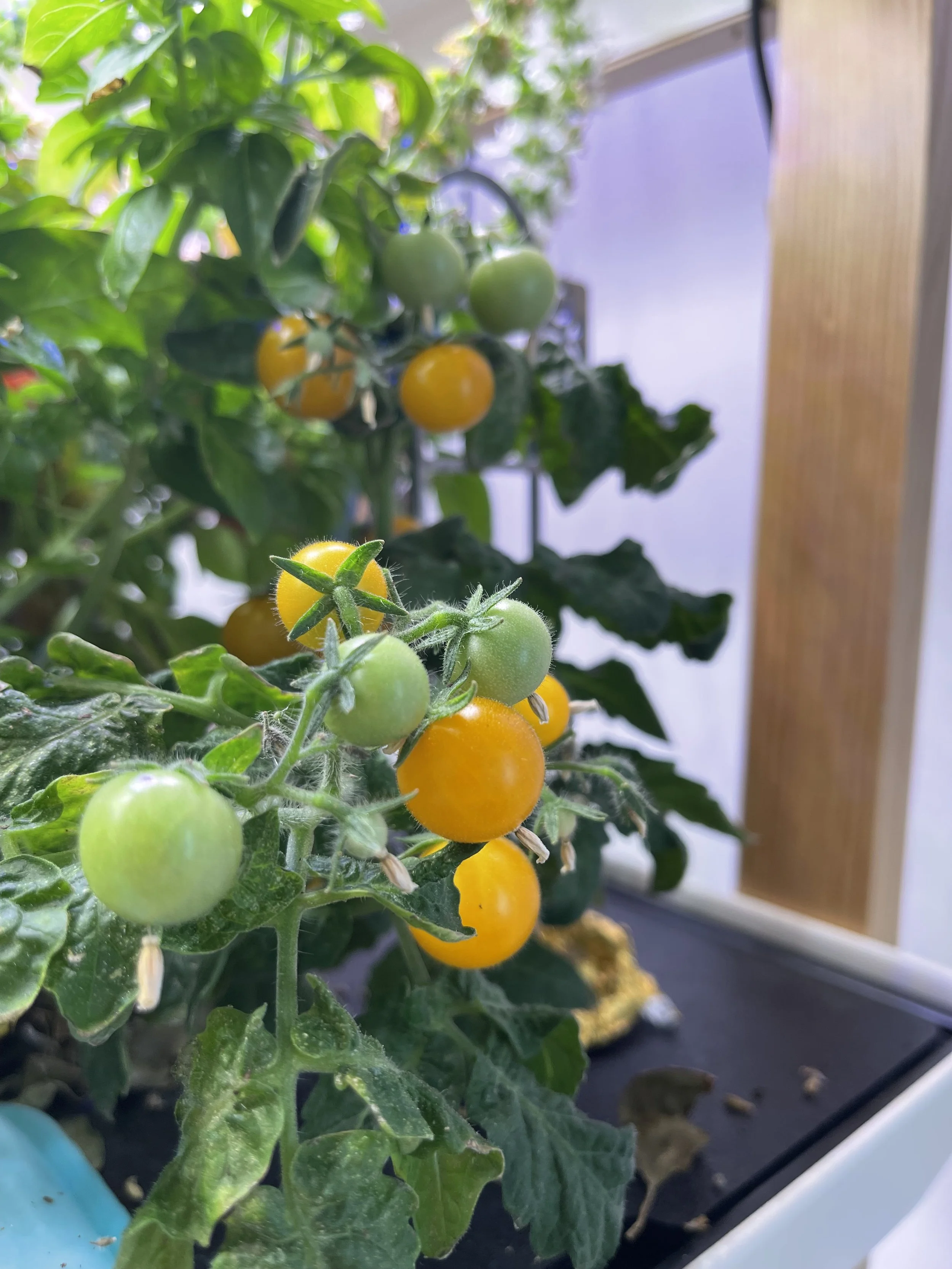
Growing tomatoes is a right of passage for any indoor gardener and while they may require more attention than leafy greens or herbs, the moment you harvest your first perfectly ripe tomato that you grew yourself, you'll understand why so many gardeners become obsessed with them.
The biggest secret to success is choosing the right variety for your space. While a massive heirloom tomato plant might be tempting, it isn't always the best fit for an indoor garden. Compact cherry tomatoes, dwarf varieties, and micro tomatoes can produce impressive harvests while taking up much less space.
Remember that tomatoes are a long-term crop. They need strong lighting, proper nutrients, support, and patience—especially during that frustrating stage when your beautiful green tomatoes seem like they will never ripen. (Every tomato grower has been there!) But with consistent care, a healthy plant can reward you with months of fresh harvests.
If you're new to hydroponics, it is always best to start with an easier option like leafy greens or herbs and work your way up to tomatoes.Once you have a few indoor growing cycles under your belt then you can jump into tomatoes and start to learn how they grow and what they need. Then you’ll be ready to experiment with different varieties and discover your favourites.
Whether you're growing micro tomatoes in a countertop model or larger tomatoes in an AeroGarden Farm XL, there's nothing quite like walking into your home and picking a fresh tomato straight from the vine—especially in the middle of winter.
Happy growing! 🍅🌱