If you've ever noticed tiny black flies hovering around your indoor plants, landing on your growing media or flying around your hydroponic setup, there's a good chance you've got fungus gnats.
They're one of those pests that seem relatively harmless at first. You spot one or two, maybe a few more around your plants, and think nothing of it. Then suddenly, you're waving your hands around trying to keep them out of your face!
Sound familiar?
The frustrating thing about fungus gnats is that catching the adults isn't enough. Those little flies are only part of the problem. The real issue is happening beneath the surface, where their larvae develop in moist growing media and organic material.
The good news? Fungus gnats are generally pretty easy to manage once you understand their life cycle and know which controls to use.
I've put together a guide to the methods I use and the different ways you can tackle fungus gnats, from beneficial insects and biological controls to simple preventative measures.
Let's get those little pests under control!
First, What Are Fungus Gnats?
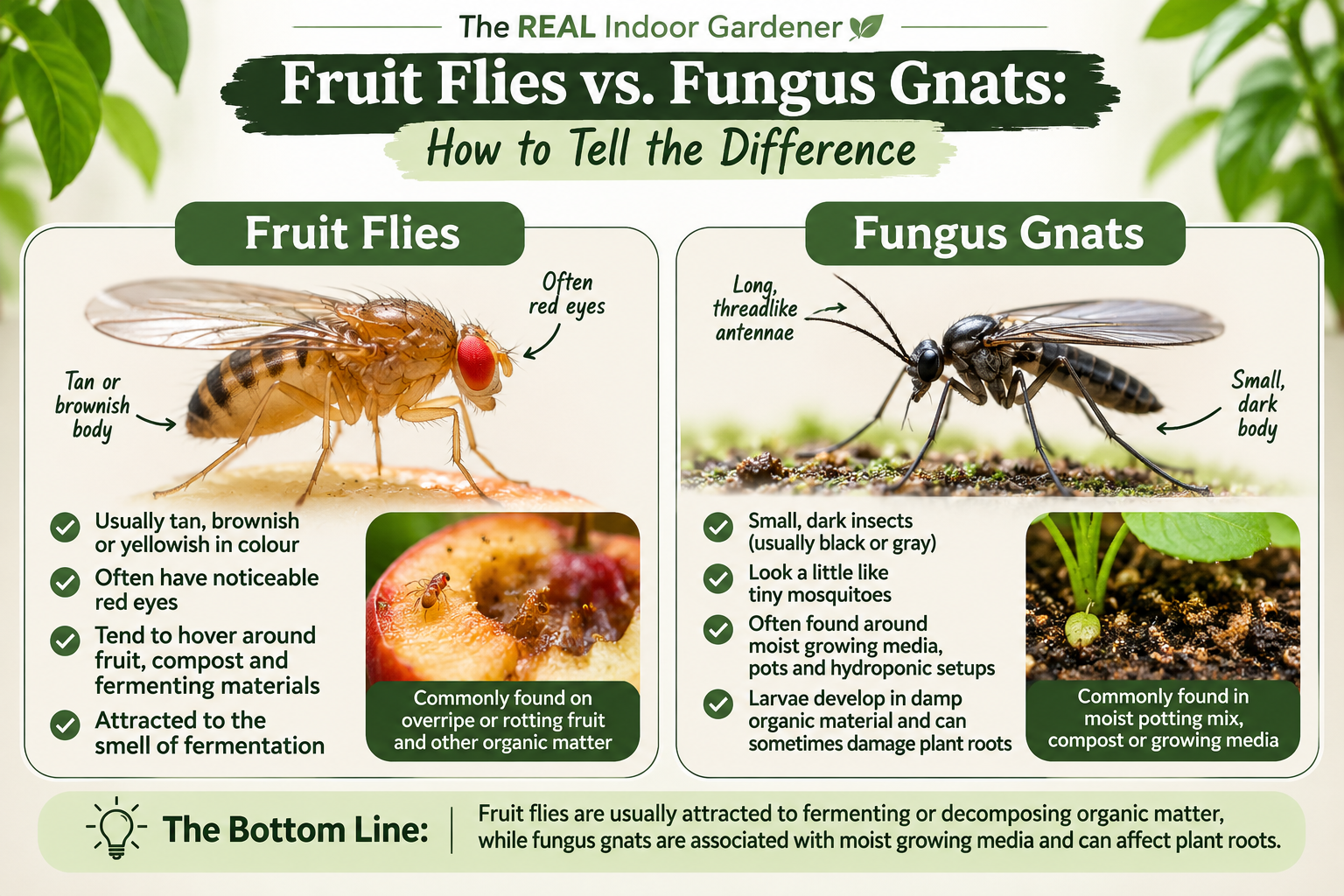
Fungus gnats are tiny, dark-coloured flying insects that are commonly found around houseplants, seed-starting trays and indoor growing systems.
They look a little like miniature mosquitoes, with slender bodies, long legs and delicate wings.
Unlike fruit flies, which are attracted to fermenting fruit and decomposing food, fungus gnats are associated with moist growing media and decaying organic material.
Adult fungus gnats are mostly a nuisance, but their larvae are the stage you really need to pay attention to as they can attack the roots of your plants.
Why Are Fungus Gnats Attracted to Indoor Gardens?
Fungus gnats love damp environments where fungi and decomposing organic matter are present.
Some common places they establish themselves include:
Overwatered houseplants
Seed-starting trays and propagation setups
Potting soil and organic growing media
Damp coco coir and other growing substrates
Algae and organic debris around indoor growing systems
Areas where water and organic material accumulate
If you're growing hydroponically, you might assume you won't have fungus gnats because you're not using traditional potting soil. Unfortunately, that's not necessarily the case.
Moist growing media, algae, organic debris and damp areas around your equipment can still provide suitable conditions for them.
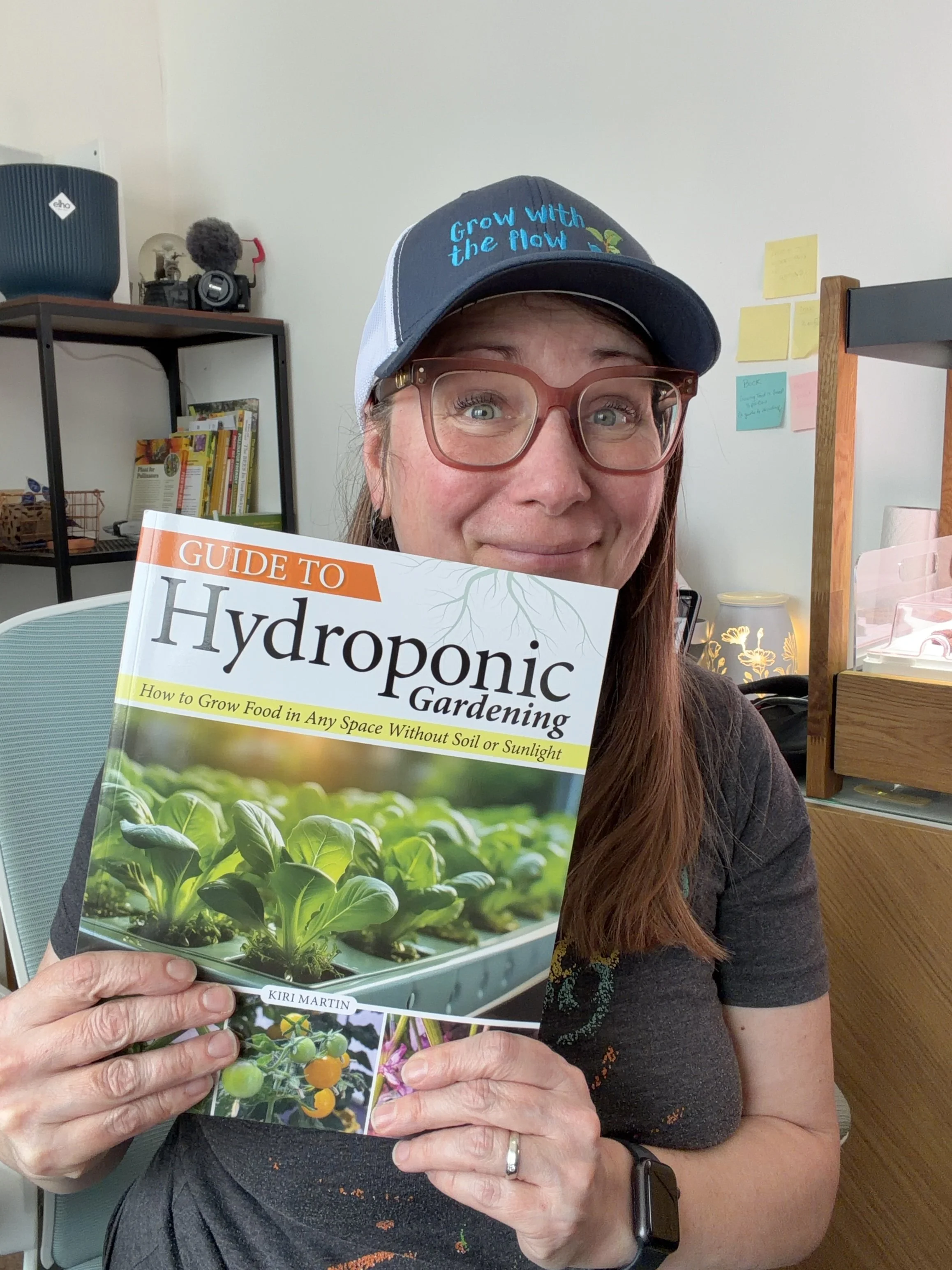
Want to Grow Your Own Food Hydroponically?
My book is packed with practical advice, tips and step-by-step guidance to help you grow fresh food in any space — without soil or sunlight. Whether you're a complete beginner or looking to expand your indoor garden, this guide will help you get growing!
Understanding the Fungus Gnat Life Cycle
To get rid of fungus gnats, you need to understand why they keep coming back.
The adult flies lay eggs in moist growing media. Those eggs hatch into larvae, which feed primarily on fungi and decaying organic matter. In some circumstances, particularly with large populations and vulnerable seedlings, the larvae can also feed on fine plant roots.
Eventually, the larvae pupate and emerge as adult flies, starting the cycle all over again.
This is why simply putting out yellow sticky traps rarely solves an infestation on its own.
You might catch hundreds of adults, but if you're not dealing with the larvae, new flies will continue emerging.
The secret to controlling fungus gnats is to target the larvae while also reducing the adult population.
My Favourite Ways to Get Rid of Fungus Gnats
I like to approach fungus gnat control in two stages: dealing with the larvae and controlling the adults.
The best results usually come from combining methods rather than relying on just one.
1. Stop Fungus Gnats at the Larval Stage
This is where I'd focus most of your attention. If you can interrupt the life cycle before the adults emerge, you can gradually bring the population under control.
There are several biological controls that can help.
Mosquito Dunks (Bti)
One of the options to consider is Bti, short for Bacillus thuringiensis subsp. israelensis.
Bti is a naturally occurring bacterium used as a biological control against certain insect larvae, including fungus gnat larvae.
It works when susceptible larvae ingest the bacteria, which produces toxins that affect their digestive systems.
Mosquito Dunks are a familiar Bti product, although not every formulation or product label necessarily covers every use.
A note about using Bti: Choose a product and application method labelled for the intended use. Some Bti products are designed for standing water, while others are formulated for application to growing media. Don't assume a mosquito dunk intended for standing water is automatically appropriate for every hydroponic reservoir or edible crop.
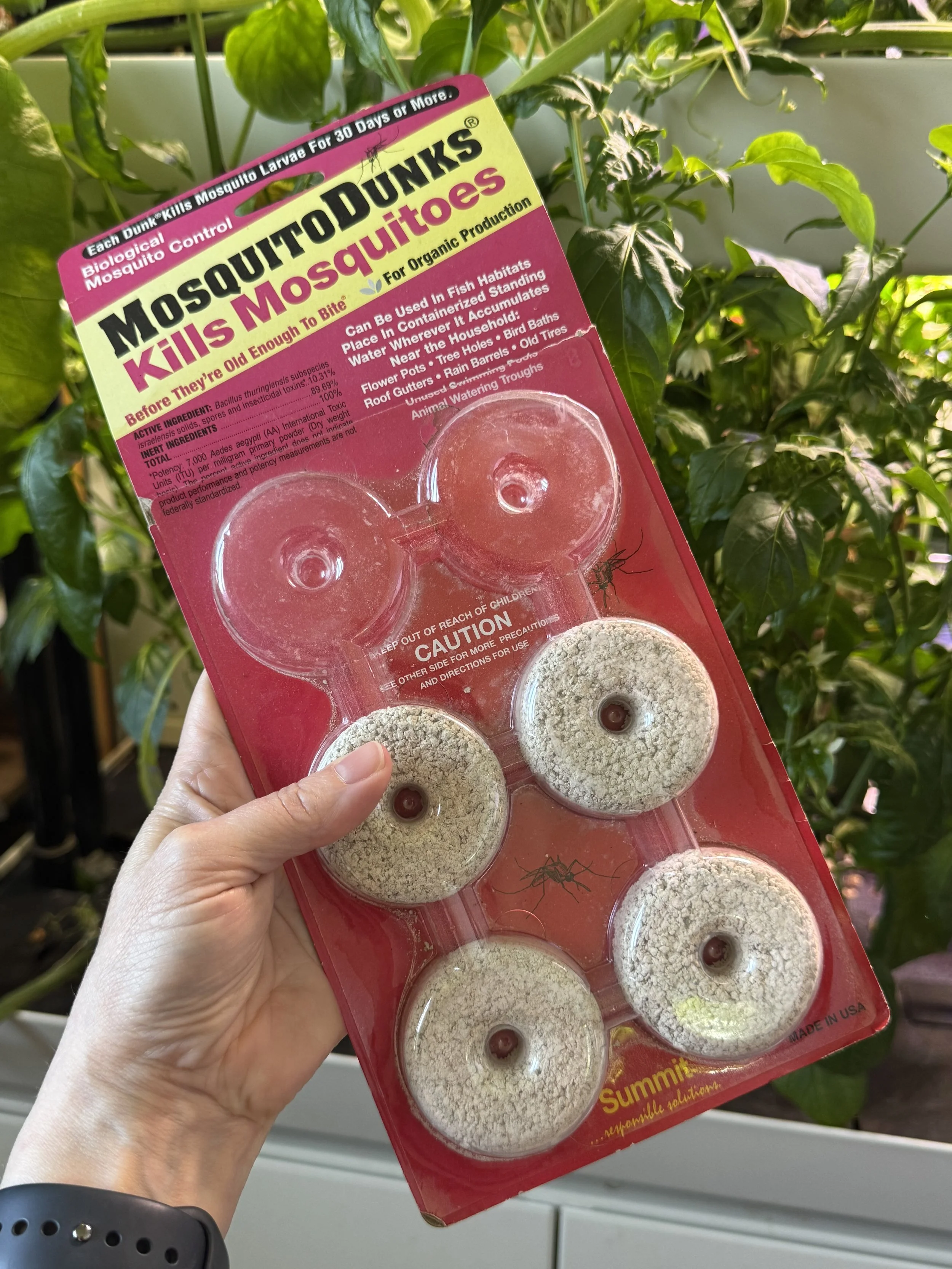
These also come in Mosquito Bits, but I can’t seem to find those in Canada. 😫
NemaKnights (Beneficial Nematodes)
Another option I really like is beneficial nematodes.
NemaKnights contain Steinernema feltiae, a species of microscopic parasitic nematode used to control fungus gnat larvae.
These tiny organisms move through moist growing media, locate susceptible insect larvae and infect them with bacteria carried in their digestive systems.
The nematodes reproduce within the host and eventually kill it.
They are particularly useful when you have an established population of fungus gnats developing in growing media.
A few things to remember:
Follow the manufacturer's mixing and application instructions.
Apply to appropriately moist growing media.
Avoid allowing the treated area to dry out immediately after application.
Pay attention to storage requirements, as beneficial nematodes are living organisms.
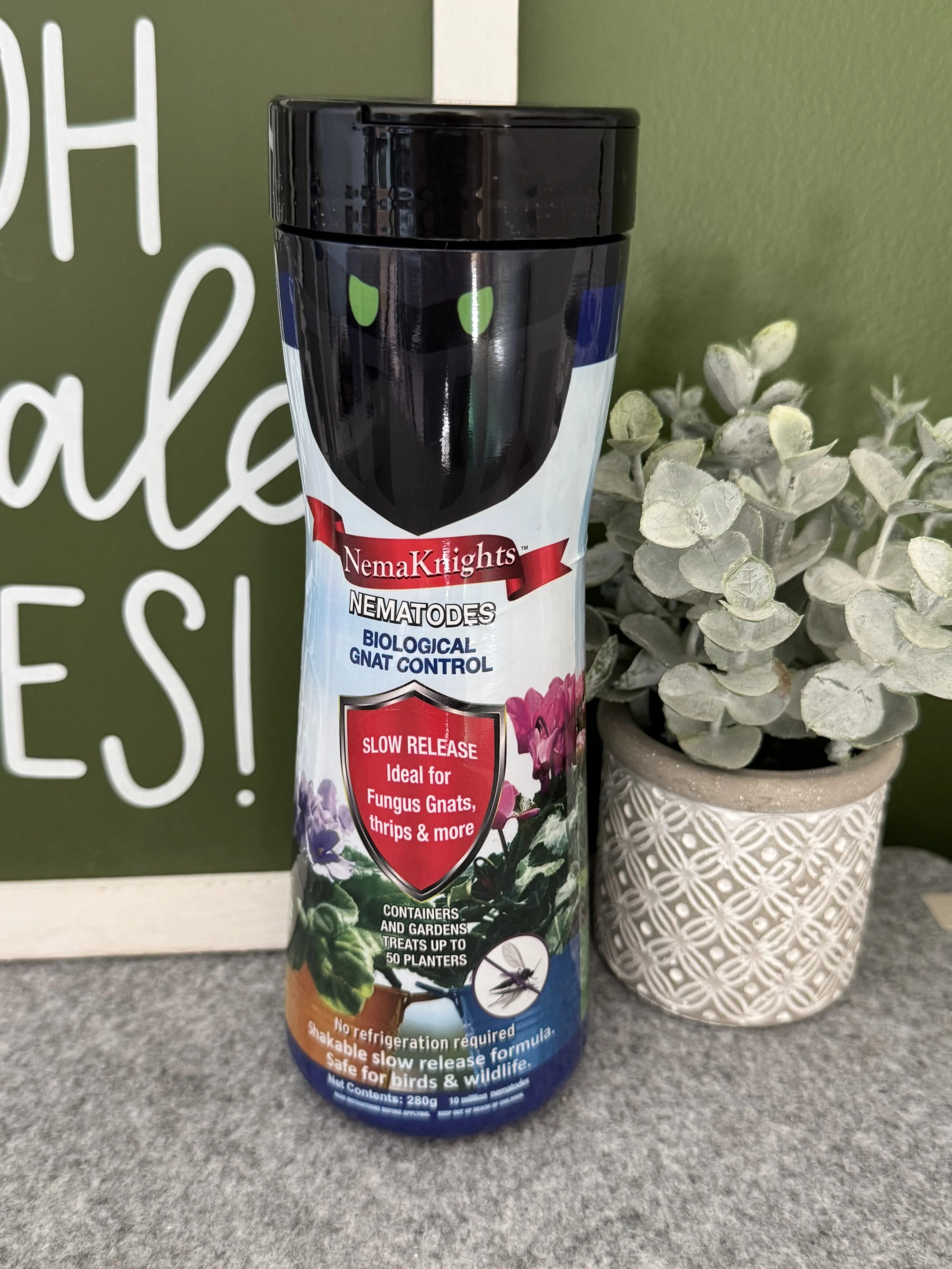
I like these NemaKnights ones but they can be a bit expensive sometimes.
Predatory Mites
If you're interested in biological pest control, predatory mites are another option.
Two species worth looking into are:
Gaeolaelaps gillespiei
Stratiolaelaps scimitus
These are soil-dwelling predatory mites that feed on small soil-dwelling pests, including fungus gnat larvae.
They actively hunt through the growing media, helping reduce the number of larvae before they develop into adults.
Unlike a one-time treatment, beneficial predators can establish themselves in suitable growing environments and provide ongoing biological control.
They're particularly interesting if you're looking for a more preventative approach rather than repeatedly treating an infestation.
I love the idea of using beneficial insects and organisms as part of an integrated pest management approach. Rather than immediately reaching for a chemical treatment, you're introducing natural predators that help keep pest populations in check.
2. Control the Adult Fungus Gnats
While targeting the larvae is important, you also want to reduce the number of adults flying around your indoor garden.
This is where traps and other adult controls come in.
Yellow Sticky Traps
Yellow sticky traps are probably one of the simplest and most useful tools for monitoring fungus gnats.
The bright yellow colour attracts flying adults, which become stuck to the adhesive surface when they land.
I like using them around my indoor growing areas because they serve two purposes:
They help catch adult fungus gnats.
They give you an indication of how large your pest population is and whether your treatments are working.
Place the traps near the growing media and around areas where you're noticing adult activity.
One important thing to remember: sticky traps catch adults, not the larvae developing in the growing media. They're a useful part of your control strategy, but they won't solve the infestation on their own.
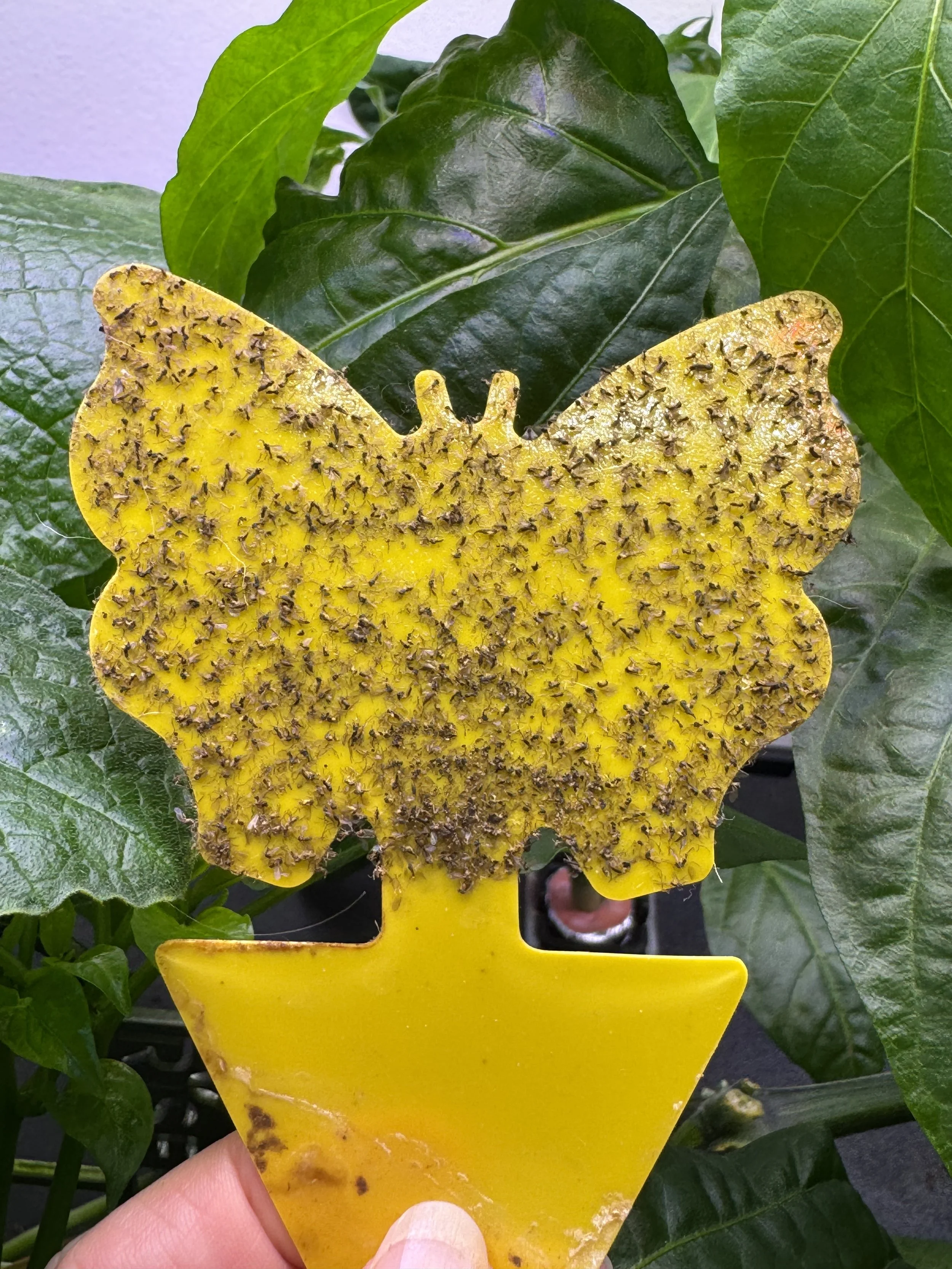
So gross, but the yellow sticky traps sure do a great job of catching any adult fungus gnats.
Carnivorous Plants
Here's a slightly more fun option!
Carnivorous plants can help catch some of the adult fungus gnats flying around your indoor garden.
Plants such as sundews (Drosera) have sticky leaves that trap small insects. Some varieties of butterworts (Pinguicula) can also catch tiny flying insects.
They're certainly not a replacement for biological controls or proper pest management, but they can help capture some adults.
And let's be honest, having a carnivorous plant in your indoor garden is pretty cool!
Just don't expect one sundew to eliminate an established fungus gnat infestation.
3. Other Ways to Help Prevent Fungus Gnats
There are a few additional methods you might come across when researching fungus gnat control.
Some are useful preventative measures, while others have less consistent evidence behind them.
Ceylon Cinnamon
Ceylon cinnamon is sometimes recommended as a natural way to discourage fungus gnats.
There are claims that cinnamon has antifungal properties that can help reduce the fungi associated with fungus gnat larvae.
It's important to distinguish between antifungal activity and proven fungus gnat control, though. Cinnamon hasn't been established as a reliable standalone treatment for an infestation.
If you decide to experiment with it, make sure you're using genuine Ceylon cinnamon rather than assuming all cinnamon products are interchangeable.
I'd consider it an optional experiment, not one of my primary recommendations.
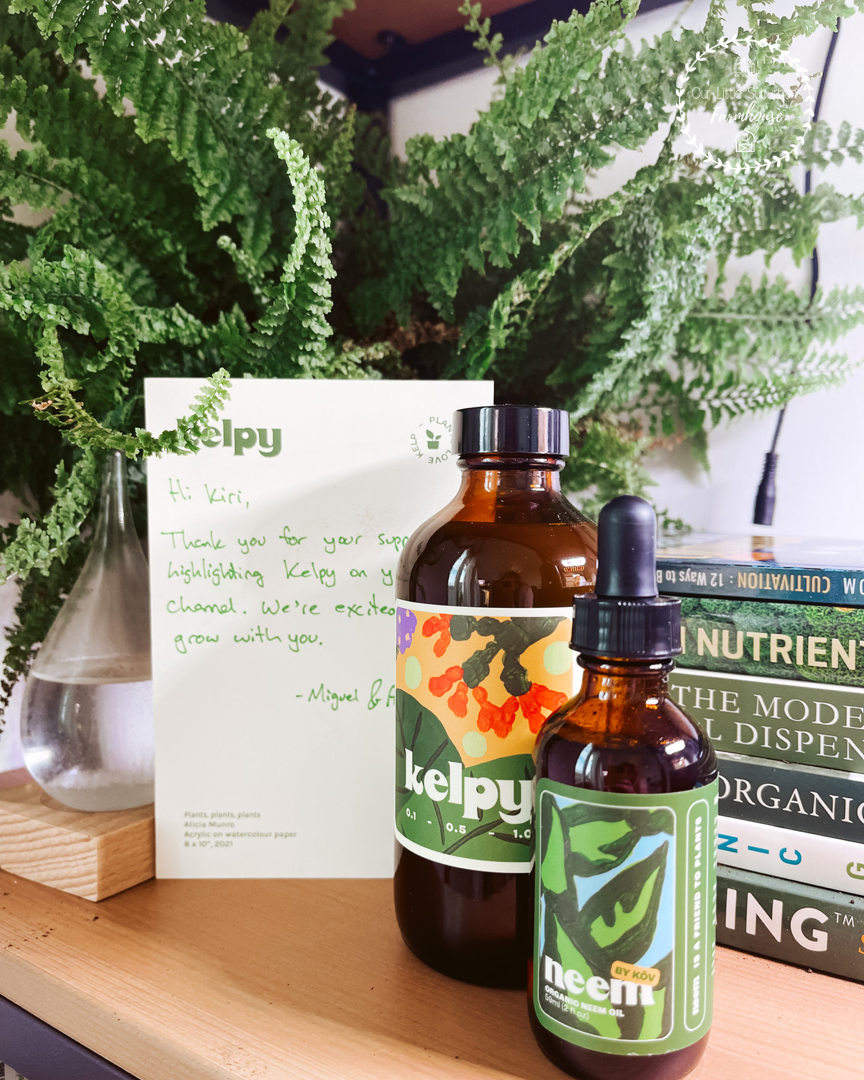
I have some neem oil from Kelpy that I like to use.
Neem Oil
Neem oil is another remedy you'll frequently see recommended for fungus gnats.
Some neem-based products contain compounds that can affect insect feeding, growth and development.
However, results depend on the formulation and how it's applied. Neem oil mixed with water and a drop of dish soap is not a guaranteed fungus gnat treatment.
A couple of cautions:
Use a product labelled for the intended application.
Don't assume ordinary dish soap is interchangeable with a formulated insecticidal soap.
Avoid pouring homemade neem mixtures into a hydroponic reservoir.
Test any foliar or growing-media application carefully, as inappropriate concentrations can damage plants.
I'd prioritize proven biological controls over homemade neem mixtures.
Sand or Vermiculite as a Surface Barrier
You've probably seen recommendations to add a layer of sand or vermiculite over the surface of potting soil.
The idea is to make the surface less suitable for adult fungus gnats to lay their eggs and for larvae to develop.
A suitable dry surface layer may help reduce access to the moist organic material underneath, but it isn't a guaranteed barrier.
This method is also more relevant to traditional pots than many hydroponic systems.
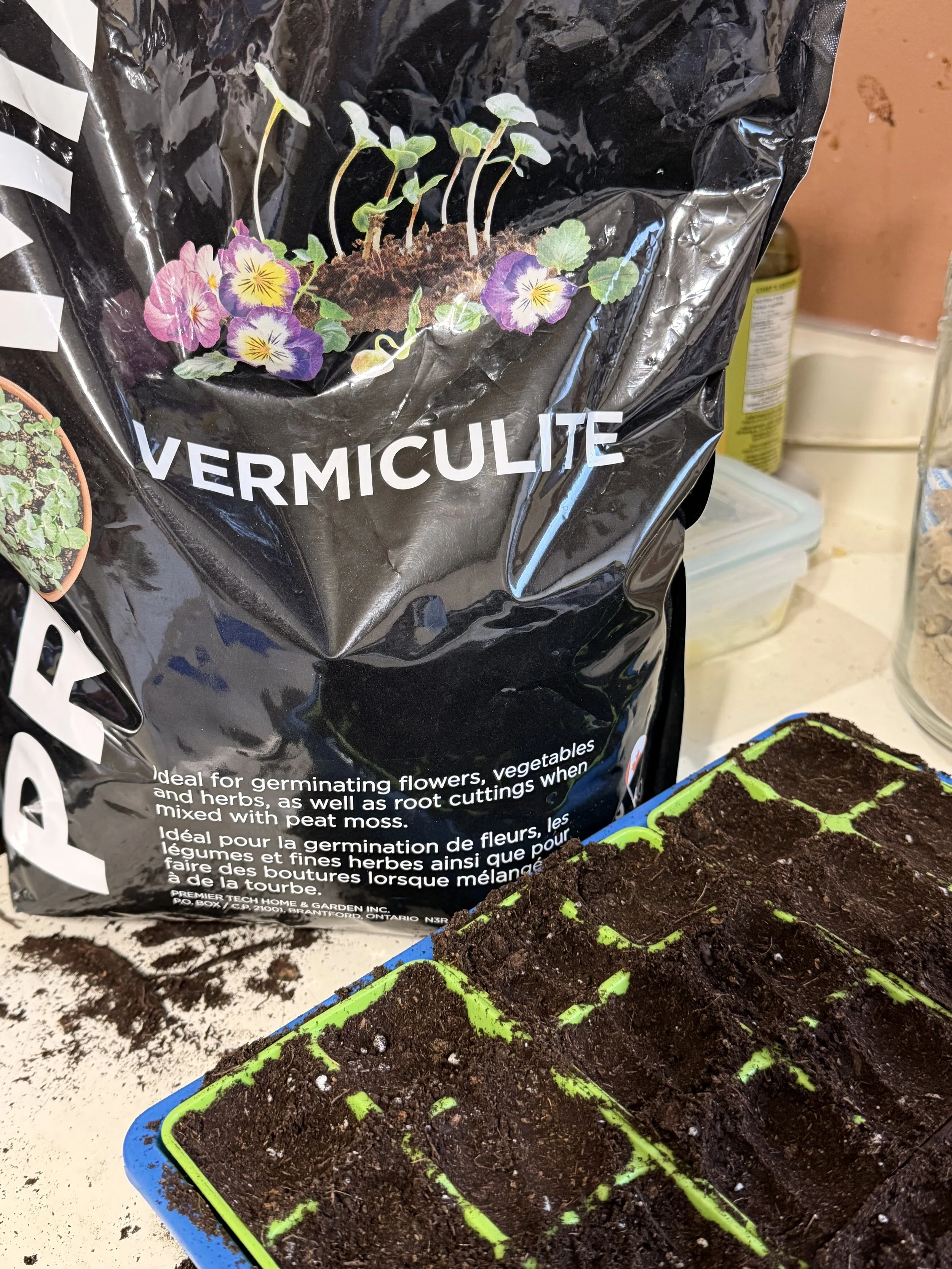
I always have vermiculite on hand as I use it for when I start my seedlings indoors too.
Cover Your Growing Media
Another preventative option is to cover exposed growing media where practical.
The goal is to reduce the opportunity for adult fungus gnats to access the moist material and lay eggs.
Just make sure your cover doesn't interfere with airflow, drainage or the needs of your plants.
Don't Overwater
This is probably one of the most important preventative steps.
Fungus gnats thrive in consistently moist environments where organic material and fungi are available.
If you're growing in soil or another moisture-retaining medium, allow the appropriate amount of drying between waterings.
Of course, this doesn't mean deliberately drying out your hydroponic growing media or stressing your plants. You want to manage moisture appropriately for the growing system you're using.
Also, keep growing areas clean. Remove dead leaves, algae and accumulated organic debris, and clean up standing water where it isn't needed.
My Recommended Fungus Gnat Control Strategy
If I were dealing with an infestation today, here's how I'd approach it:
ProblemWhat I'd UseFungus gnat larvaeBti or beneficial nematodesOngoing larval pressurePredatory mites or rove beetlesAdult fungus gnatsYellow sticky trapsMonitoringYellow sticky trapsLong-term preventionMoisture management and good growing-area hygiene
You don't necessarily need every product on this list.
I'd start by identifying where the fungus gnats are breeding, choose an appropriate larval treatment, and use sticky traps to monitor the adult population.
If you're dealing with recurring problems, introducing beneficial organisms may be worth considering as part of a longer-term integrated pest management strategy.
Frequently Asked Questions About Fungus Gnats
-
Adult fungus gnats are generally more of a nuisance than a direct threat to healthy plants.
However, their larvae can feed on fine roots, particularly in young seedlings and plants experiencing other stresses.
They can also become a nuisance in large numbers, so it's worth addressing an infestation rather than ignoring it.
-
Yellow sticky traps catch adult fungus gnats, but they don't eliminate eggs or larvae developing in growing media.
They're useful for monitoring and reducing adult populations, but you'll need to address the breeding source and larvae to get the infestation under control.
-
Bti and beneficial nematodes such as Steinernema feltiae are two commonly used biological control options.
Predatory mites and rove beetles can also help control larvae in suitable growing environments.
The best choice depends on your growing system, the size of the infestation and the product's approved application instructions.
-
The best prevention is to manage moisture, remove decaying organic material, keep growing areas clean and monitor regularly with yellow sticky traps.
If you have recurring problems, consider using suitable biological controls to help maintain a healthy growing environment.
🌱 Final Thoughts
Fungus gnats can be incredibly annoying, but they're generally not difficult to manage once you understand what's happening beneath the surface.
My biggest recommendation is to stop focusing exclusively on the little flies buzzing around your plants.
Remember, the adults are only part of the problem. Targeting the larvae is what helps break the life cycle and get the infestation under control.
Combine that with sticky traps, good growing-area hygiene and sensible moisture management, and you should be able to get things back under control.
And if you're interested in biological pest control, beneficial nematodes, predatory mites and rove beetles are fascinating options to explore.
Happy indoor gardening!